
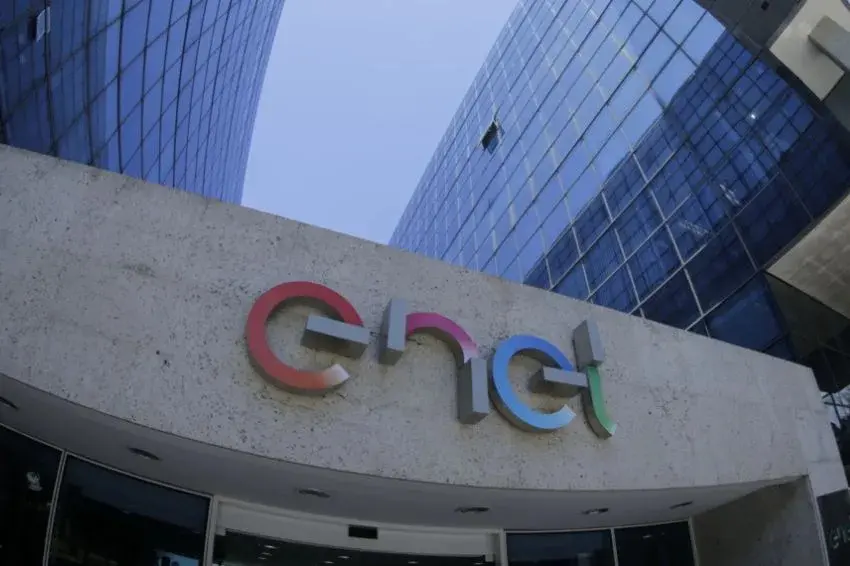
The board of ANEEL (National Electric Energy Agency) denied, in the Ordinary Deliberative Circuit held yesterday, the 29th, the request for reconsideration presented by Enel São Paulo against the decision that had refused to carry out a technical expert assessment in the administrative process that could result in the termination of the concession. With the decision, the Agency considers the instruction phase of the procedure closed.
The request for expert analysis was specifically related to extreme weather events, particularly the event that occurred in December 2025.
Enel had argued for the need for an independent technical analysis to assess the characteristics of these events and their effects on the indicators used in the process.
Upon reviewing the appeal, however, the ANEEL It concluded that no relevant fact that remains unclear has been presented, nor has the need for technical knowledge different from that already available in the process been demonstrated.
The Agency also rejected the argument that an external expert opinion would be necessary to ensure impartiality, emphasizing that its legal responsibilities include regulation, oversight, instruction, and decision-making.
Another point highlighted by the board was that the discussion is not limited to the intensity or exceptionality of meteorological phenomena. For the regulatory body, the process also needs to consider the concessionaire's preparedness, its operational response and recovery capacity, in addition to the permanent obligations of continuity, regularity, efficiency and safety.
Even if an expert analysis confirmed the exceptional nature of a particular event, according to the Agency, this would not necessarily eliminate the need to analyze any management failures identified by the audit.
Comparison
This week's refusal is the unfolding of a legal dispute that gained momentum in August. On the 24th of that month, the board of directors of ANEEL It had already unanimously rejected the request for expert evidence submitted by Enel.
At the time, rapporteur Agnes Costa stated that the request did not seek to prove a new fact or clarify an unknown technical issue.
According to the previous decision, the director also assessed that the concessionaire had been adopting, since 2025, a procedural conduct that would contribute to delaying the conclusion of the controversy.
Director-General Sandoval Feitosa, in turn, stated that the request called into question the technical authority attributed to regulatory agencies.
Enel, however, argued that the expert analysis should examine, among other points, the climatic event of December 2025, which it classified as different from previous occurrences due to its dynamics, intensity, and scope.
The company also argued that the operational reality of the concession had changed since the events that gave rise to the lawsuit.
Operational improvement
Subsequently, Enel submitted a new statement to ANEEL requesting an additional 30 days to present technical evidence at their own expense, should the Agency maintain its refusal to allow an independent expert assessment.
The distributor alleged a denial of due process and questioned the fact that the deadline for final arguments was opened before the analysis of the appeal related to the expert report.
The company also began to emphasize the evolution of operational indicators. According to the statement, since 2023 there has been a 50% reduction in the Average Emergency Response Time (AET), an 88% reduction in the percentage of interruptions exceeding 24 hours, and a 66% reduction in the number of consumers who remained without power for more than 24 hours.
Expiry is still under review.
The controversy did not begin with the discussion about the expert analysis. The administrative process of ANEEL This could lead to the termination of Enel SP's concession. The company has been contesting the conduct and basis of the procedure.
In its allegations, the distributor stated that there was a lack of previously defined objective criteria to support a possible recommendation for termination and pointed to alleged flaws from the outset of the process.
It also argued that terminating the concession would not necessarily be the best alternative for consumers, requesting that costs, operational risks, tariff effects, and the consequences of a possible replacement of the concessionaire be evaluated.
Enel also defends the possibility of a new recovery plan or measures considered less burdensome to the concession. ANEELIn turn, it clarifies that the decision regarding the expert evaluation does not represent a premature judgment on the expiration of the right.
With the conclusion of the investigation, the process moves on to the next stages of analyzing the concessionaire's conduct and potentially making recommendations regarding the future of the concession.
TCU demands assessment of impacts
In parallel with the processing of the case, the TCU (Federal Court of Accounts) recommended to the MME and to ANEEL that assess the effects of a potential termination of the concession, including compensation for reversible assets, tariff impacts, and systemic risks for the distribution segment.
The court also advised that, should the expiration be adopted, the agencies must demonstrate that the measure will provide a net benefit to consumers compared to less burdensome alternatives.
Since the current contract ends in 2028, the TCU (Brazilian Federal Court of Accounts) also recommended conducting technical and economic studies for a possible new bidding process and ordered the submission, within 60 days, of a joint schedule to ensure the continuity of service in the area served by Enel SP.
all the content of Canal Solar is protected by copyright law, and partial or total reproduction of this site in any medium is expressly prohibited. If you are interested in collaborating or reusing part of our material, please contact us by email: redacao@canalsolar.com.br.

Comments
Comments are moderated before publication.Comments should be respectful and contribute to a healthy debate. Offensive comments may be removed. The opinions expressed here are those of the authors and do not necessarily reflect the views of the author. Canal Solar.