
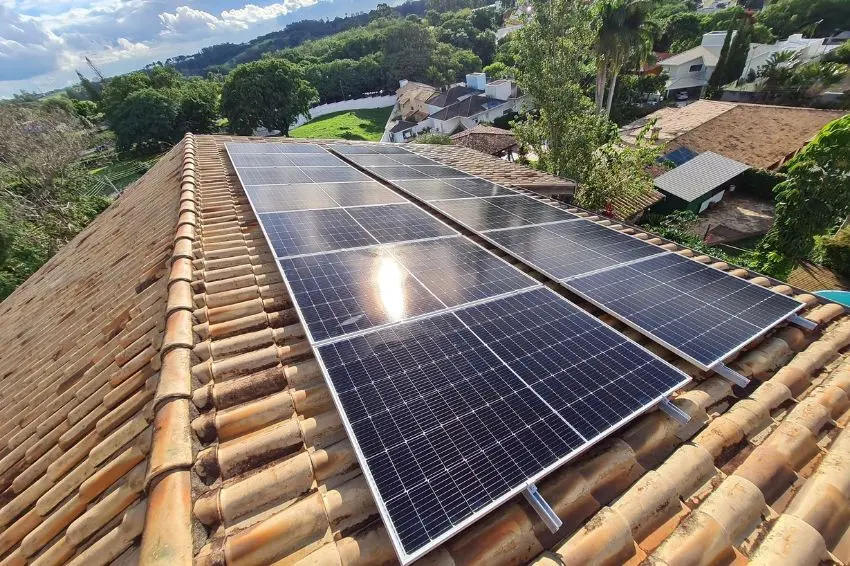
The Maranhão State Court has ruled that the state government and Equatorial Maranhão must stop charging ICMS (a state sales tax) on electricity produced by consumers, injected into the distribution network, and subsequently compensated for.
The decision has statewide scope and provides for a daily fine of R$ 10 in case of non-compliance, starting from the notification of the sentence.
The sentence, obtained by Canal SolarThe ruling, issued on November 3rd by Judge Douglas de Melo Martins of the Court of Diffuse and Collective Interests of São Luís, has statewide scope.
According to the judge, the charge is improper because the surplus energy sent to the distributor's grid does not represent a purchase and sale transaction, but a free loan that allows the consumer to use credits to offset consumption at another time.
According to the rules of the SCEE (Electric Energy Compensation System), used in MMGD (distributed microgeneration and minigeneration), the energy produced but not consumed immediately is injected into the electrical grid, generating credits that can be used later.
In his decision, Judge Martins concludes that this mechanism does not constitute a commercial transaction that justifies the imposition of the tax, since there is no transfer of ownership of the energy through buying and selling.
The judge further explained that the physical circulation of electricity through the grid is not sufficient to constitute the taxable event for ICMS (a Brazilian state tax), as a legal transaction involving the circulation of goods is necessary.
In addition to the tax-related justification, the judge highlighted the role of solar power generation in reducing greenhouse gas emissions and expanding the use of renewable energy sources.

According to Martins, the tax on compensated energy reduces the savings obtained by consumers who invested in photovoltaic systems, prolonging the financial payback period of the equipment.
The judge also argued that the effects impact families, small business owners, and rural producers, especially those who resorted to financing to install the systems.
According to the judge, the taxation could also discourage new photovoltaic installations and hinder the progress of the energy transition. The reasoning considers the constitutional right to an ecologically balanced environment and the requirement that the tax system respect environmental protection.
The decision does not mandate the automatic return of ICMS (a Brazilian sales tax) amounts already paid by consumers. The judge dismissed, without prejudice, the request for restitution presented in the collective action, considering that any prior charges should be discussed through individual legal channels. The request for compensation for collective moral damages was also rejected.
With this decision, the judge ruled that the State of Maranhão and Equatorial must cease charging ICMS (a state sales tax) on the portion of electricity compensated by consumers, with statewide scope as informed by the magistrate.
The ruling was issued in the first instance and is not yet final. In addition to the possibility of appeals, the decision is subject to mandatory review by the Court of Justice of Maranhão, as determined by the judge himself.
all the content of Canal Solar is protected by copyright law, and partial or total reproduction of this site in any medium is expressly prohibited. If you are interested in collaborating or reusing part of our material, please contact us by email: redacao@canalsolar.com.br.


Comments
Comments are moderated before publication.Comments should be respectful and contribute to a healthy debate. Offensive comments may be removed. The opinions expressed here are those of the authors and do not necessarily reflect the views of the author. Canal Solar.