
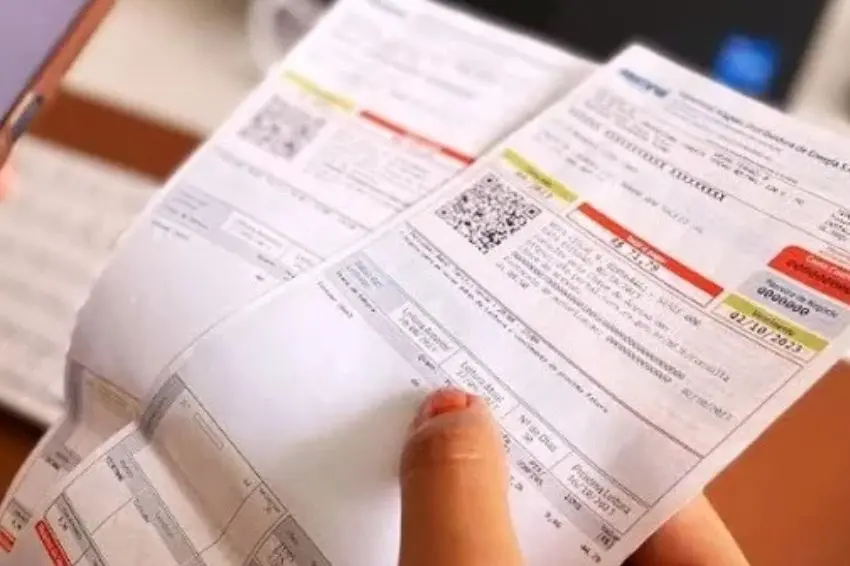
Electricity bills were the main culprit behind inflation for Brazilians in July. While prices rose by an average of 0,07% nationwide, residential electricity became 3,09% more expensive – a significant impact and well above the overall inflation rate for the month.
The data are part of the IPCA (National Consumer Price Index), an index that measures the country's official inflation, released this Tuesday (11) by IBGE (Brazilian Institute of Geography and Statistics).
With this result, Brazil's accumulated inflation for the year reached 3,44%. Over the last 12 months, the index stands at 4,44%, flirting with the upper limit of the Central Bank's target, whose tolerance range is from 1,5% to 4,5%.
Why did the electricity bill go up so much?
According to IBGE (Brazilian Institute of Geography and Statistics), two factors contributed to higher electricity prices in July: tariff adjustments by some distributors and the maintenance of the yellow tariff flag. In São Paulo, one concessionaire had an 8,85% increase. In Porto Alegre, the increase was 14,89%, while Curitiba registered a 19,55% increase.
Furthermore, the yellow flag remained in effect in July, adding R$ 1,885 for every 100 kWh consumed. The tariff flags act as a signal about the cost of producing energy in the country. When conditions become less favorable and generation becomes more expensive, there may be an additional charge on the electricity bill.
How is inflation calculated?
The IPCA (Broad Consumer Price Index) has been calculated by IBGE (Brazilian Institute of Geography and Statistics) since 1980 and tracks the variation in prices of products and services consumed by families with incomes ranging from 1 to 40 minimum wages. The survey considers prices collected in ten metropolitan regions, in addition to Goiânia, Campo Grande, Rio Branco, São Luís, Aracaju, and Brasília.
To arrive at the July inflation figure, IBGE compared prices collected between July 1st and 30th, 2026 with those recorded during the baseline period, between May 30th and June 30th. In practice, the indicator allows us to track whether the cost of living for families is increasing or decreasing over time.
all the content of Canal Solar is protected by copyright law, and partial or total reproduction of this site in any medium is expressly prohibited. If you are interested in collaborating or reusing part of our material, please contact us by email: redacao@canalsolar.com.br.





Comments
Comments are moderated before publication.Comments should be respectful and contribute to a healthy debate. Offensive comments may be removed. The opinions expressed here are those of the authors and do not necessarily reflect the views of the author. Canal Solar.