
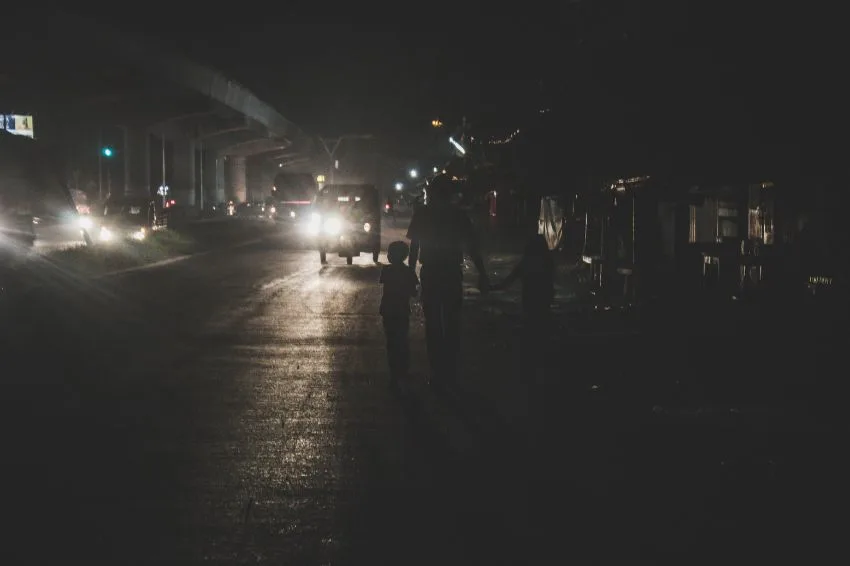
Between August 22nd and September 1st, the ONS (National System Operator) recorded three major blackouts in Brazil, affecting the states of Acre, Rondônia, Roraima and Sao Paulo.
On Saturday, August 31st, at 17:31 pm, a failure at the Guarulhos substation, in São Paulo, under the responsibility of Eletrobras, resulted in the interruption of 870 MW, harming customers served by EDP SP and ENEL SP. The full service recovery took 2h30, with the supply fully restored at 19:58 pm.
On Sunday, September 1st, at 11:53 am, the Roraima's isolated system was completely shut down, causing the interruption of 85 MW. The system restoration was completed at 13:40 p.m.
On August 22nd, at 16:47 pm, the automatic shutdown of the Madeira River generation and transmission complex, disconnecting the states of the Acre and Rondônia from SIN (National Interconnected System). There was a total interruption of 984 MW, 187 MW in Acre and 797 MW in Rondônia. The service was only normalized after 20:46 pm.
Except in Roraima, the other blackouts occurred in the late afternoon, period in which the ONS faces biggest operational challenge, as solar generation stops producing energy while demand increases rapidly due to higher consumption.
In all cases, the ONS reported, through a note, that the The causes of the outages are being investigated and will be released later in a report.
all the content of Canal Solar is protected by copyright law, and partial or total reproduction of this site in any medium is expressly prohibited. If you are interested in collaborating or reusing part of our material, please contact us by email: redacao@canalsolar.com.br.

Comments (1)
Comments are moderated before publication.Comments should be respectful and contribute to a healthy debate. Offensive comments may be removed. The opinions expressed here are those of the authors and do not necessarily reflect the views of the author. Canal Solar.
The justification for the abrupt exit of the solar generation system from synchronization with the SIN requires a better assessment by the ONS, since the generation of solar energy has a profile recorded in graphs, and these graphic records at this time have repetitive designs almost daily, so it is possible to take actions that compensate for this exit of solar electric generation safely for the SIN.