
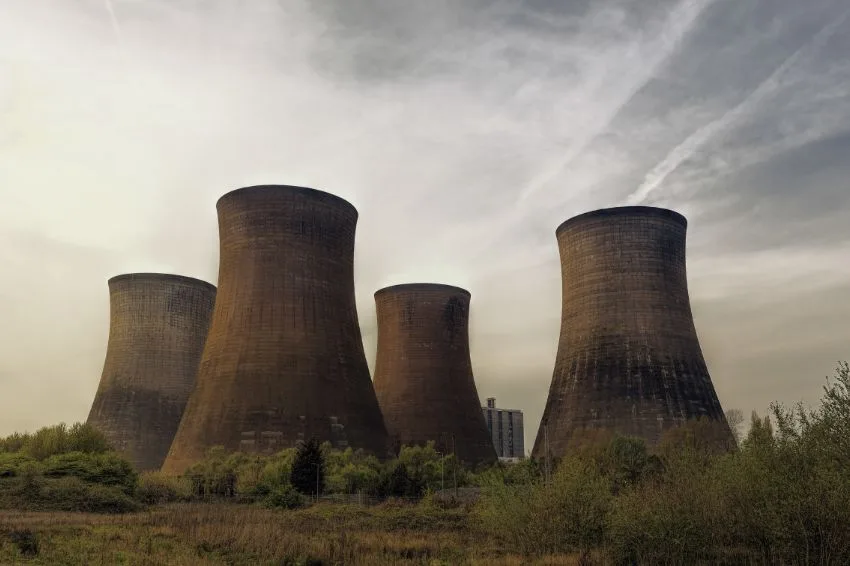
Brazil formalized its adherence to the Declaration to Triple Nuclear Energy by 2050 this Tuesday (10). The announcement, made during the II Nuclear Energy Summit in Paris, France, places the country alongside 38 other nations, such as China and Italy, in an effort to mobilize governments and financial institutions in expanding global nuclear capacity.
The initiative, originally launched at COP28 in 2023 in Dubai, United Arab Emirates, seeks to strengthen energy security and accelerate the transition to low-carbon energy sources to meet climate goals.
The Brazilian government emphasized that it has mastered the complete nuclear fuel cycle and has four decades of safe operation of the Angra nuclear power plants. By endorsing the document, it also reaffirmed its commitment to the development of nuclear power in accordance with safety standards and with the goal of expanding the supply of low-carbon energy.
The statement also highlights that the growth in global demand for electricity requires sources capable of providing stable generation, complementing intermittent renewables.
This stance, however, comes at a time when Brazil's own nuclear program is facing internal difficulties, involving the financial situation of Eletronuclear – responsible for operating the Angra 1 and Angra 2 power plants – and the uncertainty surrounding the completion of... cove 3, a project that has been dragging on for decades.
Cash flow risk
Eletronuclear is going through a financial integrity crisis and depends on a decision from the STF (Supreme Federal Court) to balance its accounts in 2025.
An agreement between the Brazilian government and Axia (formerly Eletrobras) foresees the issuance of R$ 2,4 billion in debentures to bail out the state-owned company, but the lack of full court approval puts the investment at risk.
Without these resources, Eletronuclear's cash flow is compromised for the payment of immediate expenses and essential works, such as extending the lifespan of Angra 1.
The situation is aggravated by instability in management. The company has been run by interim appointees since July 2025, a result of political disputes surrounding the nominations for the board of directors.
Furthermore, the entry of the J&F group into the shareholding structure, following the purchase of Axia's stake by Âmbar Energia, brought new elements to the process.
Angra 3 without a final decision.
Another sensitive point is the decision regarding the continuation of the Angra 3 nuclear power plant project, which has been stalled for years and depends on a decision from the CNPE (National Council for Energy Policy).
A study updated by BNDES (National Bank for Economic and Social Development) concluded that finishing the power plant is cheaper than abandoning it.
According to the analysis, the cost to complete the project would be around R$ 23,9 billion, while the expenses associated with abandoning it could reach R$ 26 billion.
The survey also indicated that financial gains – such as better financing conditions, renegotiation of contracts and tax incentives under discussion – could reduce the final cost of the project.
Despite this, the political decision has not yet been made, and the delay is already impacting the estimated price of energy, with an increase of approximately R$ 75 per Megawatt-hour in the projected tariff for the power plant.
The uncertainty surrounding Angra 3 is seen by experts as one of the main obstacles to Brazilian nuclear planning, precisely at a time when the country is signaling support for the expansion of this energy source on the international stage.
Accelerated expansion until 2050
The movement in support of nuclear energy is occurring within a context of expectations of strong growth for this energy source in the coming decades.
A recent report from the World Nuclear Association projects that global installed capacity could reach 1.446 gigawatts by 2050, more than triple the current level, if commitments announced by governments are effectively implemented.
According to the study, more than 50 countries are discussing the construction of new reactors, extending the lifespan of existing plants, and developing technologies such as small modular reactors, considered alternatives to expand generation with lower initial costs.
The organization emphasizes, however, that expansion will depend on financing, stable regulatory frameworks, supply chains, and the training of a skilled workforce – factors that still represent challenges for several countries.
In the Brazilian case, analysts assess that the country possesses the technical capacity and mastery of the nuclear fuel cycle, but faces planning and political decision-making difficulties that limit the sector's progress.
You might also be interested in!
Completion of Angra 3 is the most likely option, says BNDES.
all the content of Canal Solar is protected by copyright law, and partial or total reproduction of this site in any medium is expressly prohibited. If you are interested in collaborating or reusing part of our material, please contact us by email: redacao@canalsolar.com.br.