
Lithium battery energy storage has, for the first time, been integrated into the operational logistics of the Brazilian Army in military mobilizations.
The Air Force has begun testing a mobile system that combines solar power generation and energy storage to supply platoons in the field, reducing reliance on diesel generators and increasing troop autonomy.
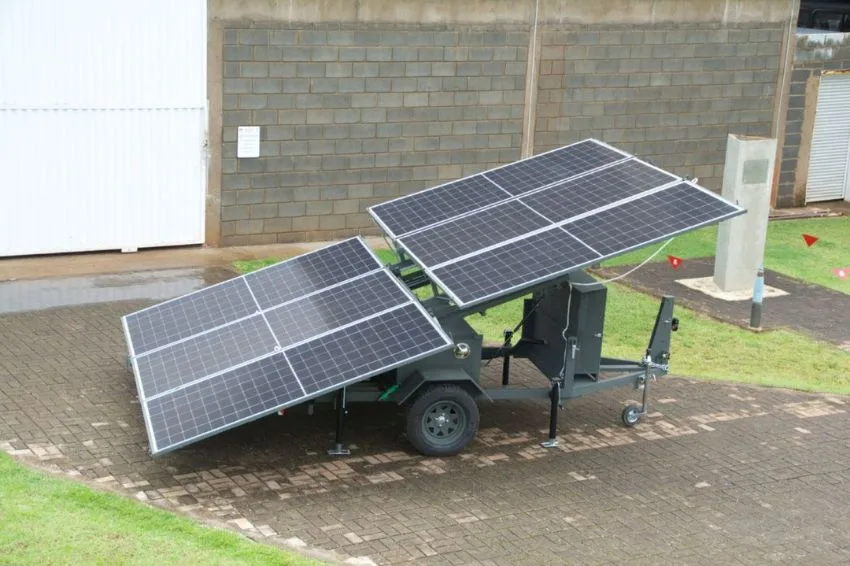
The equipment, named MEC (Campaign Energy Module), was developed to provide renewable electrical power in military operations and camps.
The MEC consists of six 610 Wp photovoltaic panels and a 20 kWh energy storage system based on lithium batteries.
The entire assembly is mounted on a small trailer, which facilitates transport and allows for rapid deployment in different operating scenarios.
Four prototypes from the Ministry of Communications (MEC) will be used in mobilizations by different military organizations, addressing needs such as communications, lighting, and other critical equipment. After the field testing phase, the system will undergo further evaluation for possible final adoption by the Armed Forces.
“By providing renewable energy to troops deployed in the field, the need for fuel supplies for generators is eliminated, increasing the energy autonomy of the units employed and reducing the exposure of supply convoys,” said Luís Cláudio Brion Cardoso, Director of Engineering Material and Brigadier General.
Investments in the solar sector are already a reality in the Brazilian Army
all the content of Canal Solar is protected by copyright law, and partial or total reproduction of this site in any medium is expressly prohibited. If you are interested in collaborating or reusing part of our material, please contact us by email: redacao@canalsolar.com.br.


Comments (1)
Comments are moderated before publication.Comments should be respectful and contribute to a healthy debate. Offensive comments may be removed. The opinions expressed here are those of the authors and do not necessarily reflect the views of the author. Canal Solar.
A race against time. I see the urgency in applying knowledge of hydrogen production via photovoltaic energy and storing energy in this fuel (in the army's BECs), which is easily converted into electrical energy.