
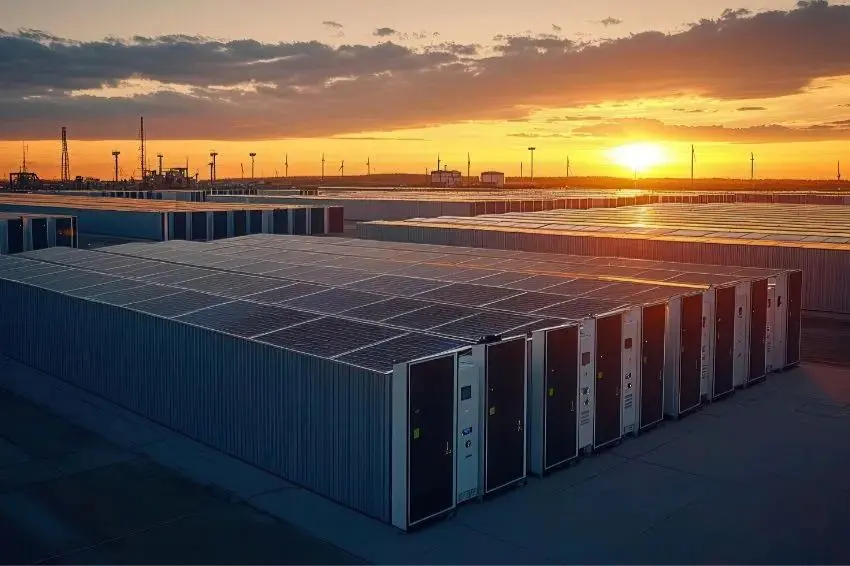
EPE (Energy Research Company) has scheduled the workshop “Integration of BESS into Transmission Planning – Increasing the Reliability of Feijó and Cruzeiro do Sul” for next Monday, the 27th, with transmission via YouTube starting at 14:30 PM.
At the meeting, which is part of a public hearing and consultation phase, EPE will present the results of electrical and environmental studies that validate the integration of battery energy storage systems (BESS) as the most efficient alternative for the region.
With the participation of representatives from the MME (Ministry of Mines and Energy), ANEEL (National Electric Energy Agency) and ONS (National System Operator), the workshop will function as a technical forum to define the guidelines and business models that will underpin future auction notices for these assets.
Feijó-Cruzeiro do Sul
The transmission system serving the Rio Branco – Feijó – Cruzeiro do Sul axis is one of the most complex infrastructure projects in the Amazon. With a total length of approximately 639 km and supported by 1.222 towers, this power line connects the far west of Acre to the SIN (National Interconnected System).
Commercial operations began in December 2024, under the responsibility of Transmissora Acre, which allowed for the shutdown of diesel-fired thermoelectric plants and generated an estimated annual savings of R$ 240 million for the CCC (Fuel Consumption Account).
Despite this progress, the network configuration is of the "radial" type, meaning it functions as an edge of the system. Due to the great length of the lines and the low inertia at the edge of the state, the region has faced instabilities and interruptions in supply since its interconnection.
Grid-forming
To remedy these shortcomings, EPE recommends the installation of large-scale batteries at the Feijó and Cruzeiro do Sul substations.
The technological distinguishing feature of this project is the requirement for inverters. grid-formingUnlike conventional systems, this technology can autonomously "create" the voltage and frequency reference for the grid.
This will allow the region to operate in a stable, isolated manner in case of a contingency on the main line coming from Rio Branco, maintaining local service until the main supply is restored.
The modernization plan will be accompanied by a structural reinforcement of R$ 694,7 million, which includes new lines and the coordinated integration of batteries to prevent blackouts at the most remote point in the system.
Laboratory
The initiative in Acre is considered by EPE as a technological milestone and an experiment for transmission planning in Brazil.
The proposal will serve as a practical experiment for the large-scale application of BESS systems in other critical endpoints of the national network, such as in the states of Amapá and Roraima.
The success of this model should also provide input for defining future remuneration rules for storage assets in transmission and consolidate the reliability strategy for isolated or remote regions of the National Interconnected System (SIN).
all the content of Canal Solar is protected by copyright law, and partial or total reproduction of this site in any medium is expressly prohibited. If you are interested in collaborating or reusing part of our material, please contact us by email: redacao@canalsolar.com.br.