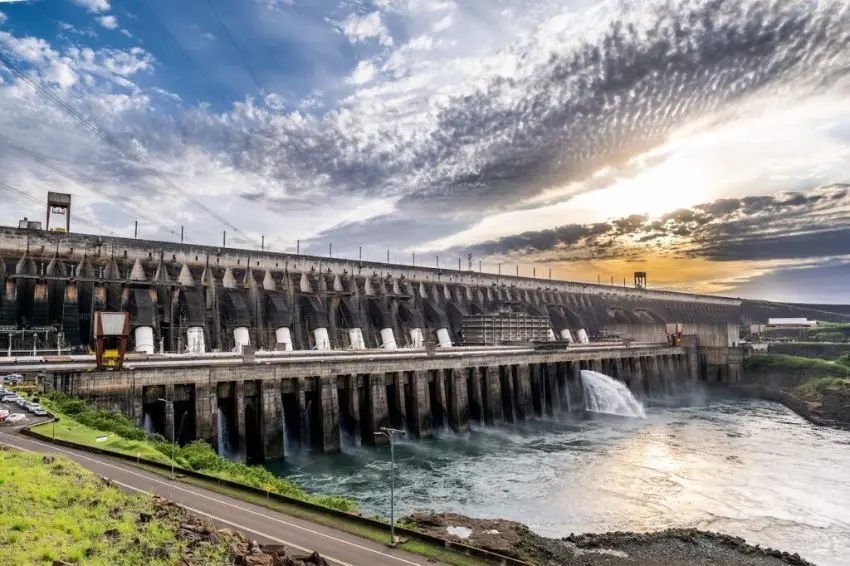
The advancement of El Niño should favor hydroelectric generation and keep energy prices under downward pressure in the short term, according to data from a new thematic report published by XP Research.
According to the institution's assessment, the above-average rainfall expected over the Southern and Paraná river basins tends to contribute to the replenishment of the Itaipu Hydroelectric Power Plant and the reservoirs of the Southeast/Central-West subsystem, responsible for approximately 70% of the storage capacity of the SIN (National Interconnected System).
With improved hydrological conditions, downward pressure is expected on the PLD (Price of Settlement of Differences), a benchmark for short-term operations in the energy market. XP classifies the utilities sector, which includes electricity companies, as one of the most exposed to the effects of the climatic phenomenon.
The report highlights that El Niño affects three of the main factors influencing the performance of power generators: energy demand, reservoir levels, and market prices.
On one hand, higher temperatures increase the use of air conditioning and refrigeration systems, raising the load on the electrical system. On the other hand, increased rainfall improves water inflows and reduces hydrological risk, expanding the availability of hydroelectric generation.
According to XP, the positive effect of hydrology should prevail over the growth in load demand in the coming months.
The market has already lowered its projections.
According to XP, the impact is already appearing in energy futures contracts. The report states that prices traded on the BBCE (Brazilian Energy Trading Platform) were revised downwards between the end of May and the end of June.
The projected average price for the third quarter of 2026 fell by 29%, while the value for the fourth quarter decreased by 12%. For maturities starting in the first quarter of 2027, the variation was between 1% and 3%.
XP explains that this difference reflects the concentration of the effects of rainfall on the current dry season, while 2027 prices remain contingent on the performance of the next wet season.
At the time of the report, the 2026 price traded on BBCE was R$ 241/MWh, a value 31% lower than the R$ 347/MWh considered in XP's models. In the third quarter, the difference reached 52%.
Effect on generators
The drop in prices could affect the results of power generators that still have significant volumes of uncontracted energy in 2026. According to XP, the average open position of the companies monitored by the institution is only 2%.
This means that, on average, 98% of the energy available for sale in 2026 is already contracted, leaving a small portion exposed to price variations in the short-term market.
Among the companies, Axia Energia appears as the most exposed, with 19% of its energy balance uncontracted for the year. Engie Brasil and Cemig are practically fully contracted, reducing the effect of short-term market fluctuations.
Auren, on the other hand, holds a short position and could benefit from lower prices in the short-term market. Despite the occasional risk for some companies, XP believes that the impact of El Niño should remain concentrated in the short term, without altering investment theses based on long-term price prospects.
Check out the full XP report by clicking here. link.
all the content of Canal Solar is protected by copyright law, and partial or total reproduction of this site in any medium is expressly prohibited. If you are interested in collaborating or reusing part of our material, please contact us by email: redacao@canalsolar.com.br.