
The Brazilian renewable energy market is going through a new phase. After years marked by the expansion of solar power generation, the sector is now facing challenges related to system flexibility, the utilization of the energy produced, and the reliability of supply.
According to EPE (Energy Research Company), the installed capacity of photovoltaic solar generation in Brazil reached 64,8 GW in 2025. This growth increases the source's share in the electricity matrix, but also highlights a structural issue: solar generation is mainly concentrated during the day, while periods of highest electricity demand do not always coincide with peak production times.
In this scenario, energy storage becomes relevant. Batteries allow for the storage of some of the electricity produced during periods of higher generation and its later use, helping to reduce the mismatch between supply and demand.
Beyond residential use, the technology is beginning to gain traction in commercial and industrial applications, as well as in larger-scale projects. In Brazil, regulatory discussions regarding the role of energy storage systems in the electricity sector are also placing the topic at the center of debates about the next phase of the energy transition.
Storage advances alongside renewable energy generation.
The increased participation of renewable sources makes flexibility an increasingly important element for the operation of the electrical system. In this context, storage systems can contribute both to harnessing solar generation and managing electricity consumption.
In homes, for example, surplus energy produced during the day can be stored for use during periods of lower solar generation. In businesses and industrial facilities, batteries can also be used in consumption management strategies and to increase energy availability.
This movement is occurring in parallel with the development of the Brazilian regulatory framework for energy storage. Recent initiatives and discussions involving the integration of batteries into the electrical system indicate a growing interest in the technology, although the market is still in the process of being structured.
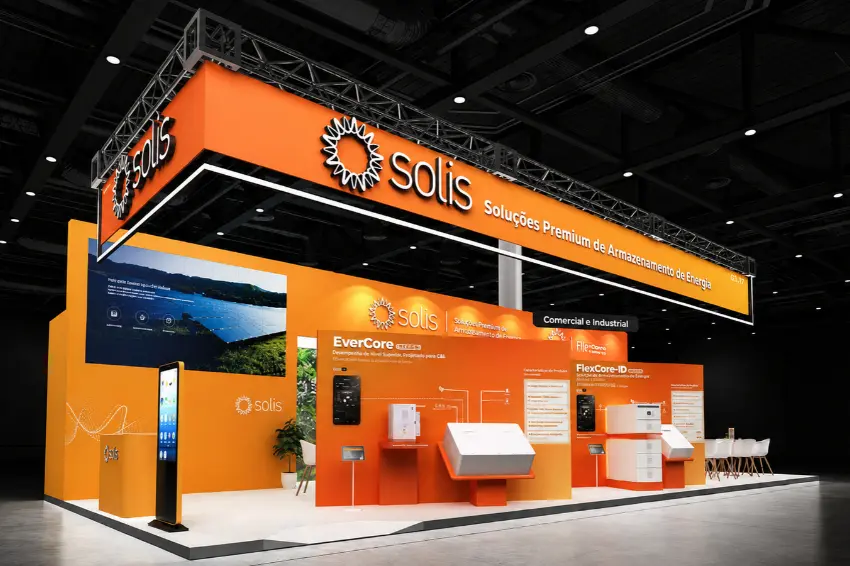
Solis presents its storage portfolio in São Paulo.
Solis will be showcasing various storage systems designed for residential, commercial, industrial, and larger-scale applications at Intersolar South America 2026 in São Paulo.
Among the equipment aimed at the residential segment are the IntelliHouse 5 kWh and the S6-EH2P7.5K02 hybrid inverter. The goal is to allow the storage of surplus energy generated by solar systems and expand the use of locally produced energy.
For commercial and industrial applications, the company will present the S6-EH3P50K-H and S6-EH3P75K-LV-H models, aimed at installations such as factories, commercial buildings, and other larger consumer units.
In these cases, storage can be integrated with solar power generation and energy management systems, allowing for greater control over consumption and the use of the electricity generated.
Larger-scale systems
The expansion of renewable energy generation also increases the potential demand for systems capable of operating in larger-scale projects. In this segment, Solis presents the EverCore 261 kWh and FlexCore-ID 261 kWh solutions.
The systems utilize a modular architecture and can be configured according to the needs of each project. Possible applications include larger commercial and industrial facilities and projects related to renewable energy generation.
The adoption of these systems is associated with a broader industry trend: combining renewable generation and storage to increase the flexibility of electricity supply.
The Brazilian market enters a new phase.
The advancement in energy storage comes at a time when the Brazilian electricity sector needs to manage a growing share of sources whose production varies according to natural conditions.
In the case of solar energy, concentrating generation during the daytime creates opportunities for storage to shift some of that energy to other times. Therefore, the technology is no longer seen exclusively as an alternative for situations of supply interruption and is becoming part of discussions about energy management and system operation.
The speed of adoption, however, will depend on factors such as regulation, equipment costs, business models, and access to the electricity market.
Solis participates in Intersolar South America 2026
Intersolar South America 2026 will be held from August 25th to 27th at Expo Center Norte in São Paulo. The event brings together companies and professionals from the solar energy, storage, and energy transition-related technology sectors.
Solis will be at booth G3.17, where it will present its line of storage solutions for different application profiles.
This participation comes at a time of expanding debate about the role of batteries in the Brazilian energy system and how storage can contribute to integrating an increasingly larger share of renewable generation.
all the content of Canal Solar is protected by copyright law, and partial or total reproduction of this site in any medium is expressly prohibited. If you are interested in collaborating or reusing part of our material, please contact us by email: redacao@canalsolar.com.br.


Comments
Comments are moderated before publication.Comments should be respectful and contribute to a healthy debate. Offensive comments may be removed. The opinions expressed here are those of the authors and do not necessarily reflect the views of the author. Canal Solar.