
The SNM (National Meteorological System) issued for the first time in history, last Thursday (27), a water emergency alert in most of the central region of Brazil. The document predicts the lowest volume of rainfall for the hydrographic region of the Paraná Basin, which covers the states of Minas Gerais, Goiás, Mato Grosso do Sul, São Paulo and Paraná for the period from June to September 2021.
Last Friday (28), the Cantareira System operated at 48% of capacity. In the same period in 2013 – a time before the water crisis – capacity was 59%. The data are from Sabesp (Basic Sanitation Company of the State of São Paulo).
Amid this worrying scenario, the possibility of energy rationing is raised. However, the Minister of Mines and Energy, Bento Albuquerque, stated that There is no risk of this happening this year. “Everything indicates that the situation is under control,” he said in an interview with the newspaper O Globo.
However, experts in the electricity sector told the Canal Solar that the minister's speech is strange. Furthermore, they emphasized that renewables are essential to face the crisis. "The minister's statement generates a certain amount of distrust. Could it be that he wants to preserve the government's political image, mitigating the critical scenario that is presented?", asked Dirceu Ferreira, an expert in energy generation and distribution.
“However, regardless of what he said, the present scenario may have been influenced by the pandemic, in which people are trapped in their homes, increasing consumption, not only of electricity, but also of water”, he explained.
According to Ferreira, trivial actions – such as putting thermal plants into operation – became the most practical solution in the short term. “Now, what could be underway is massive energy planning for renewable sources. There is an appeal for this, from environmental preservation to incentives to reduce taxes. The sector calls for an effective and active policy”, he concluded.
Bernardo Marangon, a specialist in electricity markets, also shares this premise and emphasized the very delicate moment the country is going through. “If in Bento Albuquerque’s view there is no risk of rationing for this year, the risk could increase for 2022 if we do not have the next favorable wet period.”
“In this sense, any initiative that contributes to more electricity generation will be welcome. Furthermore, at this moment, the benefit of DG (distributed generation) is clear, not only for those who install it but also for the entire market”, he highlighted.
Learn more: Government adopts new measures to prevent worsening of the water crisis
Still according to Marangon, the bottleneck experienced by developers of centralized generation projects in relation to the network's flow capacity is also clear, which makes the expansion of these sources difficult.
“I believe that a more rational use of the network is important. In this case, regulation aimed at large energy storage is essential. Furthermore, we need to work on better signaling during rush hours, which has occurred in the afternoon,” he pointed out.
In short, he believes that institutions should focus more on planning the system, considering all possible alternatives and improvements in economic signals for consumers and generators.
More reviews
Paulo Freire, a specialist in grounding and SPDA (Electrical Discharge Protection System) for large plants, sees the minister's speech as a political statement, not based on facts.
“The truth is that with global warming the rainfall regime has been altered and we have been experiencing, for years now, a chronic crisis in our hydroelectric generation, due to low water levels in the reservoirs, which are unable to recover from the dry period during the rainy season”, he explained.
“The Brazilian model of energy generation is based on hydroelectric plants. We must face the fact that this generation base needs to be diversified, as national demand grows and hydroelectric plants are no longer capable of meeting the base demand, with complementation through gas-fired thermal plants – less polluting than than coal or oil thermal plants”, said Freire.
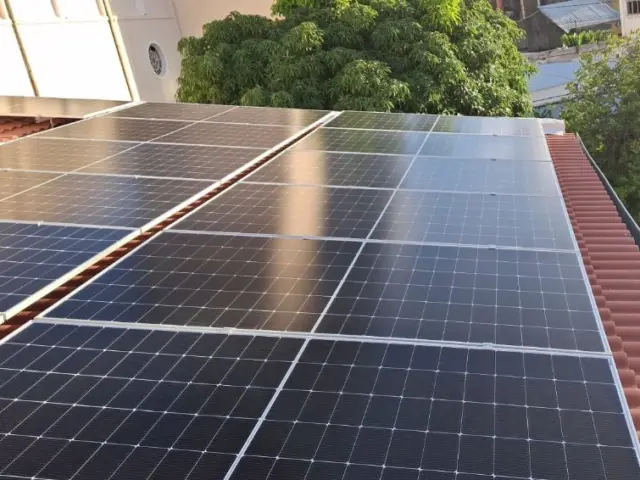
The expert also highlighted that this vision reinforces the need for investment in alternative generation plants (wind, UHE, UFV and biomass) – which will allow for lower consumption of fossil fuels and the preservation of water in reservoirs.
Water situation in the country
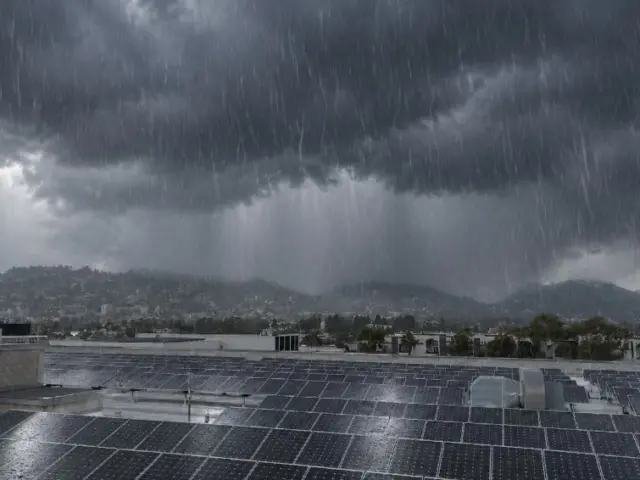
According to a survey carried out by SNM, the analysis of rainfall between October 2019 and April 2021 for the Paraná River basin indicates that – with the exception of a few months when rainfall was above the climatological average (December/2019, August/2020 and January/2021) – during most of the period there was a predominance of precipitation deficit, especially from February 2021 onwards.
This condition continued in May, with a partial accumulation of 27 millimeters for the basin, that is, below the climatological accumulation of 98 millimeters. “Analyzing the standardized precipitation index, which indicates deficit or excess for different time scales, it is concluded that in most of the Paraná River basin the situation is between moderate and extreme – considering both the last 6 and 12 months, as well as the last 48 months. In other words, the current situation of precipitation deficit is severe,” said the SNM in a note.
For the months of June, July and August, the forecast indicates little rainfall across the basin. According to the alert issued, this estimate is consistent with that of other international climate prediction centers.

Comments
Comments are moderated before publication.Comments should be respectful and contribute to a healthy debate. Offensive comments may be removed. The opinions expressed here are those of the authors and do not necessarily reflect the views of the author. Canal Solar.