
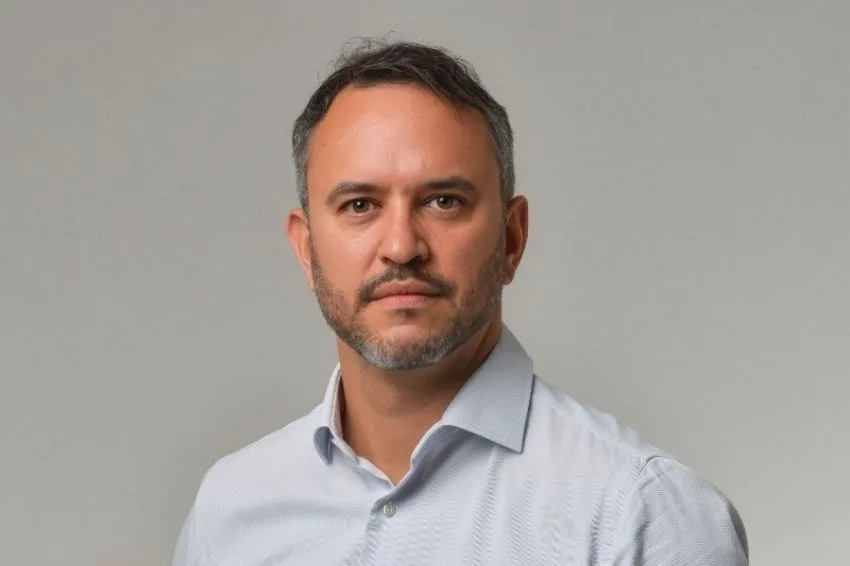
Energy has ceased to be merely an economic input and has become one of the main factors of power on the international stage. This assessment comes from Hudson Mendonça, CEO of the Energy Summit, who sees the energy transition, the expansion of artificial intelligence, and global conflicts repositioning the sector at the center of geopolitical decisions.
In an interview with Canal Regarding Solar, the executive highlighted that, for decades, energy investments were primarily guided by economic logic (CAPEX, return, and amortization period), while political risks were considered only as an adjustment factor.
However, according to him, this reasoning is changing. “Before, investors analyzed costs and financial returns and only then assessed the country's stability. Today, the logic is the opposite: the decision begins with geopolitics. If the environment is safe, then economic viability is calculated,” he says.
According to Mendonça, this shift in thinking gained even more momentum after recent events such as the war in Ukraine, tensions surrounding the supply of Russian gas to Europe, and disputes over critical minerals—factors that highlighted how energy dependence can compromise national and economic security.
Artificial intelligence increases pressure for energy.
Another element that reinforces the strategic importance of energy, according to the CEO of Energy Summit, is the global race for AI (Artificial Intelligence). According to Mendonça, the expansion of data centers is not limited by technology or human capital, but primarily by the availability of electricity.
“The growth of AI today is much less a discussion of information technology and much more a discussion of energy. The main bottleneck is where there is electricity available on a large scale,” he explains.
In this context, Brazil emerges as one of the best-positioned countries, according to the executive. "We are a country with a huge competitive advantage, with a large supply of energy and a clean electricity grid. This naturally puts us on the radar for global investments."
Recent announcements of billion-dollar data center projects in the country, such as those from the social network. TikTok, reinforce this trend. Still, Mendonça believes that the opportunity is not automatic and depends on planning and predictability.
According to him, the Brazilian electrical system still faces structural challenges, such as fluctuations between excess generation in some regions and scarcity in others, in addition to regulatory issues. "To attract large-scale investments, it is essential to guarantee legal certainty and energy predictability. After all, these projects cannot risk interruptions in supply," he emphasizes.
Geopolitical neutrality as an advantage
Beyond energy availability, Brazil's diplomatic position is also considered strategic. Mendonça highlights that the country maintains significant trade relations with both Western powers and China, without rigid alignment to political blocs. "This historical neutrality places Brazil in a privileged position on the global stage," he assesses.
According to him, international investors seek stable and predictable environments, even if they don't offer the highest possible financial return. "Today, many decisions prioritize lower risk over higher profitability. A project may be economically attractive, but unfeasible if there is political or legal instability," he adds.
Another key point is that transformations in the energy sector are increasingly influenced by factors external to the industry itself, such as industrial decisions, climate policies, technological choices, and changes in consumption patterns.
According to Mendonça, the trend is for energy to remain at the center of geopolitical disputes in the coming decades. "Energy has become a major geopolitical discussion, and geopolitics, to a large extent, has become an energy discussion," he concludes.
Energy Summit seeks to integrate these discussions.
In 2026, the Energy Summit will reach its third edition. The event, held in partnership with MIT (Massachusetts Institute of Technology), brings together authorities, executives, investors, and experts from Brazil and abroad to discuss the future of energy from an integrated perspective. Unlike events focused on a single source, such as solar, oil, or nuclear, the Energy Summit It stands out for addressing the energy system in a broader way.
This year's edition will feature a unique addition: an expanded exhibition area where companies, governments, and institutions will present projects and solutions at the technological forefront. "The idea is to offer a comprehensive overview to support investment and planning decisions. The energy sector is increasingly interconnected with other areas of the economy," explains Mendonça.
The 2026 edition is scheduled to take place between June 23rd and 25th at Marina da Glória Eventos, in Rio de Janeiro (RJ), with a full day of programming, including panels, presentations, and networking among industry leaders. More information can be found at [website address - not provided in the original text]. official website from the Energy Summit.
You might be interested!
Energy, electricity and sovereignty: the new map of power in the 21st century.
all the content of Canal Solar is protected by copyright law, and partial or total reproduction of this site in any medium is expressly prohibited. If you are interested in collaborating or reusing part of our material, please contact us by email: redacao@canalsolar.com.br.



Comments
Comments are moderated before publication.Comments should be respectful and contribute to a healthy debate. Offensive comments may be removed. The opinions expressed here are those of the authors and do not necessarily reflect the views of the author. Canal Solar.