
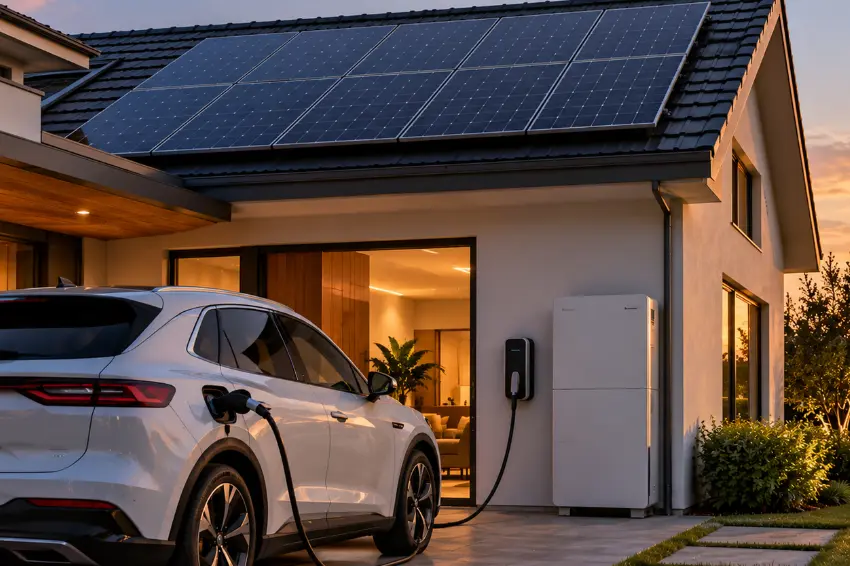
Germany's energy regulator, the Bundesnetzagentur, has approved new rules allowing electric vehicle owners to use their car batteries to power their homes or feed electricity back into the grid. This measure paves the way for expanding the use of vehicle-to-grid (V2G) technology in the country.
The decision, announced this Thursday (1st), establishes new conditions for integrating storage systems and charging points into the electricity market. According to Reuters, the rules were defined after the regulatory body revised a previous proposal in response to criticisms presented by the sector.
Integration with solar energy
One of the key points of the decision involves consumers who own subsidized photovoltaic systems in Germany.
Until then, the country's rules made it difficult to store, in the same battery, the energy produced by solar panels and electricity drawn from the grid without compromising the incentives provided by the German program to support renewable energies.
The decision, called MiSpeL, an acronym used by the regulator for Integration of the Storage and Charging Point Market, seeks to remove this obstacle.
With the new structure, electric vehicle owners will be able to charge their batteries with the surplus energy produced by the photovoltaic panels during the day and use the electricity later to meet their household consumption needs.
It will also be possible to charge the vehicle using electricity from the grid during periods of lower prices and use that energy later or inject it back into the electrical system, maintaining EEG support for the portion of renewable energy that meets the program's criteria.
Measurement every 15 minutes
To make the model viable, it will be necessary to identify the origin and destination of the electricity stored in the batteries. The new regulation establishes accounting methods based on meter readings at 15-minute intervals.
The mechanism will allow for differentiation between electricity produced by the solar system and electricity drawn from the grid and subsequently stored. This separation will be necessary to determine which volumes of energy remain eligible for the payments stipulated by the EEG.
The regulation also establishes a transition period until September 30, 2027. During this interval, implementation will depend on the approval of the operators responsible for the network and metering.
According to Reuters, the period was established to give these companies time to adapt their information technology, measurement, and billing systems to the new rules.
all the content of Canal Solar is protected by copyright law, and partial or total reproduction of this site in any medium is expressly prohibited. If you are interested in collaborating or reusing part of our material, please contact us by email: redacao@canalsolar.com.br.


Comments
Comments are moderated before publication.Comments should be respectful and contribute to a healthy debate. Offensive comments may be removed. The opinions expressed here are those of the authors and do not necessarily reflect the views of the author. Canal Solar.