

The Federal Association of the Solar Industry (BSW-Solar) published, this Friday (19), the new decision of the Federal Council, which should reduce bureaucracy in the regulations of the tax on electricity.
Through tax simplifications, users and operators of power plants, storage systems, and charging stations should benefit from tax exemptions under certain conditions.
Bidirectional charging
Among the new revisions, BSW highlights the importance of an unprecedented decision: the creation of a unified installation concept valid for all electricity tax law, in addition to considering bidirectional charging.
Under the new rules, bidirectional charging should be exempt from potential double taxation, provided that the electricity returned by the vehicle remains at the customer's facility and is not allowed to be injected back into the public grid.
The new regulation also redefines the attribution of final consumption for the purposes of the electricity tax, now considering it as carried out by the charging station operator, and not by the vehicle.
Progress in the storage sector
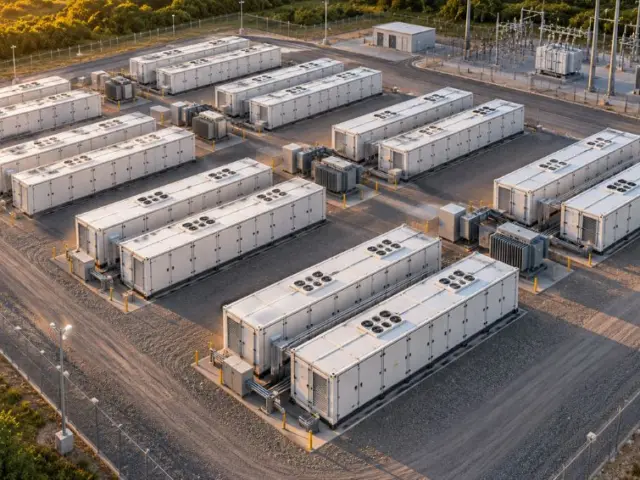
According to the Federal Association of the Solar Industry, one of the advances within the new revision is the relaxation of the right to build for battery storage systems.
The importance of these systems has already been discussed by the association itself and by the energy sector. The expectation is that the new rules will be implemented as quickly as possible, bringing agility to the sector.
Another important advancement is the new method for calculating charges on these systems. Multi-purpose storage systems, for example, will be proportionally exempt from the tax on energy input, in the same proportion as they return stored electricity to the public supply grid.
Germany begins construction of the country's largest battery storage facility.
“It is now explicitly clarified that electricity that would be tax-exempt without storage remains tax-exempt even after storage. Until now, this was not clearly regulated and, in some cases, could lead to effective double taxation of stored electricity quantities,” comments Carsten Körnig, CEO of BSW-Solar.
Relief for solar power plant operators
Currently, operators of solar power plants with a capacity above two megawatts are classified as energy suppliers, which implies bureaucratic obligations. With the new legislation, these systems will no longer be considered suppliers, reducing bureaucracy.
With the new flexibility, so-called "small suppliers" will be exempt from declaring their tax-exempt electricity quantities annually, with the declaration only being necessary when required by the customs authority.
Tax exemption for "cross-deliveries"
Solar and wind farms will also benefit from a general exemption on energy generation, without the need for formal authorization. The measure applies to both self-consumption and cross-deliveries, as long as they are within the same injection infrastructure.
“With the revision of the law, a unified concept of installation is created for the first time for all electricity tax purposes, based on generation by the same operator, using the same technology, in the same location,” explains Körnig.
all the content of Canal Solar is protected by copyright law, and partial or total reproduction of this site in any medium is expressly prohibited. If you are interested in collaborating or reusing part of our material, please contact us by email: redacao@canalsolar.com.br.




Comments
Comments are moderated before publication.Comments should be respectful and contribute to a healthy debate. Offensive comments may be removed. The opinions expressed here are those of the authors and do not necessarily reflect the views of the author. Canal Solar.