
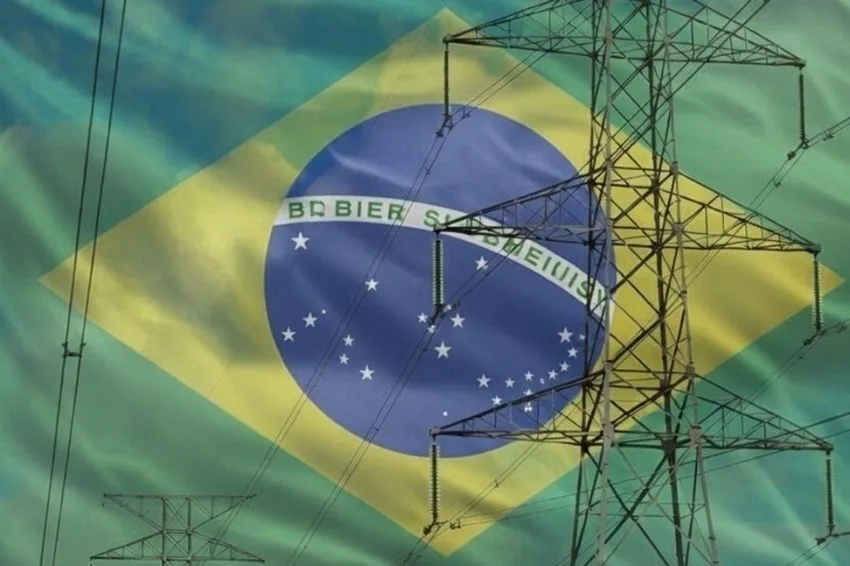
The Brazilian electricity sector remains among the most important in Latin America. On January 1, 2026, the The country surpassed 217 GW. of installed capacity in centralized power plants, according to data from SIGA (Generation Information System of ANEEL).
Of this total, 84,63% of the installed capacity comes from renewable sources, with a strong presence of hydroelectric, wind, solar and biomass power, reinforcing Brazil's leading role in the energy transition.
In 2025, the country added 7,403 GW of new capacity, with 136 new power plants coming online. For 2026, the projection is for an additional 9,142 MW, representing a 23,4% increase compared to the previous year.
What is the SIN (National Interconnected System)?
O SIN (National Interconnected System) It is the vast network that connects virtually all of Brazil's electricity generation and consumption. It integrates power plants, transmission lines, and load centers from the country's five regions, allowing energy produced in one location to be consumed in another in a coordinated manner.
Over 99% of the national electricity load is connected to the SIN (National Interconnected System). Only a few isolated systems, mainly in remote areas of the Northern Region, operate outside this structure.
How the SIN works in practice
- Energy is generated by different sources (hydroelectric, wind, solar, thermal and biomass);
- This energy enters the high-voltage transmission lines;
- O ONS (National Electric System Operator) It coordinates, in real time, which power plants should generate, how much to generate, and where the energy should flow;
- The goal is to ensure security of supply, lower overall cost, and a balance between supply and demand.
Thanks to the SIN (National Interconnected System), Brazil is able to compensate for periods of drought in one region with increased generation in another, reducing the risk of blackouts and optimizing the use of reservoirs.
Organizational chart of the Brazilian electricity sector
Brazil's electricity sector is structured in well-defined levels that complement each other and ensure a balance between political decisions, technical regulation, and efficient operation.
Political level and guidelines
This is where the strategies and major decisions of the sector are defined.
- CNPE (National Energy Policy Council)
An advisory body directly linked to the Presidency of the Republic. It formulates the strategic guidelines for the national energy matrix. - MME (Ministry of Mines and Energy)
It is the main federal government agency for the electricity sector. Responsible for implementing public policies, ensuring energy security, and granting licenses for new projects.
Level of planning and monitoring
Responsible for studying the future of the sector and monitoring security of supply.
- EPE (Energy Research Company)
Linked to the Ministry of Mines and Energy (MME), it conducts technical studies and projections, such as the National Energy Plan, which guide the expansion of generation and transmission. - CMSE (Electricity Sector Monitoring Committee)
It continuously monitors the security of the country's energy supply, assessing risks and proposing preventive measures.
Level of regulation and oversight
Ensures that the rules are followed.
- ANEEL (National Electric Energy Agency)
The regulatory body responsible for overseeing and supervising the electricity sector. It sets tariffs, establishes quality standards, applies penalties, and mediates disputes between companies and consumers.
Level of operation and market
Where the physical and commercial management of energy takes place.
- ONS (National Electric System Operator)
It coordinates the operation of the National Interconnected System (SIN) in real time. It decides which power plants generate electricity, controls transmission, and ensures the security of the electrical system. - CCEE (Electricity Trading Chamber)
It manages the energy market. It is responsible for the accounting and financial settlement of transactions, both in the regulated market (captive consumers) and in the free market.
Agents in the electricity sector
At the base of the organizational chart are the companies that perform the physical services:
- Generation (G) – Produces electrical energy.
- Transmission (T) – Transports energy at high voltage, connecting power plants to consumption centers.
- Distribution (D) – Delivers energy to the end consumer, reducing voltage and collecting payment.
- Commercialization (C) – Buys and sells energy, focusing on the free market.
Generation expansion in 2025
In 2025, the expansion of generation occurred mainly from renewable sources:
- 63 photovoltaic solar power plants – 2.815,84 MW
- 43 wind farms – 1.825,90 MW
- 15 thermal power plants – 2.505,77 MW
- 11 small hydroelectric power plants (SHPs) – 199,34 MW
- 1 hydroelectric power plant – 50 MW
- 3 hydroelectric power plants – 6,7 MW
The new plants have started operating in 17 states, most notably Rio de Janeiro, Bahia, and Minas Gerais.
Predominant sources and technological advances
Brazil's electricity grid maintains a strong predominance of renewable sources, with accelerated growth in solar and wind power, which diversifies generation and reduces dependence on hydroelectricity.
The operation of power plants and the National Interconnected System (SIN) is increasingly supported by digital systems, smart metering, and real-time monitoring, increasing the efficiency and reliability of supply.
Challenges and opportunities
Hydropower dependence
The high reliance on hydroelectric power necessitates strategies to cope with prolonged periods of drought.
Transmission expansion
The integration of new renewable power plants requires continuous investments in transmission lines and substations.
Innovation and storage
Technologies such as batteries, smart grids, and distributed generation are fundamental to the future of the sector.
Conclusion
In 2026, the Brazilian electricity sector will have a robust, organized, and expanding structure, with 215,9 GW of installed capacity, of which 84,63% will come from renewable sources.
The integrated action of bodies such as CNPE, MME, EPE, ANEELThe National System Operator (ONS) and the Chamber of Electric Energy Commercialization (CCEE), together with the functioning of the National Interconnected System (SIN), guarantee energy security, predictability, and conditions for the sustainable expansion of the electricity matrix, even in the face of climate and infrastructure challenges.
all the content of Canal Solar is protected by copyright law, and partial or total reproduction of this site in any medium is expressly prohibited. If you are interested in collaborating or reusing part of our material, please contact us by email: redacao@canalsolar.com.br.


Comments
Comments are moderated before publication.Comments should be respectful and contribute to a healthy debate. Offensive comments may be removed. The opinions expressed here are those of the authors and do not necessarily reflect the views of the author. Canal Solar.