
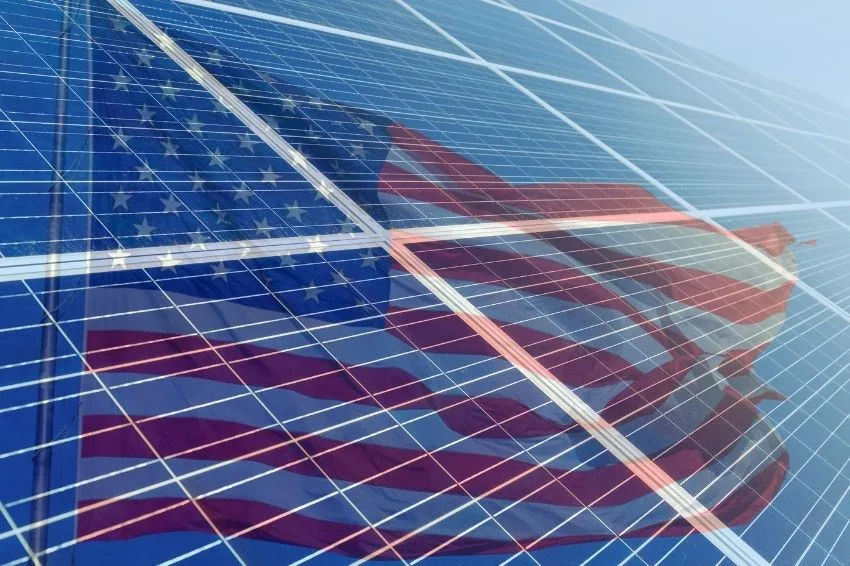
MIAMI, FLORIDA. Since taking office in January of this year, US President Joe Biden has taken initiatives that demonstrate his commitment to investing in a green economy with a focus on renewable energy and reducing polluting gas emissions.
One of the Democratic president's first initiatives was to bring the United States back into the Climate Agreement. His predecessor, Donald Trump, had withdrawn the United States from the treaty signed by nearly 200 countries to reduce carbon emissions. Biden announced a goal of cutting greenhouse gas emissions by 50% by 2030. To achieve this goal, he needs to invest in the development of renewable energy sources, such as solar energy.
According to industry experts, in order to achieve this goal, the current number of workers in the solar energy industry needs to quadruple, which currently stands at 250. “We now have the opportunity to quadruple our workforce by diversifying and expanding solar energy to underserved communities. This is an important boost for companies in the sector to strengthen themselves,” says Abigail Hopper, CEO of the Solar Energy Industries Association.
Although the cost of installing solar energy systems has fallen in recent years in the United States, the investment is still very high. “Costs have fallen dramatically, but market barriers and challenges in integrating the energy grid are still obstacles to the expansion of the sector in the United States,” the government reports.
In March of this year, the Biden administration set a goal of reducing the cost of installing solar energy by up to 60% by 2035. To achieve this, the government will invest $128 million in technology to use perovskite-based photovoltaic solar cells, instead of silicon as is currently widely used in the American market.
Solar energy in the USA
According to the US Department of Energy, between 2008 and 2021, the country increased its solar power generation by 97,2 GW, enough to power 18 million American homes. Despite this progress, today only 3% of homes have solar power.
The government expects that by 2030, one in seven homes will have solar panels on their roofs. California is the state that uses this type of energy the most. In 2020, more than 22.7% of the energy generated in the West Coast state came from solar energy.





Comments
Comments are moderated before publication.Comments should be respectful and contribute to a healthy debate. Offensive comments may be removed. The opinions expressed here are those of the authors and do not necessarily reflect the views of the author. Canal Solar.