
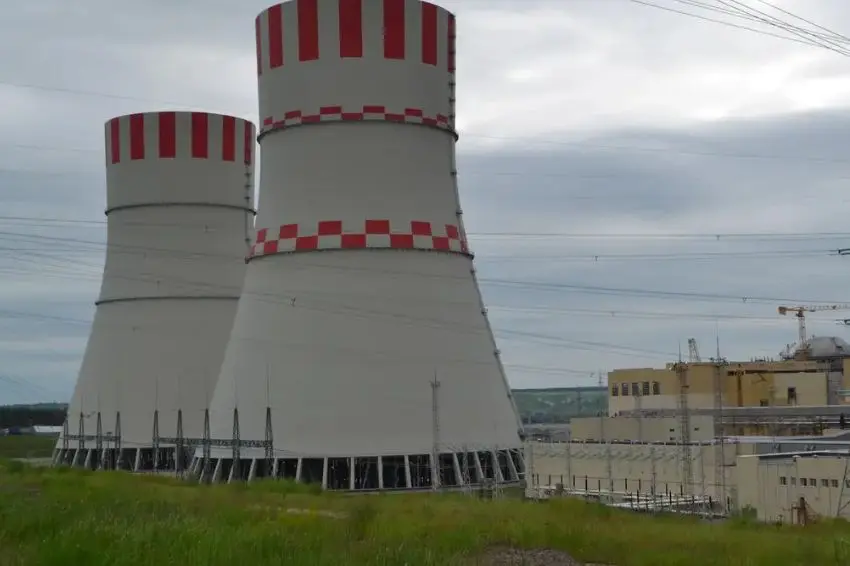
Support for nuclear power generation outweighs opposition in 23 of the 34 countries analyzed by The Nuclear Confidence Project – Global Public Opinion Report 2026. Conducted by Radiant Energy Group, the survey polled more than 26,5 people and found that 41,4% of respondents support the technology, while 28,5% oppose it.
The countries surveyed account for approximately 65% of the world's population. Despite the positive outcome, the study points to a knowledge gap regarding the role of this energy source in reducing carbon emissions, as well as concerns about safety and the time required to build new power plants.
According to ABDAN (Brazilian Association for the Development of Nuclear Activities), the results indicate greater recognition of nuclear energy as an alternative to reconcile energy security, industrial competitiveness, and decarbonization.
"The data shows that public perception of nuclear energy is evolving in several countries. What is striking is that, often, public support advances more rapidly than the energy policies themselves," says Celso Cunha, president of the organization.
Although combating climate change appears to be the main reason for building new energy sources, only 44,9% of respondents recognize nuclear power generation as a low-carbon or zero-carbon emission technology.
According to the report, this percentage is lower than that recorded for solar and wind power. Researchers classify the difference between the priority given to climate and knowledge about nuclear technology as a "climate mismatch".
According to ABDAN's assessment, the result demonstrates the need to expand access to information about the characteristics of the source and its role in the energy transition.
“Nuclear energy is already recognized by international organizations as one of the main technologies for decarbonization. The report shows that there is still a gap between technical reality and public perception,” says Cunha.
Safety and project deadlines
Reliability of supply also appears among the priorities of the surveyed population. For 40% of participants, ensuring stability and security in the energy supply is one of the main needs for the coming years.
ABDAN believes that this concern reinforces the importance of diversifying the electricity matrix, in a context of growing demand and geopolitical tensions.
"The energy debate is no longer just about the environment. Today it involves sovereignty, national security, economic competitiveness and attracting investment," says the association's president.
Support for the technology, however, coexists with concerns. Approximately 81% of those interviewed expressed some level of worry about accidents or leaks, while 62,5% showed apprehension about the construction timeline of new power plants.
More than a third of participants consider nuclear energy necessary, but admit to knowing little about how it works. According to the survey, support for this energy source is still weak in several markets.
According to the association, the results contribute to discussions about the completion of Angra 3 and the potential development of SMRs (small modular reactors) in Brazil.
Cunha argues that the country should transform its mineral reserves, technological capacity, and institutional structure into a long-term strategy for the sector.
“The world is rethinking the role of nuclear energy in its development strategy. Brazil has mineral reserves, technological expertise, established institutions, and one of the cleanest electricity grids on the planet. The question now is how to transform these advantages into a long-term energy policy,” he states.
all the content of Canal Solar is protected by copyright law, and partial or total reproduction of this site in any medium is expressly prohibited. If you are interested in collaborating or reusing part of our material, please contact us by email: redacao@canalsolar.com.br.



Comments
Comments are moderated before publication.Comments should be respectful and contribute to a healthy debate. Offensive comments may be removed. The opinions expressed here are those of the authors and do not necessarily reflect the views of the author. Canal Solar.