
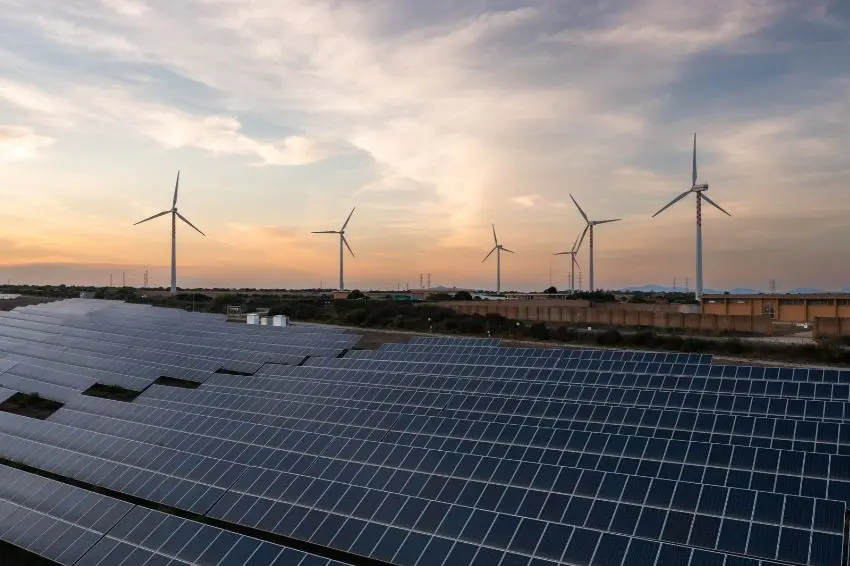
The world's installed renewable generation capacity would need to grow from the current 5,2 TW to around 38,2 TW by 2050 to align the energy transition with a trajectory compatible with limiting global warming to 1,5°C.
In this scenario, solar and wind power would supply more than 80% of the world's electricity by mid-century. These projections are based on... World Energy Transitions Outlook 2026, released this Tuesday (13) by IRENA (International Renewable Energy Agency).
The report points out that the expansion of generation needs to be accompanied by reforms in the energy system, with advances in electrification, modernization of networks, and expansion of storage and operational flexibility.
According to the agency, electricity's share of final energy consumption needs to reach 35% by 2035 and exceed 50% by 2050. Electrification powered by renewables, combined with more efficient technologies and sustainable fuels, would allow for the progressive replacement of fossil fuel-based systems and meet the growing demand.
Despite record-breaking renewable energy expansion projected for 2025, IRENA warns that investments in grids are not keeping pace. At the same time, energy efficiency gains remain below what is needed and do not offset the increased demand for electricity.
"Record growth in renewables is not enough on its own: energy efficiency is falling short of what is needed, grids are struggling to keep pace, and global energy demand continues to grow," said IRENA Director-General Francesco La Camera, in a free translation.
According to him, adding renewable capacity without transforming the structure of the energy system is insufficient to make the transition viable. "We need reforms to build the infrastructure of a new energy system that is electrified, efficient, flexible, and powered by renewables," he stated.
The agency emphasizes that networks, storage, energy efficiency, and flexibility are central components of this transformation. Without their expansion, these solutions could become bottlenecks for the integration of renewable sources and for meeting demand.
The scenario would also require annual investments of approximately US$10,3 trillion between 2026 and 2050. Most of the additional resources would be directed towards renewable generation, electricity grids, flexibility, and the electrification of end-use energy.
According to IRENA projections, a trajectory consistent with 1,5°C could deliver cumulative economic gains of around US$46 trillion by 2050, compared to the continuation of current trends.
Jobs in renewable energy could grow more than fivefold during this period, starting from just over 16 million currently. The agency also estimates that increased competitiveness in electricity markets could result in prices 15% lower for end consumers by 2050.
La Camera stressed that economic benefits need to be accompanied by social protection measures and access to opportunities generated by the transition. "The quality of the transition will be as important as its speed," she stated.
To guide governments in the next decade, the report presents seven priorities for action. The agenda covers integrated energy and markets planning, roadmaps adapted to the reality of each country, modernization of grids, industrial and investment strategies, social and environmental policies, and international cooperation.
According to IRENA, the challenge is to manage the replacement of fossil fuels in a coordinated manner, preserving supply reliability, energy security, and affordable prices while low-carbon alternatives gain scale.
all the content of Canal Solar is protected by copyright law, and partial or total reproduction of this site in any medium is expressly prohibited. If you are interested in collaborating or reusing part of our material, please contact us by email: redacao@canalsolar.com.br.



Comments
Comments are moderated before publication.Comments should be respectful and contribute to a healthy debate. Offensive comments may be removed. The opinions expressed here are those of the authors and do not necessarily reflect the views of the author. Canal Solar.