
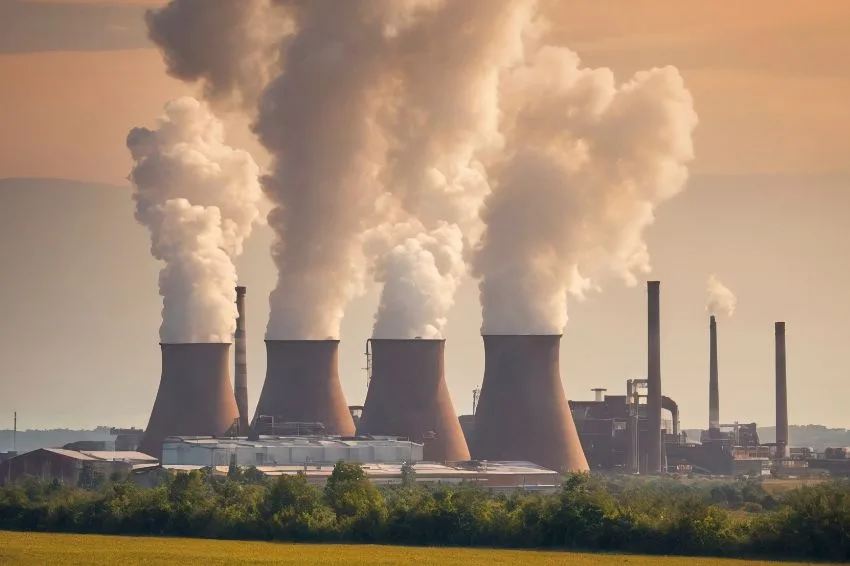
The increasing use of curtailment in the Brazilian electrical system has intensified the debate about which technology should be prioritized to guarantee additional power for the country.
According to José Wanderley Marangon, member and advisor of ABGD (Brazilian Association of Distributed Generation) and Honorary Member of ABSAE (Brazilian Association of Energy Storage Solutions), the scenario demands a broader evaluation of the paths taken in capacity auctions.
He questions whether contracting new natural gas-fired thermal power plants is the most efficient alternative. According to him, although the government had previously indicated that it would not specify a technology beforehand, this auction ended up directing the contracting towards thermal plants.
"The solution of defining the technology a priori ends up indirectly creating a preference for a certain segment, which can be considered a subsidy," he stated.
In the evaluation of MaragonThe choice also faces structural obstacles linked to the natural gas sector. He points out that Brazil has not consolidated a consistent policy for the segment, partly due to the history of the monopoly exercised by... PetroBrazil, which resulted in infrastructure gaps.
"Setting up this structure now to solve the power problem is not economically viable with the advent of new electrochemical storage technology," he pointed out.
According to Marangon, energy storage offers significant operational advantages, unlike thermal power plants, which depend on fuel and take time to reach full dispatch. Batteries can use the surplus energy from the SIN (National Interconnected System) during peak solar generation hours as input. This energy has been wasted by the ONS (National System Operator) through mandatory generation cuts, known as curtailment.
“Furthermore, in operational terms, thermal power plants need time to reach the required dispatch capacity to be more efficient, which makes them more expensive and even hinders curtailment,” he explained.
He acknowledges that technical challenges still exist, which are usually cited as obstacles to the integration of batteries known as BESS. In a system dominated by synchronous machines, inverters cannot satisfactorily respond to dynamic disturbances related to system stability.
This discussion has been led by ONS, which is responsible for the operation of the SIN (National Interconnected System) and is developing the necessary requirements for connecting BESS (Brazilian Electric System) to the system.
"The biggest problem today in the SIN (Brazilian Interconnected System) is voltage collapse, not electromechanical oscillations, which can be resolved even with the 'grid-following' technology already present in solar and wind generators. A new 'grid-forming' version is being tested in several countries and, if properly adjusted, can contribute to damping electromechanical oscillations," he concluded.
all the content of Canal Solar is protected by copyright law, and partial or total reproduction of this site in any medium is expressly prohibited. If you are interested in collaborating or reusing part of our material, please contact us by email: redacao@canalsolar.com.br.

Comments
Comments are moderated before publication.Comments should be respectful and contribute to a healthy debate. Offensive comments may be removed. The opinions expressed here are those of the authors and do not necessarily reflect the views of the author. Canal Solar.