
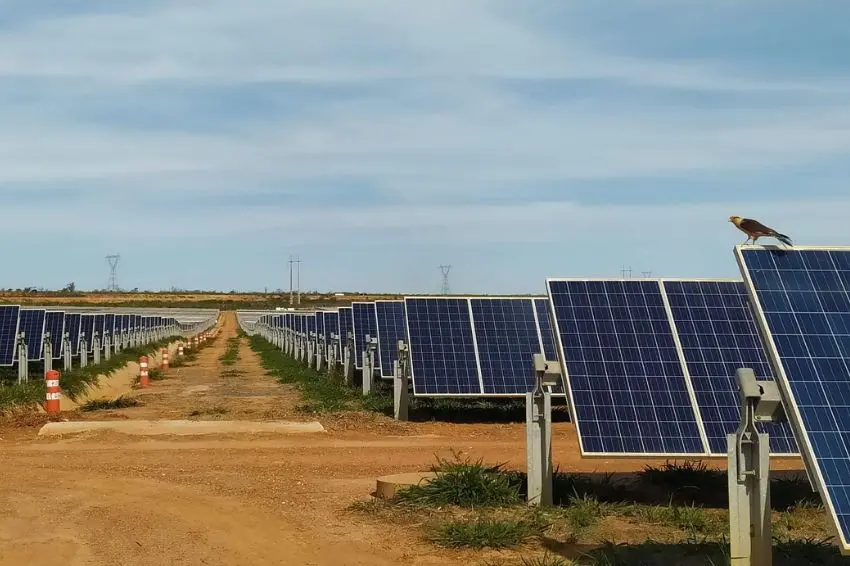
The ONS (National Electric System Operator) has updated Technical Note DPL 0031/2024, a document that describes the methodology used to estimate productivity functions for photovoltaic plants.
The review was conducted after the operator identified inconsistencies in generation calculations during certain periods of the day.
According to the operator, the update reflects changes implemented in the data filtering model used to estimate the productivity of solar power plants, especially during sunrise and sunset times.
The revised functions have already been made available for consultation on the SINtegre portal, in the file “Funcoes Prod-2026 Revisadas.zip”.
Estimation
According to the ONS (National System Operator), the inconsistency was identified in the process of estimating the productivity functions of photovoltaic plants and impacted generation calculations during the early morning and late afternoon periods in certain solar plants.
The problem was likely caused by overly conservative criteria in filtering solar irradiance data.
In practice, the system automatically discarded measurements considered valid precisely during times of lowest solar incidence, such as sunrise and sunset.
As a result, generation estimates during those times were compromised, affecting the productivity calculations of some of the plants monitored by the operator.
Corrections
After identifying the fault, the ONS (National System Operator) revised the parameters used in the model and recalculated the productivity functions of the affected power plants in the revisions for December 2025, January 2026, and February 2026. The other schedules remained unchanged.
According to the operator, the corrections were definitively incorporated in the March 2026 revision, eliminating the need for further adjustments later on.
The problem affected power plants whose productivity functions were estimated based on data from the ONS (National System Operator) Supervision and Control System.
However, plants whose agents resubmitted their information for the annual review did not experience any changes in the calculations.
Real Time
The updated technical note comes at a time of increasing relevance of solar power generation in the Brazilian electrical system, amplifying the need for precision in generation and productivity estimation models.
Productivity functions are used in various operational and monitoring processes within the electricity sector, including analyses related to photovoltaic constrained-off, a mechanism associated with operational restrictions that limit the generation of solar power plants.
With the methodological revision, ONS seeks to correct distortions identified in the calculations and increase the adherence of the models to the actual operation of the photovoltaic plants monitored by the system.
all the content of Canal Solar is protected by copyright law, and partial or total reproduction of this site in any medium is expressly prohibited. If you are interested in collaborating or reusing part of our material, please contact us by email: redacao@canalsolar.com.br.