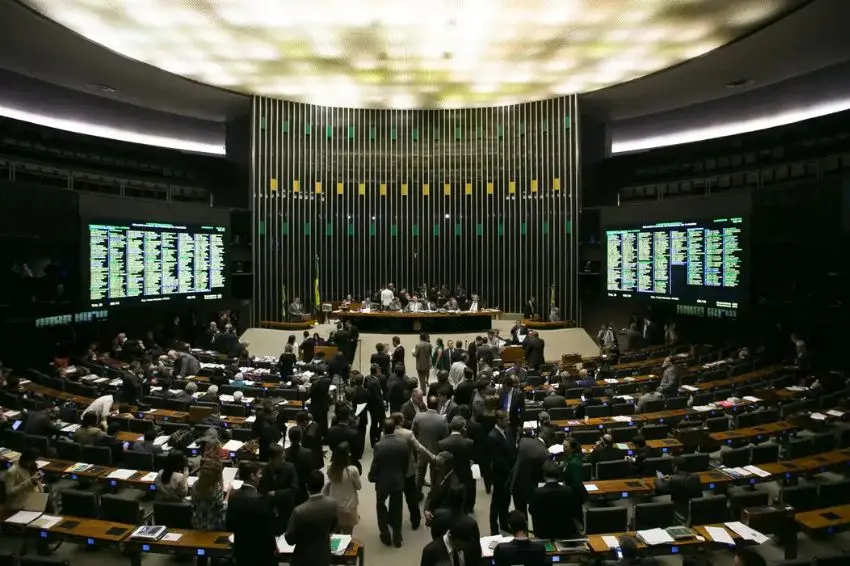

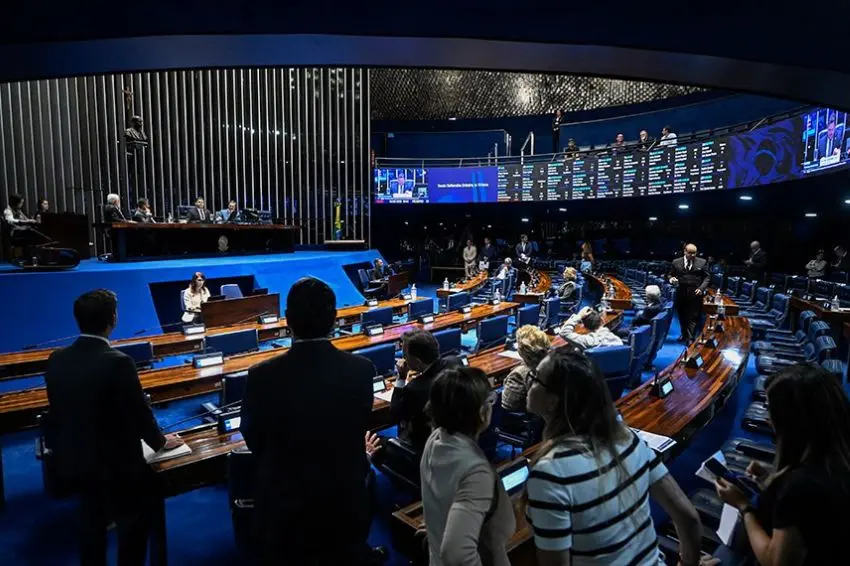
The Brazilian Federal Senate approved this week PLP (Complementary Law Project) 73/2025, which seeks to prevent the withholding of funds allocated to federal regulatory agencies. The proposal received 54 votes in favor and 17 against in the plenary session and now goes to the Chamber of Deputies for analysis.
The project, authored by Senator Laércio Oliveira (PP-SE), gained momentum after successive warnings about the impacts of budget restrictions on the oversight, regulation, and supervision activities carried out by agencies such as ANEEL (National Electric Energy Agency) and ANP (National Agency of Petroleum, Natural Gas and Biofuels).
In practice, the text amends the Fiscal Responsibility Law to prevent resources from regulatory agencies from being blocked in order to meet the Union's fiscal targets, ensuring greater predictability for the operation of these institutions.
The text was reported by Senator Marcos Rogério (PL-RO), who defended the need to ensure financial autonomy compatible with the technical independence attributed to these institutions. The vote took place a few hours after the proposal was approved by the Senate Infrastructure Committee.
During the discussions, government representatives expressed opposition to the project, arguing that the measure reduces the federal administration's flexibility in managing the budget during times when fiscal adjustments are necessary.
According to the understanding defended by the economic team, the expenses of regulatory agencies should remain subject to the same fiscal rules applied to other bodies of the public administration.
Proponents of the proposal argue that funds raised through inspection fees and other own-source revenues should not be subject to recurring budget cuts.
Debate
Before the vote, the Senate's Infrastructure Committee (CI) held a public hearing to discuss the effects of budget cuts on the functioning of regulatory agencies.
At the time, the director of ANEEL (National Electric Energy Agency), Agnes da Costa, participated in the debate and defended mechanisms capable of guaranteeing greater financial predictability for these institutions.
The discussion focused specifically on PLD (Complementary Law Project) 73/2025 – which seeks to prevent the blocking of funds for federal regulatory agencies, even during periods of government budget cuts.
According to the director, frequent budget cuts compromise the technical and operational capacity of regulatory bodies. During her statement, Agnes highlighted that the agencies play a fundamental role in maintaining regulatory stability and attracting investment in strategic sectors of the economy.
She further emphasized that autonomous agencies were created precisely to meet demands that cannot be directly addressed by the State, performing essential functions of oversight, regulation, and monitoring of public services granted to the private sector.
The proposal under discussion affects several federal institutions, including the agencies responsible for the sectors of oil, telecommunications, health surveillance, transportation, mining, civil aviation, water resources, supplementary health, film, and data protection.
Recent cuts
The discussion about the budgetary autonomy of the agencies intensified after the government announced a freeze of R$ 22,1 billion in the federal budget at the end of March.
Regulatory agencies were among the bodies most affected by the measure. In some cases, the budget cuts exceeded 20% of the resources planned for 2026, leading several institutions to announce measures to contain expenses and reduce activities.
These restrictions add to a recent history of reduced resources. According to data presented during the debates, regulatory agencies had already recorded, on average, a drop of approximately 25% in their budgets throughout 2025.
Reasons
The Federal Government justified the budget freeze based on the need to meet the fiscal targets set for the fiscal year.
Among the factors cited for the measure are the increase of R$ 14,1 billion in the projected spending on the BPC (Continuous Benefit Payment) and an increase of R$ 11 billion in Social Security expenses.
Given this scenario, the Executive Branch implemented cuts in discretionary spending, a category that includes investments and operating expenses of the public administration.
Although the blocked funds may be released later, regulatory agencies have been warning that uncertainty about the replenishment of resources hinders the planning of activities and compromises the execution of functions considered essential for the oversight and regulation of strategic sectors of the economy.
all the content of Canal Solar is protected by copyright law, and partial or total reproduction of this site in any medium is expressly prohibited. If you are interested in collaborating or reusing part of our material, please contact us by email: redacao@canalsolar.com.br.