
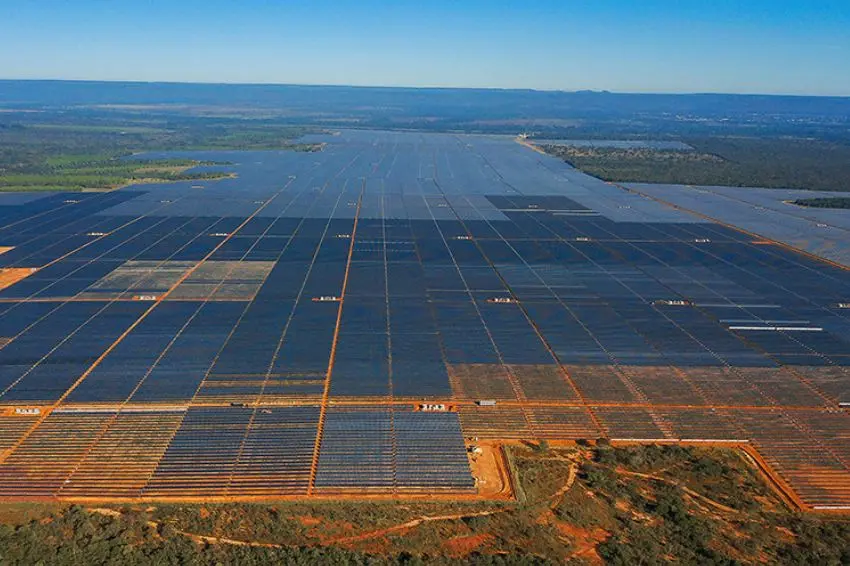
The global solar energy market is set to hit a new record in 2025, according to data from the report. Global Market Outlook for Solar Power 2026–2030, developed by SolarPower Europe and released this week during Intersolar Europe in Munich, Germany.
According to the study, considered one of the main surveys of the global photovoltaic sector, the planet will add 664 GW of new solar capacity in 2025, a 12% increase compared to the 595 GW installed the previous year.
Although the volume is the highest in history, the report shows that the market is beginning to enter a phase of more moderate growth. After advancing 85% in 2023 and 32% in 2024, global expansion slowed to 12% in 2025.
According to SolarPower Europe's assessment, the sector is unlikely to repeat the growth seen in recent years. The trend is towards more sustainable expansion, but one that is increasingly dependent on the modernization of electricity grids and battery storage.
In other words, the next stage of the energy transition will no longer be just a race for new installed gigawatts, but will depend on the capacity of electrical systems to absorb and integrate large volumes of renewable generation.
In total, the ten largest markets accounted for 82% of all solar capacity added worldwide in 2025. China alone accounted for 57% of new global installations and about 70% of all added capacity among the ten largest markets.
O Canal Solar analyzed the report and presents, below, a A complete overview of the top ten markets that will add the most solar energy in the world in 2025.

A China It remains the largest photovoltaic market on the planet. 382 GW were installed in 2025, about eight times more than India, the second-largest market. The country alone accounted for 57% of all global solar expansion. According to SolarPower Europe, although growth remained high (+16%), there was a slowdown compared to previous years.
The report highlights that the Chinese market is entering a new phase, in which integration into the electrical grid, market design, and grid capacity are becoming more important than simply installing new projects. Another highlight is that new solar projects are already starting to participate in wholesale electricity markets, increasing investors' exposure to price fluctuations.

A India It was the big surprise of 2025. With 45,7 GW installed (+49%), the country surpassed the United States for the first time and became the second largest solar market in the world in annual growth. Growth was primarily driven by large photovoltaic power plants.
Distributed generation still represents a relatively small portion of new installations. The report also highlights the strengthening of the national solar equipment manufacturing industry, considered one of the pillars for future growth.

Our United StatesAfter a record year in 2024, the market slowed down last year. New installations fell 14% to 43,2 GW, mainly reflecting project delays, grid connection limitations, and changes related to IRA (Inflation Reduction Act) incentives.
Despite the downturn, the SolarPower Europe report highlights that market fundamentals remain solid, driven by growing electricity demand from data centers, the electrification of the economy, and industrial expansion.

A Germany It maintained its leadership among European markets. Installations remained virtually stable at 17,4 GW, after years of strong growth. The residential segment lost momentum due to more difficult economic conditions.
Meanwhile, commercial and industrial applications continued to support the market. The study also highlights that the popularization of so-called balcony solar systems, small systems installed in apartments, helped to boost some of the new installations.

O Brazil It fell from fourth to fifth position in the world ranking. The country added 14,5 GW, a 23% decrease compared to the 18,9 GW recorded in 2024. According to the study, after a cycle of extremely rapid expansion, the Brazilian market is beginning to enter a more mature phase.
Although distributed generation continues to be the main driver of growth, problems with grid limitations and risks related to curtailment have begun to influence the pace of expansion. The organization emphasizes that future growth will depend much more on investments in electrical infrastructure and system integration than solely on the demand for new photovoltaic systems.

Na SpainAfter a weaker performance in 2024, the market grew 22% in 2025, reaching 11,3 GW of new installations. The growth was primarily driven by large power plants, supported by a robust portfolio of corporate projects.
However, the international report warns that bottlenecks related to the capacity of the electricity grid and the drop in energy capture prices persist. These are points of concern that the local market should not ignore, according to the study.

A Saudi Arabia It was one of the countries that saw the biggest jumps in the Solar Power ranking. Photovoltaic installations grew by an impressive 211% last year, reaching 7,9 GW.
Almost all of this growth has been driven by centralized projects, making the market highly dependent on the commissioning schedule of these plants. Distributed generation now accounts for only 3% of new installations.

A France It maintained a consistent growth trajectory. The European country installed 6,9 GW in 2025, representing a 23% increase compared to the 2024 figures.
The market remains strongly supported by distributed generation, especially in the residential and commercial segments, although it continues to face challenges related to environmental licensing and land availability.

Na ItalyThe solar energy market has entered a stabilization phase after registering strong expansion in 2024. Installations fell 5% last year, ending the year at 6,4 GW.
Distributed generation remains the main segment of solar energy in the country, while large power plants still face difficulties related to the licensing process and grid connection.

O Japan The solar energy market has completed another year of contraction. New photovoltaic installations fell by 7% in 2025, accumulating 5,8 GW. According to the study, this scenario reflects a fairly mature market with increasingly limited room for expansion.
The report highlights challenges such as a lack of available land for new projects, structural constraints in the electricity grid, and reduced attractiveness of solar investments. Nevertheless, distributed generation remains important to offset some of these limitations.
all the content of Canal Solar is protected by copyright law, and partial or total reproduction of this site in any medium is expressly prohibited. If you are interested in collaborating or reusing part of our material, please contact us by email: redacao@canalsolar.com.br.




Comments
Comments are moderated before publication.Comments should be respectful and contribute to a healthy debate. Offensive comments may be removed. The opinions expressed here are those of the authors and do not necessarily reflect the views of the author. Canal Solar.