

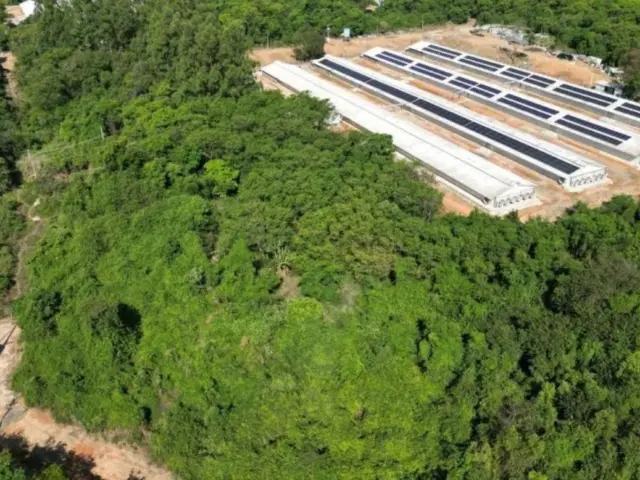
In operation since February 2022, the solar power plant of the TJDFT (Court of Justice of the Federal District and Territories), located in the Leal Fagundes Forum, in Brasília (DF), is already showing significant results.
According to the agency, generating its own energy already provides annual savings of between R$ 800 and R$ 900, in addition to contributing to reducing dependence on the conventional electricity grid and advancing the institution's sustainability goals.
With an installed capacity of 165 kWp, the system's performance varies according to climatic factors such as temperature, air mass, and solar irradiance levels.
According to the TJDFT (Court of Justice of the Federal District and Territories), the project was structured to guarantee a return on investment in just over four and a half years of operation. Considering the estimated lifespan of approximately 20 years, the expectation is that the economic and environmental benefits will continue to be observed over the next few decades.
According to the Court, the installation of the photovoltaic system also reduced dependence on energy supplied by the distributor and became part of a set of initiatives aimed at institutional sustainability.
This measure is part of the agency's strategy to increase the energy efficiency of its units and optimize the use of public resources, while also encouraging the use of renewable energy sources.
"In addition to contributing to the reduction of electricity consumption from the conventional grid, the initiative decreases the environmental impacts associated with institutional activities and strengthens the culture of sustainability within the Judiciary," the court reported.
The project also offers environmental benefits. It is estimated that the plant will prevent the emission of between 50,4 and 71,3 tons of carbon dioxide (CO₂) per year, contributing to a reduction in the carbon footprint associated with the institution's operations.
The TJDFT (Court of Justice of the Federal District and Territories) also highlights that the adoption of solar energy is aligned with the agency's sustainability goals and follows a trend observed in public institutions at different levels, which have invested in their own energy generation to reduce operating expenses, increase the predictability of electricity costs, and expand the use of clean energy sources in public administration.
all the content of Canal Solar is protected by copyright law, and partial or total reproduction of this site in any medium is expressly prohibited. If you are interested in collaborating or reusing part of our material, please contact us by email: redacao@canalsolar.com.br.




Comments (2)
Comments are moderated before publication.Comments should be respectful and contribute to a healthy debate. Offensive comments may be removed. The opinions expressed here are those of the authors and do not necessarily reflect the views of the author. Canal Solar.
Note that I published an article back in June 2022 alerting public bodies about the trillions that could be saved if they joined GD1.
Paying transmission network fees on the excess injected energy? I highly doubt it, with only 165 Wp. Unless they are the only privileged ones not to pay the injection fee into the grid. Even so, I find it unlikely with only that power…