
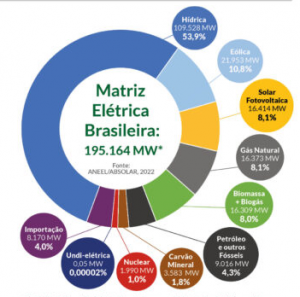
A solar energy surpassed natural gas and biomass thermoelectric plants and became the third largest source of national electrical matrix, second only to hydroelectric plants and wind farms, according to data from ABSOLAR (Brazilian Photovoltaic Solar Energy Association).
Entity mapping reveals that the source already accounts for 8,1% of the entire matrix with 16,4 GW of installed power in the segments of distributed generation (11,31 GW) and centralized (5,09 GW).
In comparison with the January bulletin, the growth of solar in 2022 draws attention: exactly 3,4 GW were installed in the first six months of the year, almost 90% of which came from homes, facades and small plots of land.
The growth of solar, as well as other sources, has helped Brazil to diversify the matrix and make the country less dependent on hydroelectric plants. Last year, the lack of rain and the low level of reservoirs raised an alert regarding this importance.
According to MME (Ministry of Mines and Energy), in the coming years, the forecast is for a significant reduction in the share of hydroelectric plants in the country due to the advancement of wind and solar sources, including distributed generation projects aimed at small consumers.
In the last ten years, in addition to ensuring savings on Brazilians' electricity bills, solar energy has also been responsible for preventing the emission of more than 24,6 billion tons of carbon into the atmosphere and guaranteeing numerous social benefits for the country.
Among them are: the creation of more than 492 thousand new jobs, the attraction of more than R$87 billion in investments, in addition to the collection of more than R$23 billion in taxes, which helps to promote the economy and the development of states and municipalities.


Comments (1)
Comments are moderated before publication.Comments should be respectful and contribute to a healthy debate. Offensive comments may be removed. The opinions expressed here are those of the authors and do not necessarily reflect the views of the author. Canal Solar.
Excellent news that creates many opportunities for us, integrators installing photovoltaic generators.