
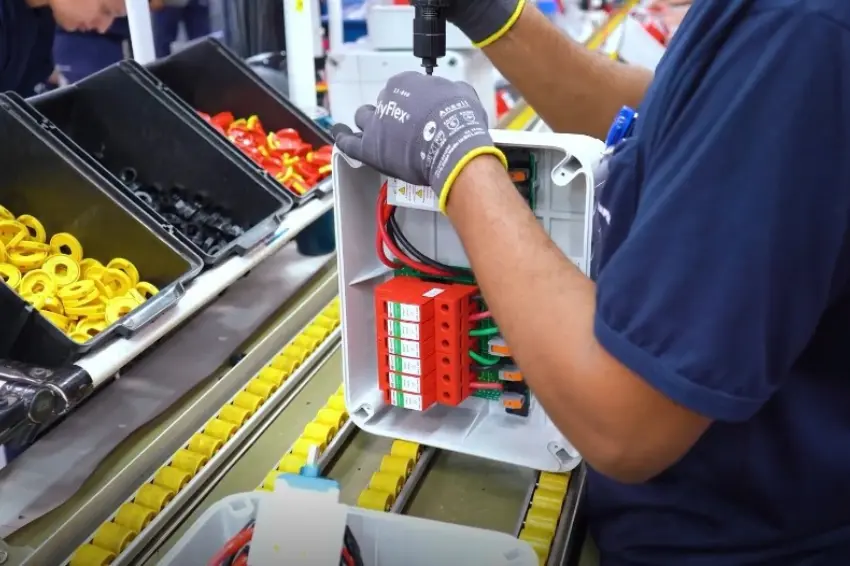
A new study developed in partnership between UPE (University of Pernambuco) and CLAMPER evaluated, through experimental tests, the performance of internal protection in photovoltaic inverters compared to the use of external SPDs (Surge Protection Devices).
Presented at ICLP 2026 in Japan, the research, entitled "Surge Resilience of Photovoltaic Inverters: Analysis of Internal Protection vs. External SPDs," examined three 5 kW inverter models, identified in the study as some of the most popular in the Brazilian market.
This study is the second developed through the partnership between UPE and CLAMPER and continues the research presented at the 2024 edition of the ICLP, held in Dresden, Germany, where initial tests had already highlighted the vulnerability of the equipment.
At the time, 3 kW inverters from two different manufacturers failed, on average, before the 8th surge impulse on the AC (alternating current) side, while on the DC (direct current) side, one of the models did not withstand the 1st impulse.
With the external surge protection device (SPD) installed, CLAMPER reported that the same inverters withstood the 100 applied impulses, and the device diverted more than 93,6% of the surge energy.
According to the company, this new work expands on the results obtained in the first study by directly comparing the internal protection of inverters with the performance of external surge protection devices (SPDs). In the previous study, the equipment was subjected to tests with combined wave impulses, associated with Class III protection.
In the second study, the tests considered the Class II surge protection declared by the inverter manufacturers. For this, current pulses of 8/20 µs, corresponding to this protection class, were applied, allowing for a practical evaluation of the equipment's performance in the face of surges.
According to the company, the results demonstrated the importance of adopting the Surge Protection Measures (SPM) outlined in Brazilian technical standards.
The company also highlighted the Brazilian context, marked by a high incidence of lightning strikes and the expansion of solar energy, which has already exceeded 50 GW of installed capacity in distributed generation.
“Internal protection does not replace external surge protection devices. This second study reinforces what had already been demonstrated by the first and shows, in a practical and measurable way, how exposed inverters are when the installation depends only on onboard protection,” assessed Douglas Lara, coordinator of Application Engineering at CLAMPER.
Three models of 5 kW inverters, among the most popular in Brazil, were tested and subjected to pulses of up to 20 kA simulating lightning strikes. Without an external surge protection device (SPD), the equipment failed, on average, after 6,9 pulses on the DC side and 4,8 pulses on the AC side; some models did not withstand the second pulse.
With the external protection installed, all withstood the 100 pulses applied, the maximum limit defined for the test. The SPD diverted 80,8% to 96,8% of the surge energy: in model A (DC side), for example, the current reaching the inverter dropped from 21,6 kA to 6 kA. Even in scenarios with imperfect coordination between the protections, the SPD increased the withstand capacity from 16,6 to 63 pulses in model C.
“It’s important to remember that a photovoltaic installation is designed to operate for 10, 15, 20 years or even longer, a period that may even exceed the warranty period of some inverters. Therefore, surge protection needs to be considered throughout the installation's lifespan. An external surge protection device (SPD) is an application foreseen in Brazilian regulations and is indispensable for protecting the investment in solar energy and ensuring the continuity of generation, even for inverters that declare internal Class II protection,” concluded Lara.
all the content of Canal Solar is protected by copyright law, and partial or total reproduction of this site in any medium is expressly prohibited. If you are interested in collaborating or reusing part of our material, please contact us by email: redacao@canalsolar.com.br.




Comments
Comments are moderated before publication.Comments should be respectful and contribute to a healthy debate. Offensive comments may be removed. The opinions expressed here are those of the authors and do not necessarily reflect the views of the author. Canal Solar.