
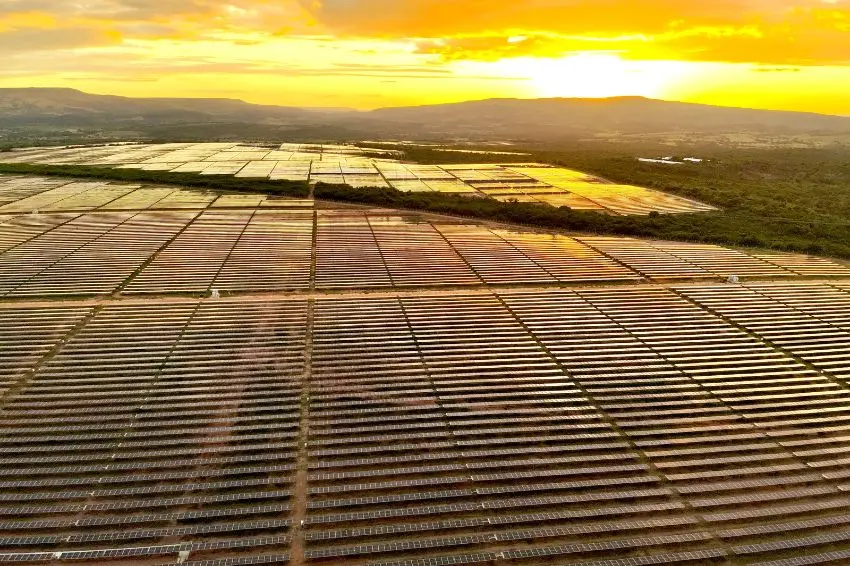
The effects of Super El NiñoThe storms, predicted to peak at the end of this year, could significantly worsen generation cuts at renewable power plants in Brazil and cause losses exceeding R$ 8 billion to the electricity sector — double the estimate considered for a normal climate scenario, according to an analysis by Aurora Energy Research.
According to the consultancy, the combination of adverse weather conditions and operational factors is expected to increase curtailment from 17% to 25% in 2026.
In practice, this means that up to a quarter of the energy generated by renewable energy plants may not be delivered to the SIN (National Interconnected System) due to operational restrictions in the electricity grid.
The projection considers that the climatic phenomenon will reduce the inflow levels to the reservoirs, mainly in the Northeast region, while at the same time increasing the capacity factors of renewable power plants.
This scenario increases the volume of available energy precisely at times when the system has the lowest capacity to distribute it, increasing the need for generation cuts.
For solar power, Aurora estimates that the energy effectively delivered to the SIN (National Interconnected System) could be reduced by up to 40%. Onshore wind generation could suffer a reduction of 21%. According to the consultancy, this scenario represents a 47% increase compared to the curtailment volume projected for the 2026 baseline scenario.
Activating thermal power plants can further increase curtailment.
In addition to the climatic effects, Aurora warns of a second factor that could worsen the scenario: the potential dispatch of thermoelectric power plants outside of merit order.
According to the consultancy, if the drought significantly reduces reservoir levels, the CMSE (Electricity Sector Monitoring Committee) may again authorize the extraordinary activation of thermoelectric plants, as occurred during the 2021 water crisis.
That year, 37 TWh of emergency thermal generation were authorized, a volume equivalent to approximately 32% of all thermal power generation recorded during that period.
“Our modeling shows that an additional 3 GW of mandatory thermal capacity, coupled with El Niño conditions, could add up to 6 percentage points of restriction for solar photovoltaic assets,” says Rodrigo Longo, senior associate at Aurora Energy Research.
Government will reduce hydroelectric generation to preserve reservoirs in the face of Super El Niño.
all the content of Canal Solar is protected by copyright law, and partial or total reproduction of this site in any medium is expressly prohibited. If you are interested in collaborating or reusing part of our material, please contact us by email: redacao@canalsolar.com.br.




Comments
Comments are moderated before publication.Comments should be respectful and contribute to a healthy debate. Offensive comments may be removed. The opinions expressed here are those of the authors and do not necessarily reflect the views of the author. Canal Solar.