
On August 1st, the 50% tariff imposed by US President Donald Trump on Brazilian products will come into effect. The measure is expected to affect some sectors, such as the steel industry. The US surcharge could lead to a decline in exports.
In recent years, Brazil has been a major supplier of steel to the US, particularly iron ore. However, what may seem like negative news for the steel industry could also open a window of opportunity in the Brazilian solar energy market.
"Today, Brazil exports steel to the United States. And the increase in import taxes there, which were already high, with Trump's protectionist policies, could create a surplus of steel in the domestic market. So, even though we haven't yet felt the direct effects of this change, the expectation is that the price of steel here will fall slightly," said David Sigismondi, commercial director of Axial Brasil.

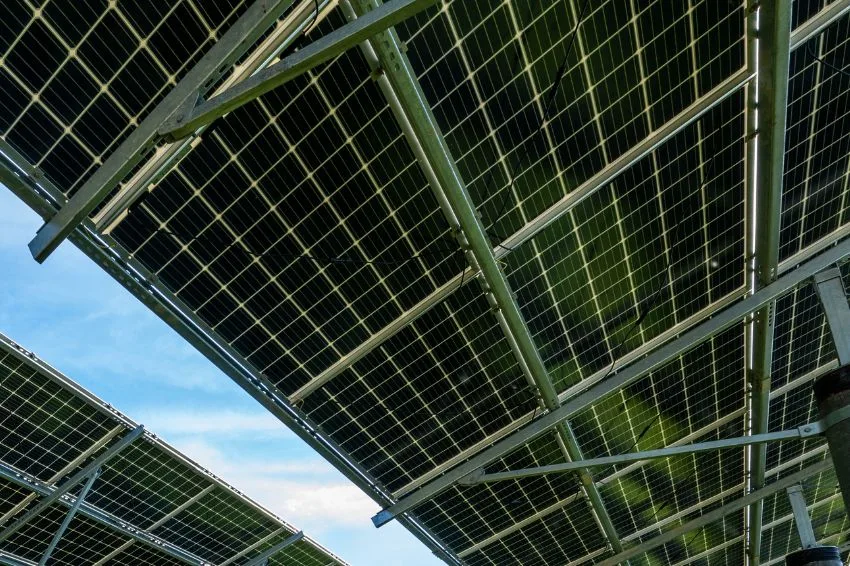
Axial is also among the top 10 companies selling solar trackers worldwide. Steel is the primary material used in the construction of fixed structures and solar trackers.
Trackers are devices that monitor the sun's movement throughout the day. These structures are designed to optimize solar energy generation, dynamically adjusting to capture the maximum amount of solar radiation possible.
According to Sigismondi, if Trump's rate is maintained, tracker prices in Brazil may fall starting in September or October.
"If the 50% tariff is consolidated in August, exporting producers can hold onto their stocks, hoping for a reversal. But since steel can't remain idle for long, they'll need to offload it. This should put downward pressure on prices," the director analyzed.
The executive, however, emphasizes that "Curve A," which represents the main components of a photovoltaic project, such as trackers, modules, and inverters, is already at its limit. "So, if I were an investor, I wouldn't postpone the decision waiting for cost reductions. But I would keep an eye on the situation and negotiate," he emphasized.
Expansion into new markets
Axial arrived in Brazil three years ago and has become a leading supplier of trackers for the distributed solar generation market. The company also works with fixed structures, but chose to focus on trackers because they offer greater added value.
"We've been in Brazil for three years and started with a focus on DG (distributed generation) – smaller, easier-to-manage, and lower-risk projects. Within this niche, we're among the three largest suppliers. Now, in 2025, we're making a strong push into centralized generation," said the executive.
The company has a processing plant in Bahia and an office in São Paulo. "We expanded the Bahia plant to increase inventory and improve the supply chain. Previously, we worked with a few projects; now we want to scale with greater volume. DG is more just-in-time, with retail delivery. With Centralized Generation, the lead time is longer, and this allows us to operate more efficiently," said Sigismondi.
all the content of Canal Solar is protected by copyright law, and partial or total reproduction of this site in any medium is expressly prohibited. If you are interested in collaborating or reusing part of our material, please contact us by email: redacao@canalsolar.com.br.




Comments
Comments are moderated before publication.Comments should be respectful and contribute to a healthy debate. Offensive comments may be removed. The opinions expressed here are those of the authors and do not necessarily reflect the views of the author. Canal Solar.