
The opening of the free energy market to low-voltage consumers promises to usher in a new phase for the Brazilian electricity sector.
More than just allowing millions of consumers to choose their energy supplier, the move should alter the competitive dynamics of the market, boost new business models, and attract investment to different segments of the supply chain.
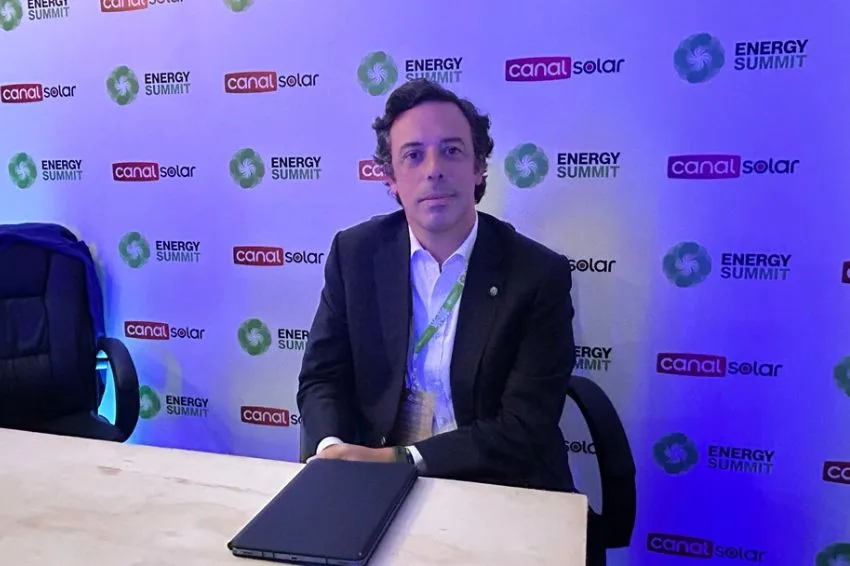
According to Tomás Baldaque, Director of Customer Solutions at EDP In South America, this is an unprecedented transformation. According to him, it is unlikely that another country will experience a similar process in the coming decades, mainly due to Brazil's territorial size and the volume of consumers who may migrate to the free contracting environment.
"I don't recall an opening of the free energy market of this magnitude. We will never experience anything like this again in our lives," he stated in an interview with... Canal Solar
The statement stems from the experience of someone who has followed other liberalization processes around the world. Baldaque, who is Portuguese and has worked in the telecommunications sector in Europe, asserts that Brazil possesses unique characteristics to lead a historic change.
“When I came here from Europe, one of the things I heard most was that Brazil has extremely qualified professionals and a very competent regulator. And I have seen that this is true. Many people are looking at this market because the scale of this opening is extraordinary,” he stated.
Despite the enthusiasm, he points out that the success of the opening will not depend solely on regulation. It will be necessary to build an environment of trust, expand the digitization of the electricity grid, make information about customers' consumption profiles available, and allow companies to develop truly personalized offers.
A very different opening from that which occurred in telecommunications.
The comparison between opening the free energy market and liberalizing telecommunications often comes up in discussions about the future of the electricity sector. For the EDP executive, however, the similarity exists only up to a certain point.
According to him, the main difference lies in the very nature of electrical energy. “My background is in telecommunications, and I see some similarities. But there is a very important difference: the volatility of energy prices. In telecommunications, this practically didn't exist,” he commented.
According to the executive, this volatility explains why several trading companies have faced financial difficulties in recent years.
"The energy challenge is much greater because it requires constant risk management. That's what caused many difficulties in the market," he said.
Nevertheless, he believes that the Brazilian process will follow a similar path to that observed in other sectors: increased competition, a greater supply of services, and increasingly demanding consumers.
A continental country will require different strategies.
Another aspect highlighted by the executive is the size of the Brazilian market. According to him, Brazil presents very distinct characteristics between regions, both from a climatic point of view and in terms of energy consumption habits. "Brazil is practically a continent."
According to Baldaque, this reality will lead to the coexistence of regionally operating companies and large national trading companies.
“I believe there will be very strong marketers in certain regions and others with a national presence. EDP wants to position itself as a national player,” he reported.
Despite this, he believes that scale will be crucial to the success of companies. “We should have three or four large national operators and several regional players. Whoever manages to achieve scale will have significant operational advantages,” he emphasized.
The future will not be about selling energy, but about solutions.
According to the executive, one of the biggest changes brought about by the opening of the free market will be the transformation of the trading companies' own offerings.
Instead of just selling energy, companies will start competing for market share by offering complete solutions for residential and business consumers. "We're going to have two major offerings: energy and services. The key will be combining these two things," he stated.
In the residential segment, he believes it will become increasingly common for a single supplier to deliver different solutions to a single client. "In the future, it will be natural for a family to want to contract energy, solar generation, batteries, and electric mobility within the same ecosystem," he assessed.
According to Baldaque, the real challenge will be in the execution. “Everyone has the idea. The difficulty lies in executing it well. How do I do good maintenance? How do I guarantee quality? How do I deliver all of this working? That's where the difference will be,” he stated.
The same reasoning applies to the commercial sector. Citing the example of restaurants, the executive explains that many businesses will need solutions focused on energy efficiency in cold storage chambers, consumption monitoring, preventive maintenance, and even other recurring services required by operations.
"Customers will no longer just buy energy. They will start contracting for solutions."
Data will be the main asset of the new competition.
Although discussions about opening up the free market are usually focused on trade rules, Baldaque believes that one of the biggest challenges will be something else: access to consumer information.
According to him, the European experience demonstrates that the digitalization of distribution and the adoption of smart meters were fundamental to making the market more efficient. "Before robotization and digitalization, there is a prior step: information."
He argues that retailers should be able to understand consumers' load profiles in order to create offers that match their consumption habits.
“In Europe, we can find out if a customer consumes more during the day, during the night, if they have different consumer units, and how they use energy. This allows us to create much more suitable products.”
In practice, he explains, a consumer who concentrates their consumption during the day may receive a solution based primarily on solar generation. Another customer who has higher demand in the early evening might obtain better results by combining energy with storage systems.
"Without knowing the customer profile, we run the risk of offering an unsuitable product."
According to the executive, this information needs to be available to all market players. "The information must be accessible to both national companies and regional operators. This creates real competition."
Credibility comes before consumer education.
In debates about opening up the free market, one of the most recurring themes is the need to educate consumers. Baldaque, however, reverses this logic.
For him, before any educational campaign, it will be necessary to build credibility. "Before education, there is credibility."
According to the executive, the first step is to ensure that the rules are clear, stable, and equal for all market participants.
"Both the regulated market and the free market need to follow consistent rules. If there are distortions, the consumer will not see any advantage in switching."
Another key point is preventing companies without financial or operational capacity from operating in the market. "Those who cannot deliver on their promises should not be allowed to enter."
In his assessment, a negative experience right at the start of the opening could compromise the public's perception of the entire market. "If a consumer switches and is deceived, they will tell everyone that the free market doesn't work."
Furthermore, frequent changes in the rules also represent risks. "If today a consumer switches believing in certain conditions and tomorrow the rules change completely, credibility disappears."
The role of the press will be decisive.
Only after this environment of trust is consolidated, according to Baldaque, will consumer education gain prominence.
And in this process, he believes the press will play a central role. "In Europe, much of education has taken place through the media."
According to him, newspapers, television, radio, and specialized media played a decisive role in explaining how the new market worked and what consumer rights were.
"The topic has become part of people's daily lives." According to the executive, the same should happen in Brazil.
Competition demands a long-term vision.
When asked about the challenges faced by energy trading companies during periods of high energy price volatility, Baldaque states that the companies that will survive are those that view the market as a long-term project.
"Anyone who thinks only of a 100-meter race will have difficulties. This is a marathon."
According to him, some of the difficulties observed in recent years stemmed from the sale of energy without the proper contractual backing.
"There were companies that took advantage of periods of low prices to sell energy without properly structuring their positions. When prices rose, they were unable to deliver on their promises."
He states that EDP's strategy is different. "Perhaps we are not always the most competitive in price. But our priority is to deliver on what we promise our customers."
An opportunity that is unlikely to be repeated.
At the end of the interview, Baldaque once again highlighted the historic nature of the opening of the Brazilian free market.
According to him, few professionals will have the opportunity to witness a transformation of this magnitude throughout their careers. "In five years, we will see a completely different sector."
According to the executive, there will be challenges, regulatory adjustments, and lessons learned along the way, but the potential for transformation outweighs the uncertainties.
“We will get some things right, some things wrong, because this is a new and complex process. But I believe we have an extraordinary path ahead of us.”
He concludes by stating that Brazil has become one of the most closely watched markets in the world precisely because it brings together a rare combination of scale, technical capacity, and growth potential.
“Many people are watching Brazil. We will never again see an opening of the free energy market of this magnitude. We need to seize this opportunity and learn from it,” he concluded.
all the content of Canal Solar is protected by copyright law, and partial or total reproduction of this site in any medium is expressly prohibited. If you are interested in collaborating or reusing part of our material, please contact us by email: redacao@canalsolar.com.br.