
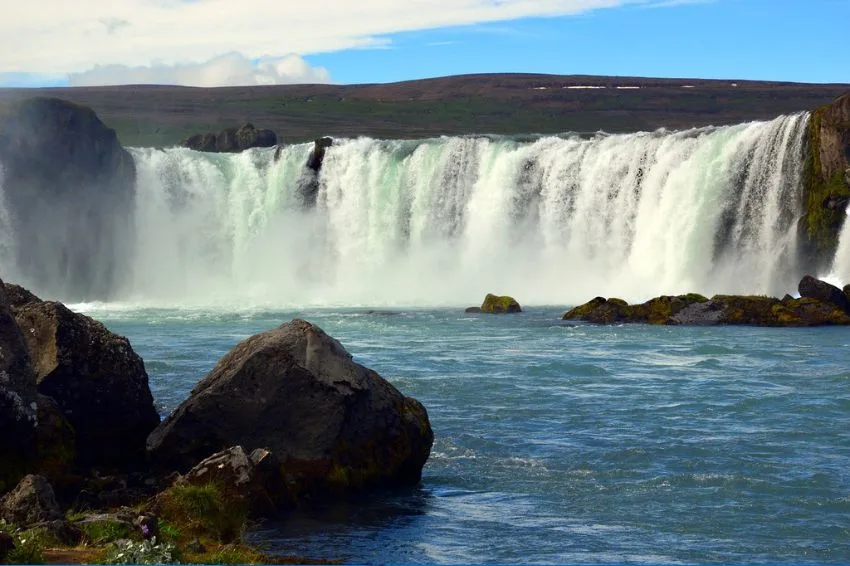
A ANEEL (National Electric Energy Agency) announced that the month of February will green flag, that is, without any additional cost on the electricity bill. For 22 months (since April 2022) the signage has remained the same due to good energy generation conditions.
“With generation expanding rapidly, mainly from renewable and clean sources, we have achieved 22 consecutive months with the green flag activated. This is a very positive sign for the country, reflecting favorable conditions for energy generation,” reinforced the CEO of ANEEL, Sandoval Feitosa.
Tariff flags have existed since 2015 and serve to signal energy supply conditions to consumers. The yellow color indicates a state of attention and therefore there is an additional cost. Red flags 1 and 2 already indicate a situation of scarcity in the generation sector, which is why there is an even greater cost on Brazilians' electricity bills.
Lack of rain and growing load
It may seem contradictory, but the ONS (National System Operator) reported that the prospects for ENA (Affluent Natural Energy) are below average for a typically humid period. What the agency means is that it is not raining as it should at this time of year in the basins that feed the hydroelectric plants.
In February, the forecast is that rainfall will be below average in the South (77%), Southeast/Central-West (71%) and Northeast (61%) subsystems. Only the North submarket is expected to have attendance within the average of 102%.
Despite this unfavorable scenario, the ONS explains that there is no concern regarding energy supply, as the hydroelectric reservoirs are at favorable levels. Stored Energy for February is projected at 95,2% in the North, 68,2% in the Southeast/Central-West, 63% in the Northeast and 46,2% in the South.
On the other hand, the energy load is growing in the SIN (National Interconnected System). The agency estimates an increase of 5,5% (82.607 average megawatts) compared to February 2023. In the subsystems, the forecasts are: Northeast, 8,2% (13.587 MWmed), Southeast/Central-West, 4,5% (46.871 MWmed), North 14,5% (7.635 MWmed) and South, 2% (14.514 MWmed).
“Despite the occurrence of precipitation below the historical average in river basins located in the Southeast, Center-West, North and Northeast Regions, during the period from October 2023 to January 2024, when the rainy season is characterized, we have stored energy. However, serving peak load times, those with the greatest demand from society, is a challenge for the operation, and it may be necessary to activate additional thermal dispatch”, explains Luiz Carlos Ciocchi, general director of ONS.
In January, SIN capacity should register an increase of 9,9% (82.009 MWmed) compared to the same period of the previous year. In the subsystems, the forecasts are: Southeast/Center-West (46.763 MWmed – 11,2%), North (7.233 MWmed – 11,2%), Northeast (13.370 MWmed – 10,1%) and South (14.643 – 5,1 %).
all the content of Canal Solar is protected by copyright law, and partial or total reproduction of this site in any medium is expressly prohibited. If you are interested in collaborating or reusing part of our material, please contact us by email: redacao@canalsolar.com.br.




Comments
Comments are moderated before publication.Comments should be respectful and contribute to a healthy debate. Offensive comments may be removed. The opinions expressed here are those of the authors and do not necessarily reflect the views of the author. Canal Solar.