

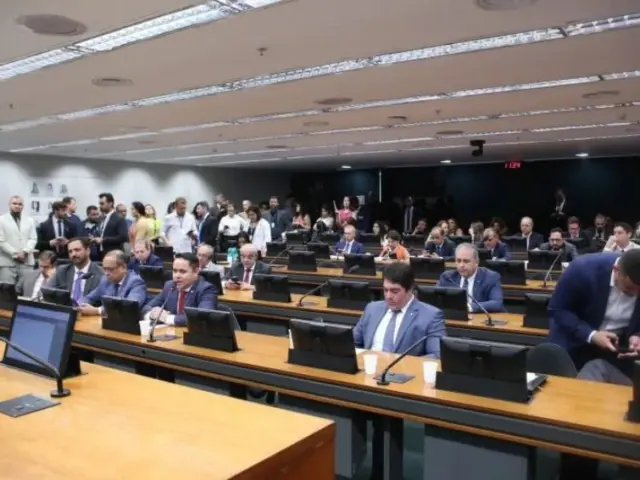
The board of ANEEL (National Electric Energy Agency) should finally look into the results of the first phase of Public Consultation 39/2023, which gathered information to improve the regulation of energy storage. It will be next Tuesday (10), at the 46th ordinary public meeting of the Agency's top management. The process is the eighth on the agenda, and has director Ricardo Tili as rapporteur.
The public consultation was opened in October last year, with information expected to be collected until December 2023. The board, in fact, should authorize a new round of information collection, which also includes subsidies related to reversible hydroelectric plants - those that are not connected to a watercourse or do not significantly interfere with the hydrological regime, and that have mechanisms for storing excess energy, in order for it to be used in later periods of peak demand.
Despite the delay in analyzing the public consultation, the schedule established by the board of directors ANEEL divided this regulatory adaptation process into three cycles. The idea is to allow the incorporation of storage systems as tools to support the sustainable energy transition.
The current cycle (2023/2024) addresses the specificities of open-cycle reversible hydroelectric plants. The development of regulatory sandboxes is also discussed as a way to make storage economically viable and capture more benefits for the system.
For the last cycle, from 2024 to 2025, the discussion revolves around more complex themes, such as aggregators for the various services, simulations in computational models and their impacts, exploration of new business models (storage applications to mitigate curtailment and constrained-off of generation plants) and the deepening of structural definitions on revenue stacking.
System advantages
Storage systems have managed to curb a certain “wary view” of the market, which already sees advantages in the topic. One of them would be to help reduce intermittency and unforeseen events common in generation sources such as wind and solar, the most dominant at the moment. Storage for these energies is seen as a way to stabilize the grid and ensure reliability.
Another attractive feature is solving an old transmission dilemma: sometimes there is a lack of space to house the energy produced, sometimes there is a lack of consumers to distribute that energy. Finally, the implementation of a storage system can be more economically advantageous than building new lines and installing new transformers. Details to be checked and validated by ANEEL next week.
all the content of Canal Solar is protected by copyright law, and partial or total reproduction of this site in any medium is expressly prohibited. If you are interested in collaborating or reusing part of our material, please contact us by email: redacao@canalsolar.com.br.


Comments
Comments are moderated before publication.Comments should be respectful and contribute to a healthy debate. Offensive comments may be removed. The opinions expressed here are those of the authors and do not necessarily reflect the views of the author. Canal Solar.