
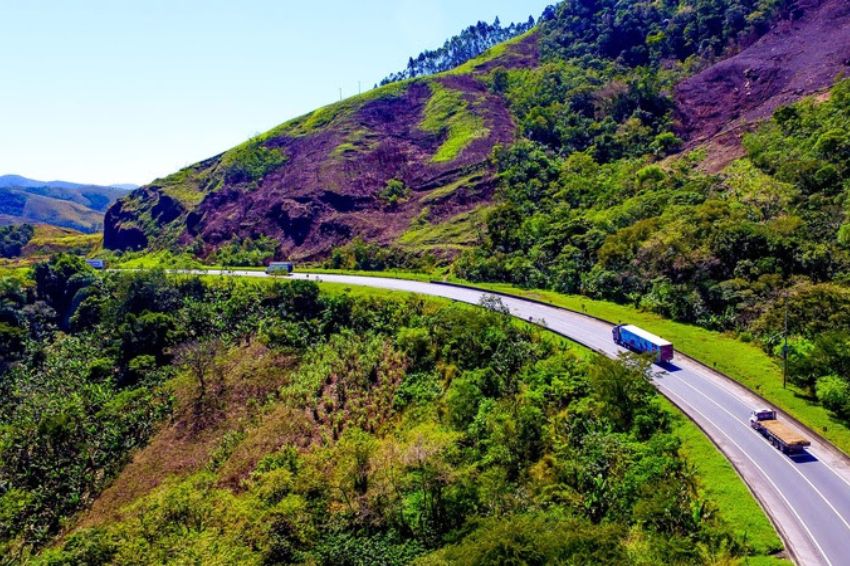
A Arteris, specialist in highway management, migrated recently five consumer units from the dealership Arteris Planalto Sul protocols for free market de energy, with 100% of energy-generating sources renewable energy.
According to the company, the change of the energy matrix in the South Region generates a saving de cost from to 25 % to supply electricity to 20 consumer units.
The purchase of clean energy on the free market for these units has been the main energy efficiency alternative, according to the project's feasibility study. With the initiative, the company will be able to save near R $ 750 thousand e reduce 200 tons de CO₂ per annum.
“Our goal is to make activities increasingly sustainable and with less carbon emissions, which reduces the environmental impact and the direct influence on climate change”, explained Christiana Costa, Sustainability Superintendent at Arteris.
“We study the possibilities according to the characteristics of each concessionaire, but always aligned with our decarbonization plan and the UN Sustainable Development Goals”, he highlighted.
Arteris Planalto Sul is responsible for managing the 412,7 kilometers of the BR-116 highway, connecting Curitiba to the border of the states of Santa Catarina and Rio Grande do Sul.
The migration had already been carried out in 15 consumer units in the other two units in the Southern Region (Arteris Litoral Sul and Arteris Régis Bittencourt), responsible for BR-116, BR-101 and BR-376, between São Paulo, Paraná and Santa Catarina.
Decarbonization plan
In addition to the free market, other initiatives and projects in the energy eco-efficiency axis were put into practice within the decarbonization plan of the company's activities.
The target made it possible to eliminate carbon emissions from electricity consumption in 2022, mainly due to the acquisition of renewable energy certificates (I-RECs), corresponding to 100% of own electricity consumption. Arteris has had this practice since 2021, which resulted in a reduction in emissions of 5,3 thousand tons of CO2.
solar energy projects
According to the company, actions to reduce the impact of its activities on the environment are not new. Studies for the implementation of solar plants began more than six years ago at Arteris Fluminense.
The concessionaire, which manages BR-101 Norte, had the first system installed in 2018, at the Campos dos Goytacazes toll plaza. Subsequently, in 2020, two more plants were installed in the same location. Combined, the 669 solar panels have 262,4 kWp.
In the wake of investments in technology in favor of sustainability, it is also worth mentioning Arteris Intervias and Arteris ViaPaulista, responsible, among other highways, for SP-330 (Rodovia Anhanguera), which invested R$ 16 million to build 38 micro and mini-generation photovoltaic systems distributed, including at Arteris headquarters in Ribeirão Preto.
In São Paulo concessionaires, there is a reduction of up to 85% in consumption costs given the capacity of 4.053,8 kWp, with an estimated generation of 6.167 MWh per year. The amount corresponds to 20% of the total electrical energy consumed by the seven concessionaires.
Still in the concept of energy efficiency, Arteris concluded, in February this year, the installation of 10 thousand lamps with LED technology on part of the 3.200 kilometers of highway under its responsibility in São Paulo, Minas Gerais, Paraná, Rio de Janeiro and Santa Catarina .
“With greater durability, lower environmental impact, they consume less energy and generate greater savings”, concluded Sérgio Henrique Viana, Automation and ITS manager at Arteris.


Comments
Comments are moderated before publication.Comments should be respectful and contribute to a healthy debate. Offensive comments may be removed. The opinions expressed here are those of the authors and do not necessarily reflect the views of the author. Canal Solar.