
Although the mandatory generation cuts had a negative impact of R$ 98 million between April and June, Auren Energia managed to offset a good part of this loss through its strategy of modulating its portfolio of renewable assets.
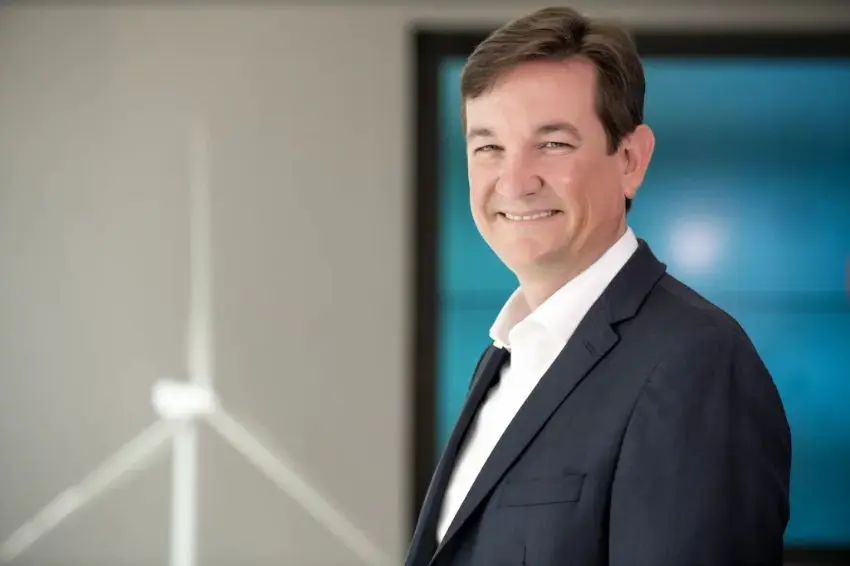
According to a statement by Auren's CEO, Fábio Zanfelice, during the Q2 results conference held on Thursday morning, the 6th, the gains obtained with this management reached R$ 71 million, neutralizing approximately 72% of the financial effects of the curtailment in the quarter.
In the first half of the year, the performance was even more impressive, he pointed out, because the gains from modulation totaled R$ 168 million, practically offsetting the R$ 184 million in losses caused by mandatory generation cuts and reducing the net impact to just R$ 16 million.
“We neutralized practically 72% of the negative impact of curtailment with modulation,” the executive highlighted. According to him, the performance demonstrates, in practice, the resilience of the company's portfolio, mainly due to the complementarity between wind and photovoltaic assets.
Government proposal
In addition to the operational impacts, Zanfelice dedicated a significant portion of the presentation to the regulations published by the federal government to financially compensate for the cuts that occurred between September 2023 and November 2025.
According to the executive, Auren estimates it is due to receive approximately R$ 300 million under the commitment agreement regulated by Ordinance No. 140 of the Ministry of Mines and Energy. Despite this, the company has not yet decided whether to adhere to the mechanism.
“The company is evaluating the document,” said Zanfelice, noting that the statement of interest due by August 10th is merely a declaration of interest and is not binding. The final decision will depend on further evaluations by management, the board of directors, and shareholders.
During the question and answer session, the CEO explained that final participation will only be discussed after the initial expression of interest and after greater clarity on the payment schedule foreseen by the government.
The ordinance is seen as a step forward.
According to the company, the publication of Ordinance No. 140 represents an important step towards solving part of the problem faced by renewable energy generators, but it is far from ending the regulatory discussion.
Zanfelice highlighted that the regulation covers compensation for outages related to system reliability and external unavailability during the period between September 2023 and November 2025.
However, he noted that the issue of so-called energy curtailment remains open, a topic that, according to him, will still require new regulatory and legislative definitions. For the executive, this is "an important milestone," as it represents a signal that the problem has begun to be addressed by the public authorities.
The CEO added that the company expects the entire process of calculating the values and validation by ONS (National Electric System Operator)The final participation of agents and the start of payments should only be completed during the second half of 2027, with some compensations potentially extending into 2028.
Debate on future cuts
When questioned by analysts about the evolution of regulations for future cuts, Zanfelice stated that the discussion will still have to return to the National Congress.
According to him, the legislation addressed liabilities related to previous periods and established guidelines for some forms of reimbursement, but compensation related to energy curtailment will still depend on further definitions.
“The future curtailment is an issue that we need to revisit with Congress,” he stated. According to the executive, this discussion is likely to gain momentum only in 2027, considering the electoral calendar and the renewal of the Legislative branch's composition.
He added that the company advocates for regulatory treatment that encompasses all agents responsible for generation cuts, while preserving balanced conditions among the different participants in the electricity sector.
Commercial strategy
In addition to regulatory discussions, Zanfelice attributed part of the mitigation of the curtailment's impacts to changes observed in the behavior of the energy market throughout the quarter.
According to him, the drop in the cost of repurchasing energy to cover the exposure resulting from the cuts, combined with the new hourly price profile in the short-term market, favored the company's results.
The executive explained that the increase in disconnections occurs predominantly during the period of highest solar generation, precisely when energy prices tend to be lower, reducing the cost of restoring the company's contractual position.
According to management, this combination of commercial management, portfolio modulation, and pricing behavior significantly reduced the financial effects of the curtailment on the semester's results.
all the content of Canal Solar is protected by copyright law, and partial or total reproduction of this site in any medium is expressly prohibited. If you are interested in collaborating or reusing part of our material, please contact us by email: redacao@canalsolar.com.br.

Comments
Comments are moderated before publication.Comments should be respectful and contribute to a healthy debate. Offensive comments may be removed. The opinions expressed here are those of the authors and do not necessarily reflect the views of the author. Canal Solar.