
The Brazilian electrical matrix is predominantly clean and mostly water-based. However, we continue to emit an excessive amount of carbon into the atmosphere with the generation of electrical energy – the main reason is the constant activation of thermal plants. Just a small positive fluctuation in consumption, or a worsening water situation putting pressure on our reservoirs, which are increasingly low, so that the thermal park can start operating and, consequently, red or yellow tariff flags return to Brazilians' electricity bills.
The use of raising funds to pay for more expensive thermal plants and signaling to consumers that it is time to save energy should be an exception. But even in times of pandemic, with the population pressured by an unstable economic situation and household consumption boosted by the forced adoption of home-office and distance learning, these flags are reappearing.
Although the ANEEL (National Electric Energy Agency) announced that there would be no extra charge in 2020, it was resumed in December, with Order 3.364/2020, at its maximum value: R$6,24 for every 100 kWh consumed. In January and February of this year, the agency defined a yellow flag. It is important to keep in mind that the flags do not solve the problem, they only treat the symptoms that worsen year after year.
Our matrix is considered clean due to the strong presence of hydroelectric plants, but the impacts of global warming (which fossil fuels help to aggravate) have already been felt in our rainfall patterns. There are years when the reservoirs of Brazilian power plants have not been able to replenish themselves.
Thus, the “emergency” generation of energy through fossil fuels becomes almost routine, going against the global energy transition and increasing the tariff for consumers. It is worth remembering that Brazil has the second most expensive residential electricity tariff in the world, according to the International Energy Agency. 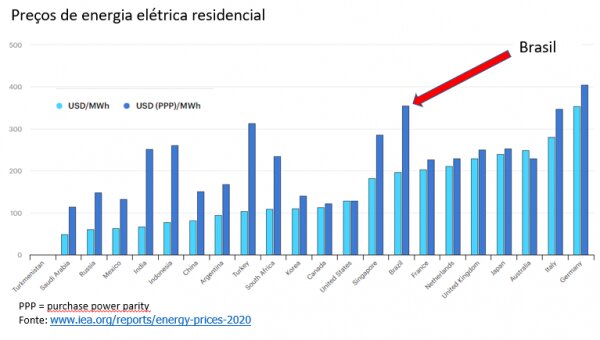
The return of the red flag in December was justified by the return of electricity consumption rates to levels prior to the start of the pandemic, at the same time that hydroelectric generation is compromised due to low reservoir levels. When this negative combination of factors occurs, the government authorizes the activation of thermoelectric plants that use a variety of fuels, such as natural gas, diesel oil or coal, guided by the operating costs of these plants.
Furthermore, energy imports are also permitted. Both measures aim to maintain the supply and security of the system. The situation becomes more dramatic if we consider that we are in the wet season, which runs from December to April and is characterized by the highest incidence of rain. Even at this time of year, there are thermoelectric plants in operation, generating around 14 GW, and at the same time we are importing 2,2 GW of power from Argentina.
If thermal power plants should be used for emergency purposes, we must ask why they are being used so much? In general, thermal power plants are already much more expensive than hydroelectric or renewable energy plants, but plants that are activated sporadically to meet specific needs are even more expensive. Some plants, therefore, operate entirely or partially for baseload generation – that is, in constant operation.
Its high costs, as well as its environmental impact, are shared among all Brazilians. When installing a new gas-fired thermal plant, it is also necessary to contract the gas, which means a 60% “take-or-pay” required by the gas producer/transporter. This is because there are few gas pipelines still crossing the country and we still depend on importing Bolivian natural gas, quoted in dollars.
The cost of gas, added to the cost of MWh of the thermoelectric plant, results in a high bill to be paid by Brazilians through their electricity bill. The environmental impact of generating energy using fossil fuels is an aggravating factor that makes the bill even heavier. Another reason for Brazil to increasingly use thermal plants is the interruption in investments in hydroelectric plants with large reservoirs.
The installation of large hydroelectric plants causes socio-environmental impacts in the region where they are located. Environmental and social concerns are extremely important in many ways, but when considering a systemic view, it is important to consider that the absence of hydroelectric plants also causes impacts. It is necessary to evaluate negative effects such as the increase in greenhouse gas emissions and the increase in electricity bills for Brazilians.
There is no way to change the past, but there is still time to encourage alternatives and solutions that could improve the situation in the short term. Distributed generation with renewable sources is a good example: DG has shown significant growth in recent years. There are more than 400 thousand connections and almost 5 GW of installed power.
However, within the Brazilian electrical system, DG still represents only 0,5%, a share that could be much higher. Brazil has a great opportunity to include part of its 85 million low-voltage consumers in this modality, so that more people can produce part of their own energy in a decentralized way, injecting any surplus into the grid through the SCEE (Electric Energy Compensation System).
The growth of distributed generation can prevent this year and the next from being marked by consequent red flags or, even worse, by the threat of regionalized rationing. The blackout in Amapá could have been less serious if the state had significant distributed generation. The same applies to the blackouts that occurred recently in Roraima and Rondônia, which had less repercussions but were equally serious for the citizens who were left without power.
In addition to occasional regional blackouts, there is also the problem of 8,5 million Brazilians who still do not have access to electricity, almost condemned to live as if they were in the XNUMXth century, and who could benefit from microgeneration and minigeneration, whether integrated into the grid or off-grid. The Brazilian electrical system is quite complex and has some structural problems. There is no simple or definitive solution.
The stabilization of the sector, with the effective application of the concepts of “tariff reasonableness” and “energy security”, involves network expansion, energy transition, market opening, privatization of perpetually deficient companies, tax reform in the sector, and an end to burdensome charges. , many of them focused on fossil fuels and, mainly, political will to face everything with a medium and long term plan.
Distributed generation, although not the solution to all problems, helps to solve some – and brings countless benefits. Therefore, it is important to ensure the conditions for its development. In this sense, it is important to draw attention to proposals that represent a threat to the growth of DG, such as some versions proposed for the revision of Normative Resolution 482/2012, which regulates the modality.
The process of updating the standard is still ongoing and the dialogue is moving towards more balanced options; however, there is still pressure from concessionaires and distributors to end distributed generation in its current format. There are several contradictions in the stance of important players in the electricity sector.
Some companies have even taken a stand against the current energy compensation system, arguing that it harms the remaining consumers (who do not have their own energy generation systems); at the same time, these same companies created an operational and commercial structure to explore DG and make money from it, using funds allocated to energy efficiency programs.
It makes no sense to pressure public opinion with a discourse that is against distributed generation and, at the same time, invest in the sector seeking financial returns. Proinfa (Program to Incentive Alternative Sources of Clean Energy), created by Law 10.438/2002, was a fundamental milestone in increasing the participation of alternative renewable sources (small hydroelectric plants, wind farms, biogas and biomass) in the production of electric energy, as well as the publication of resolution 482, which regulated microgeneration and minigeneration of energy with all renewable sources, improved by REN n° 687/2015.
It is time to take a step forward. The incidence of tariff flags, the hydrological crisis that increases year after year and, at times, mistaken interpretations that confuse incentives with subsidies are a warning sign for society to reflect on what it really wants for the Brazilian electricity sector. Do we want to have the record for the highest tariffs in the world? Move forward against the energy transition? Reduce the percentage of renewable energy in our electricity matrix? Certainly, no Brazilian wants that.
With the current review of the regulation, the Federal Government and the National Congress have an excellent opportunity to stimulate distributed generation with renewable sources, voting and approving one of the several bills favorable to DG (distributed generation) that are being processed in the Chamber. In particular, we highlight the CBEE (Brazilian Electric Energy Code), which has an entire chapter dedicated to the modality, guaranteeing regulatory stability, enabling a reasonable transition process, maintaining the acquired rights of “prosumers” and fairly remunerating all players in the sector. This chapter of the CBEE was prepared by a multidisciplinary group of experts in the electricity sector, who considered the positive attributes of distributed generation and sought consensus among all perspectives of approach.

The Brazilian Electric Energy Code initiative is obviously supported by ABGD (Brazilian Distributed Generation Association), the largest association in the sector in Brazil, as well as several other entities representing this segment. We currently have more than 400 “prosumers”, people and companies from all social classes and consumption profiles, who contribute to the development of the market and to the diversification of the Brazilian electricity matrix – and, consequently, collaborate to reduce the incidence of tariff flags.
The more energy from DG is injected into the grid, in theory, the less water from reservoirs needs to be used to supply the electrical system. We hope that Brazil will definitively enter the 21st century and use its rich energy potential, assuming a global leadership in the hydro and non-hydro renewable energy sector, leading the energy transition and setting an example to the world, demonstrating that the consumer, or rather, the “prosumer” and the citizen must be the center of action.

Comments
Comments are moderated before publication.Comments should be respectful and contribute to a healthy debate. Offensive comments may be removed. The opinions expressed here are those of the authors and do not necessarily reflect the views of the author. Canal Solar.