
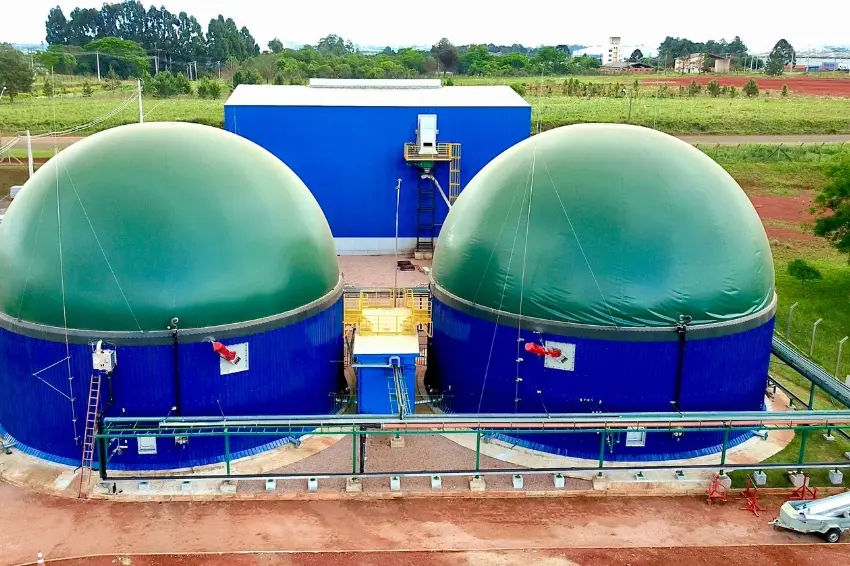
A plan developed by ABiogás (Brazilian Biogas Association) estimates that the development of the Brazilian biogas and biomethane market could mobilize R$ 216 billion in investments and create 251 direct jobs by 2035.
The projections consider the implementation of ten measures aimed at expanding the production and consumption of these fuels in the country. Among the proposals are holding auctions for reserve capacity, creating road corridors supplied with biomethane, and stimulating the national production of fertilizers.
According to the organization, the initiatives could also add R$ 57 billion per year in revenue to the sector and replace R$ 42 billion annually in imports of diesel, natural gas, and fertilizers.
The plan was prepared as a proposed strategic agenda for candidates and campaign teams. The document aims to position biogas and biomethane as instruments for energy security, industrial competitiveness, food security, and waste management.
ABiogás estimates that Brazil has the potential to produce 120 million cubic meters of biomethane per day. Currently, however, less than 2% of that volume is being utilized.
With the implementation of the measures presented, production could grow by 28,6 million cubic meters per day by 2035. The greatest increase would occur in the transportation segment, responsible for 23,8 million cubic meters per day.
The association argues that biomethane can reduce the country's exposure to international fluctuations in fossil fuel prices and the risks of disruption to global supply chains.
The plan cites as examples the 2018 truckers' strike, the increase in fertilizer costs after the start of the war in Ukraine, and public spending on diesel subsidies.
Auctions could contract up to 400 MW per year.
For the electricity sector, the main proposal is to hold annual auctions for reserved capacity specifically for biogas and biomethane projects. Contracts could reach up to 400 MW per year.
The design of the tenders should consider attributes such as dispatchability, operational flexibility, price predictability, and proximity to cargo centers.
According to ABiogás, these characteristics allow biogas plants to complement variable renewable sources, such as solar and wind power, and contribute to the security of the electrical system.
The organization also proposes that biogas and biomethane have a greater presence in official energy planning instruments, such as the PDE (Ten-Year Energy Expansion Plan), the PNE (National Energy Plan), and the BEN (National Energy Balance).
The auctions could stimulate the additional consumption of 1,1 million cubic meters of biomethane per day. This measure has the potential to attract R$ 20 billion in investments, create 9 jobs, and generate R$ 2 billion per year in revenue.
all the content of Canal Solar is protected by copyright law, and partial or total reproduction of this site in any medium is expressly prohibited. If you are interested in collaborating or reusing part of our material, please contact us by email: redacao@canalsolar.com.br.

Comments
Comments are moderated before publication.Comments should be respectful and contribute to a healthy debate. Offensive comments may be removed. The opinions expressed here are those of the authors and do not necessarily reflect the views of the author. Canal Solar.