

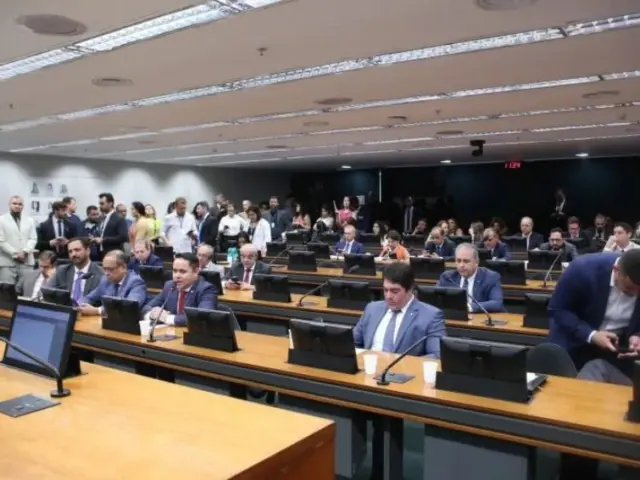
The difficulties faced by consumers from Minas Gerais who want generate your own energy by solar source will be discussed this Wednesday (23) at Legislative Assembly of Minas Gerais. The public hearing, scheduled to begin at 10:30 am and broadcast on YouTube, will be held by the Mines and Energy Commission.
This is not the first time that Cemig's operational bottlenecks have been discussed by deputies. The first meeting was on May 17th. However, parliamentarians report that several professionals in the solar sector contacted their offices saying that since then the situation has persisted, impacting several projects and making new installations in the state impossible.
The public hearing meets the request of the deputy Gil Pereira (PSD), president of the Mines and Energy Commission, together with the deputy Ricardo Campos (EN).
According to the two parliamentarians, it is worrying shackles that Cemig comes imposing the expansion of the generation of Photovoltaics, above all, the situation of the North and Northeast of Minas, which are areas with significant investments in solar energy generation.
“We requested this meeting with Cemig precisely so that it can be more sensitive to serve integrators, who create jobs and work very efficiently. The demand is very high for the distributor, which is why we need it to be able to respond to more requests, to have more staff to be able to handle requests for new connections”, explained Gil Pereira to the Canal Solar.
The parliamentarian pointed out that Cemig is dependent on the State and that until now what has been seen as action was the release of R$42 billion all with investments em network infrastructure.
Deputy Ricardo Campos highlighted that Cemig's lack of speed and interest has harmed not only the applicants, but all development in the regions that most need this energy.
Audience participation is expected, in addition to parliamentarians and Cemig representatives, businesspeople, government institutions and municipalities in Minas Gerais where there are photovoltaic energy generation projects.
Writ of Mandamus
At the beginning of June, as reported by Canal Solar, the 10th Federal Court of Belo Horizonte granted an injunction ordering Cemig to resume the analysis of budget requests for the connection of microgeneration distributed in the State.
The distributor had suspended the analysis of the opinions under the pretext of the need to consult the ONS (National System Operator), a measure considered illegal by the association.
Two months earlier, in April, the Government of Minas Gerais released a statement informing that there were regions in Minas Gerais where the electrical grid did not have the technical capacity to receive new connections from distributed minigeneration photovoltaic projects.
This scenario of uncertainty has been worrying consumers and integrators in the region. This is because, without a definition of when the flow capacity of Cemig's substations will be normalized, integrators are unable to provide their clients with an expectation of when their projects can be installed.
Understand
Cemig stops projects and causes losses to companies in the solar sector
In the end, what is happening is that the majority of consumers interested in technology end up not closing the deal, causing losses that compromise the continuity of companies in the sector.
Cemig currently serves approximately 8,5 million consumer units in 774 municipalities. The state has 3,1 GW of installed solar DG capacity and more than 253 photovoltaic systems installed in homes, businesses, rural properties, industries and public properties. The data is from the SISGD (Distributed Generation Registration System) of the ANEEL (National Electric Energy Agency).


Comments (1)
Comments are moderated before publication.Comments should be respectful and contribute to a healthy debate. Offensive comments may be removed. The opinions expressed here are those of the authors and do not necessarily reflect the views of the author. Canal Solar.
Do they want to generate their own energy or do they want to install solar “plants” kilometers away to sell energy to customers in the state capital? And they still want CEMIG to transport energy for free…