
Dry weather, low air humidity, little rainfall and dry vegetation are factors that directly impact the increase in fire records in the country. These types of occurrences cause damage and generate losses for consumers, affecting, for example, the generation and supply of electricity.
In the months of August and September alone, Inpe (National Institute for Space Research) recorded 120.023 fires throughout Brazil. To prevent fires from damaging photovoltaic plants on the ground and causing financial impacts to consumers and investors, some care must be taken. This is what experts in the solar sector say.
“It is important to have a large volume water tank at the plant, of 15 thousand to 20 thousand liters, with a motor pump and fire protection structures, so that, in the event of such an anomaly, the operators and those responsible for maintenance are prepared”, recommends José Diniz Neto, project manager and commissioning engineer at Enersolar.
In addition to the risk of fire in the modules, Diniz also highlights that, when designing a plant close to forest areas, there is a risk of animals threatened by fires damaging the equipment. “It is possible that in these locations, fauna migrates to the region inside the plant, as the movement of these animals is affected. In this case, animals can eat cables and cause erosion in the structures.”
Luiz Antony, director of ADX Energia do Brasil, says that the damage caused by the fires could be incalculable. “When the fire hits a string line in the plant, it can irreparably damage the boards, inverters, cables and string box. If this fire is not fought in time, it could even reach places such as the guardhouse, the property fence and even the transformers”, he warns.
Still according to Antony, in the Northeast and in São Paulo, where sugar cane cultivation is strong, and in the states of Goiás, Mato Grosso and Mato Grosso do Sul, where the practice of burning to renew pastures is common, it is important that entrepreneurs and operators of photovoltaic plants adopt certain precautions to try to prevent fire from reaching the project area.
“It is necessary to cover the plant area with crushed stone, which in the case of using bifacial panels, helps to enhance energy production. Furthermore, it is necessary to periodically weed the vegetation inside the plant area, always keeping it close to the ground”, he advises.
“The entrepreneur must also create firebreaks during the dry period, which consists of scraping the vegetation area so that an isolation area remains between the vegetation and the limits of the solar plant area, preventing the fire from advancing into the interior of the area. area of the enterprise. In this case, the distances vary according to the height of the vegetation that you want to separate from the project area. Normally, the proportion is four times the height of the vegetation”, adds Antony.
Dirt on solar panels
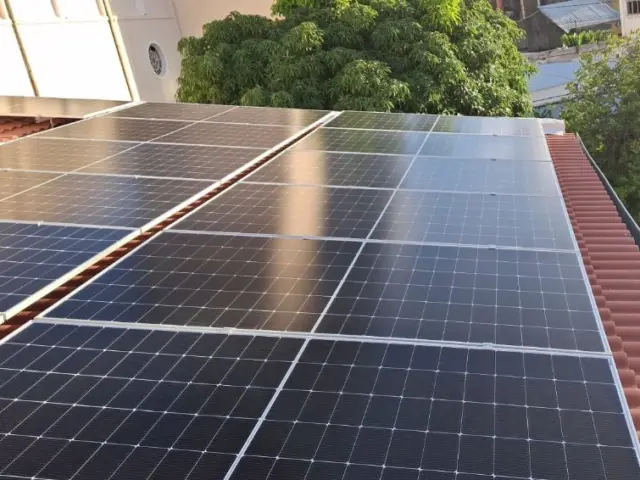
The proximity of photovoltaic plants to fire regions can result in dirt in the modules, due to the soot released by the fire. This dirt can negatively impact the plant's productivity.
Felipe Santos, materials engineer and sales manager at photovoltaic module manufacturer JA Solar, recommends periodic maintenance with attention to cleaning the equipment. “There is no pre-determined frequency for cleaning the modules, this depends on the climatic conditions of the region. It is recommended to carry out constant and preventive monitoring”, he advises.
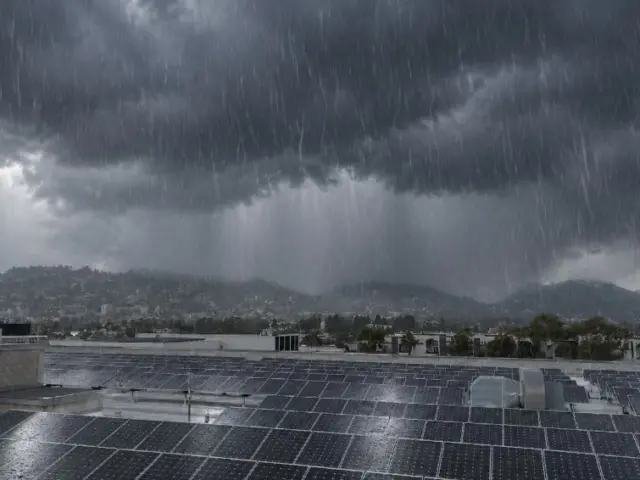
“If the plant is installed in a location where the soil is sandy, bare, with high wind intensity and even soot, it will certainly require shorter intervals. This frequency can also be affected by the occurrence of rain that can replace cleanings scheduled in the plan”, adds Santos.
The expert also recommends that the designer put together a robust O&M (Operation and Maintenance) plan, based on data that aims to avoid wasting resources, in addition to optimizing the plant's operating costs and increasing production.

Comments
Comments are moderated before publication.Comments should be respectful and contribute to a healthy debate. Offensive comments may be removed. The opinions expressed here are those of the authors and do not necessarily reflect the views of the author. Canal Solar.