
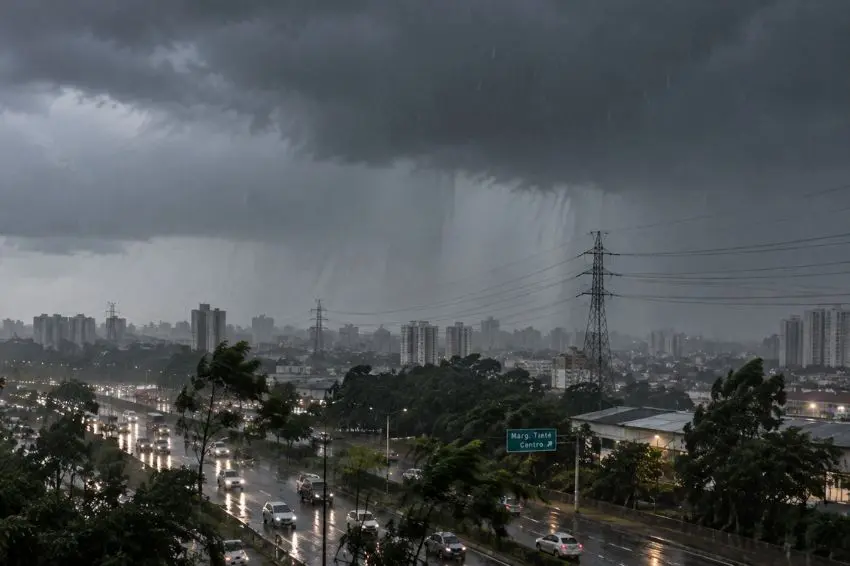
Companies in the electricity sector are expanding partnerships with Climatempo to strengthen the monitoring of weather events and anticipate risks to energy networks and assets. Among the companies that already use the company's solutions are ISA Energia and Argo Energia, both in the transmission segment.
The move comes in response to the possibility of El Niño intensifying and the impacts the phenomenon can have on electrical infrastructure, especially in situations of heavy rain, strong winds, lightning strikes, extreme heat, and changes in precipitation patterns.
The initiatives involve installing weather stations and using real-time data and alerts to identify at-risk areas and prepare operations before and during extreme events.
“The electricity sector is increasingly exposed to the impacts of extreme weather events. With the possibility of a strong El Niño, anticipating risks becomes even more strategic for the energy sector,” says Vitor Hassan, Head of Business at Climatempo.
Broadcasters increase monitoring.
ISA Energia, for example, has partnered with Climatempo to implement a network of weather stations at its assets in the state of São Paulo. This infrastructure will allow them to monitor weather conditions at different points along the network and identify events that could pose risks to the transmission lines.
Argo Energia has also adopted weather stations to monitor sections of its power lines. In Rondônia, for example, weather data is linked to occurrences of faults and interruptions to support operations management.
According to Climatempo, for transmission companies, this type of monitoring allows them to track meteorological and environmental variables along the transmission line corridors, identify more exposed sections, and analyze occurrences related to lightning, strong winds, and wildfires.
In the distribution sector, meteorological information can also be used to anticipate storms and gales, organize field teams, and prepare operations for potential power outages.
Project envisions sharing of climate data.
In addition to individual initiatives, Climatempo, in partnership with companies in the electricity sector, develops a research and development (R&D) project regulated by... ANEEL (National Electric Energy Agency).
The proposal aims to create a collaborative climate intelligence hub initially focused on transmission and distribution companies. The project envisions the deployment, initially in the state of São Paulo, of a network for data collection through meteorological sensors.
The information will be shared between participating companies and the state Civil Defense. The initiative aims to gather calibrated, auditable, and georeferenced climate data to support risk identification and the development of contingency plans in the face of extreme events.
“The collaborative climate intelligence hub will allow for the creation of more effective contingency plans to address the effects of the El Niño phenomenon, and the proposal includes bringing together companies from other regions of the country and may even evolve into other sectors such as railways and highways,” explains Hassan.
The last Super El Niño was ten years ago.
The advance of a new El Niño has triggered a major alert in Brazil due to the high probability of the phenomenon reaching the "Very Strong" category in the coming months, something that last occurred 10 years ago.
According to INMET (National Institute of Meteorology), the planet has not faced an event of this magnitude since the 2015/2016 period, a time marked by global disasters and severe economic losses.
Characterized by the unusual warming of the Pacific Ocean waters, the phenomenon drastically alters the global climate; in the national scenario, the forecast indicates excessive rainfall in the Southern Region and severe drought in parts of the North and Northeast., testing the vulnerability of the country's infrastructure.
Faced with this critical scenario, the Brazilian electricity sector is intensifying its operations to protect power generation, transmission, and distribution networks against the impact of extreme weather.
O Canal Solar prepared detailed coverage on the topic, including a special report that is available for free in the latest edition of the magazine. Canal Solar.
Access the magazine for free and learn more by clicking [here]. here
all the content of Canal Solar is protected by copyright law, and partial or total reproduction of this site in any medium is expressly prohibited. If you are interested in collaborating or reusing part of our material, please contact us by email: redacao@canalsolar.com.br.




Comments
Comments are moderated before publication.Comments should be respectful and contribute to a healthy debate. Offensive comments may be removed. The opinions expressed here are those of the authors and do not necessarily reflect the views of the author. Canal Solar.