
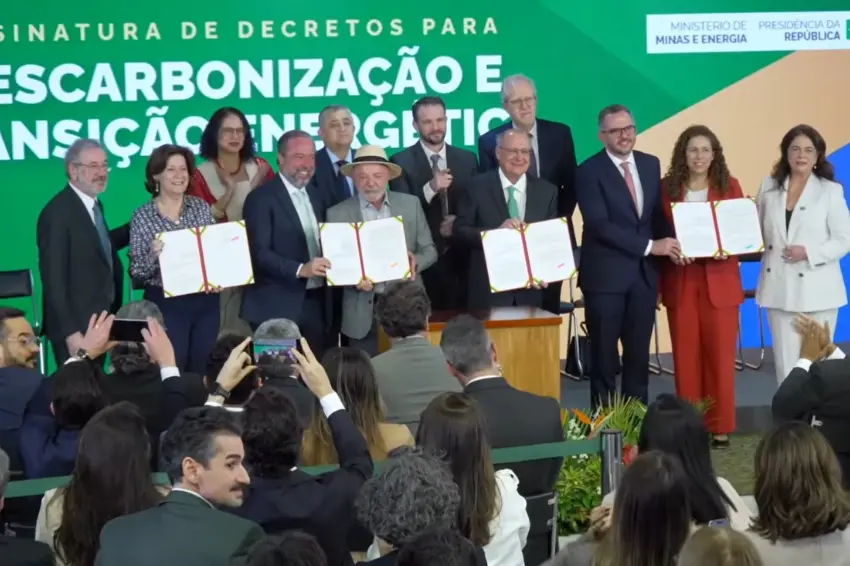
President Luiz Inácio Lula da Silva signed four decrees related to the energy sector this Wednesday (12), in Brasília (DF). Among them is the Regulation of the opening of the free energy market. for all consumers connected to low voltage, including the creation of the Supplier of Last Resort.
According to the schedule established in the new regulatory framework for the electricity sector, commercial and industrial consumers will be able to choose their energy supplier until November 2027. For residential consumers and other classes served at low voltage, the opening is scheduled for November 2028.
Currently, these consumers are required to purchase energy from the distributor responsible for their concession area. With the opening up of the market, they will be able to negotiate their energy purchase with different suppliers.
Distribution services, however, will continue to be provided by the local utility company, which will remain responsible for the electrical grid and for responding to power outages.
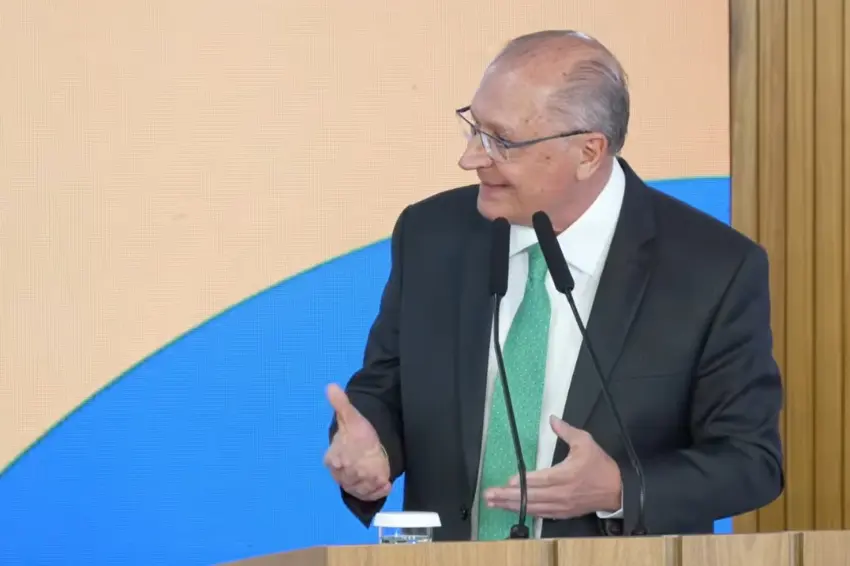
“Today, large consumers can access the free market and buy energy 23% cheaper, but low-voltage consumers still cannot. The decree allows commerce and small industry to enter the free market next year, followed by residential consumers. This will help reduce the price of energy,” stated the Vice-President of the Republic, Geraldo Alckmin.
According to the Minister of Mines and Energy, Alexandre Silveira, opening the market to all consumers should increase competition among suppliers and create conditions for cost reduction.
"This will create competition among generators, which will allow for a decrease in the price of energy for the end consumer," he stated.
The possibility of a reduction in the bill, however, will depend on the conditions offered by the suppliers and the consumption profile of each customer. Tariffs for network usage, sector charges, taxes, and other components will continue to be included in the bill. The decree will still undergo regulation by... ANEEL (National Electric Energy Agency).
Migration will be simplified.
Since January 2024, all consumers connected to high voltage can migrate to the free market, regardless of the volume of contracted demand.
In 2025, more than 21,7 consumers joined this environment, which ended the year with approximately 85 participants and accounted for about 43% of the electricity consumed in the country, according to data from CCEE (Chamber of Energy Commercialization).
"The migration will be simplified and will include portability rules, all with great transparency and in pursuit of continuous service improvement," said Silveira.
The opening up to low voltage will require a series of regulatory and operational adaptations. These include defining the rules for consumer representation, separating energy trading from distribution services, and the role of the supplier of last resort.
Lack of information will be the main challenge for opening the free market.
This supplier will act as a safety net to temporarily serve consumers who are left without a supplier, for example, in the event of a retail supplier ceasing operations.
The president of the Board of Directors of ONS (National Electric System Operator) and vice-president of Neoenergia, Solange Ribeiro, recalled that the full opening of the market has been discussed for about two decades.
“It is on the foundation of trust and investment that we are taking a very important step: the regulation of the energy market. It is a change that transforms the relationship with the consumer and places them at the center of the market. Freedom of choice is the essence of this transformation,” he stated.
Sustainable aviation fuel
Lula also signed the decree regulating the National Sustainable Aviation Fuel Program, known as ProBioQAV. This initiative is part of the Future Fuel Law and establishes progressive targets for reducing greenhouse gas emissions on domestic flights through the use of SAF, an acronym for sustainable aviation fuel.
According to the Ministry of Mines and Energy (MME), SAF (Sugarcane Agrochemical) production projects could add R$ 13 billion to the GDP (Gross Domestic Product), create 9 jobs, and generate R$ 39 billion in investments by 2033. The decarbonization targets for domestic flights begin at 1% in 2027 and gradually increase to 10% in 2037. The decree will also be subject to regulation by the ANP (National Agency of Petroleum, Natural Gas and Biofuels).
Carbon capture and storage
The third decree regulates activities related to the capture, use, and geological storage of carbon dioxide. The technology allows for the capture of CO₂ emitted by industrial facilities, its transport, and its permanent storage in suitable geological structures, contributing to the reduction of emissions from sectors where decarbonization is more complex.
The government expects this market to generate R$16 billion in investments annually and stimulate the creation of 209 jobs. "Carbon capture will boost engineering services and open up a new market," said Alckmin.
Low emission hydrogen
Finally, the president signed the decree that regulates the legal framework for low-carbon hydrogen. The text details rules for certification, oversight, and project classification, as well as establishing parameters for the development of the industry in the country.
Low-emission hydrogen is considered an alternative for decarbonizing industrial activities and transportation sectors that find it more difficult to replace fossil fuels.
all the content of Canal Solar is protected by copyright law, and partial or total reproduction of this site in any medium is expressly prohibited. If you are interested in collaborating or reusing part of our material, please contact us by email: redacao@canalsolar.com.br.
Comments
Comments are moderated before publication.Comments should be respectful and contribute to a healthy debate. Offensive comments may be removed. The opinions expressed here are those of the authors and do not necessarily reflect the views of the author. Canal Solar.