
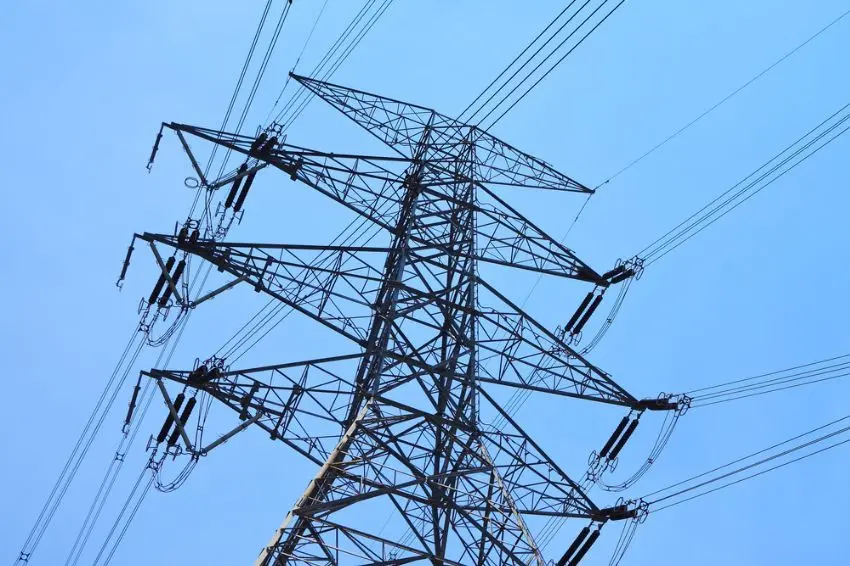
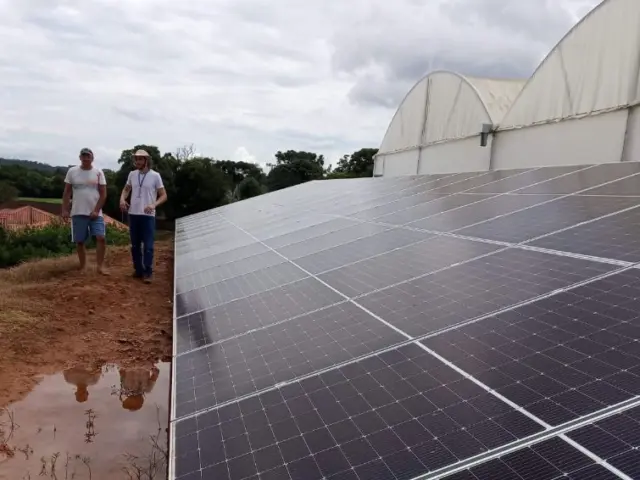
The growth of distributed energy resources (DERs) is already a reality in the Brazilian electricity sector and should not be contained, but rather accompanied by changes in market and operational rules. This is the assessment of technicians from EPE (Energy Research Company) in an article published by the institution.
According to Caroline Chantre, Energy Research Analyst, and Gabriel Konzen, Technical Consultant, the challenge now is to prevent the expansion of self-generation, batteries, and other decentralized solutions from amplifying economic distortions and operational difficulties.
The discussion gains importance in light of the projections of the PDE (Ten-Year Energy Expansion Plan) 2036. Distributed micro and mini-generation (MMGD), which reached approximately 45 GW of installed capacity in 2025, could reach 91,7 GW in 2036, with 13,5 million adopters.
Of the 110 GW of additional generation capacity projected for the decade, 41 GW are expected to come from this type of energy.
Cross-subsidies enter the debate.
One of the most sensitive points raised by the technicians is the current compensation model for distributed generation.
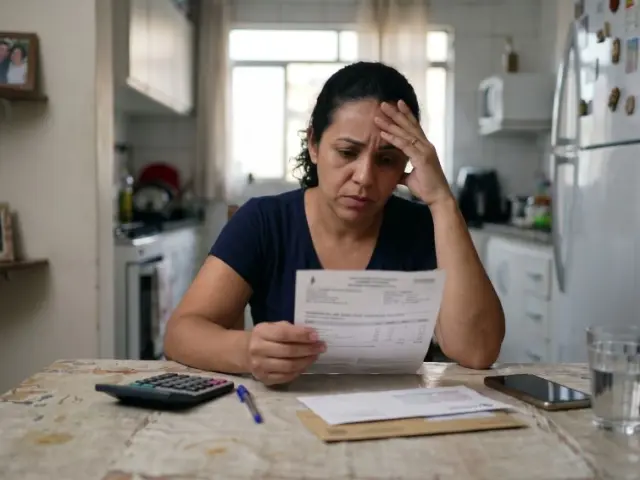
According to data cited in the article, the network costs and charges that were not paid by participants in the SCEE (Electric Energy Compensation System) and were redistributed among other consumers exceeded R$ 14 billion in 2025. The associated tariff impact was estimated at 4,83%.
According to the authors, the net metering model does not adequately differentiate the value of energy according to the time and location where it is injected. A kWh produced during surplus hours may receive the same treatment as one made available when the system needs power.
Similarly, the energy injected into a saturated grid is not differentiated from that which uses an infrastructure with available capacity. The proposal is to move towards a more precise allocation of costs; that is, those who use the grid should pay for that use, while the resources that actually provide services to the system should be remunerated.
The experts mention the two-part tariff, which separates the costs of energy and infrastructure, and the contracting of services to the grid as possible solutions.
Pricing, measurement and coordination
Revising economic signals is another priority. The authors argue that tariffs should reflect time and location differences, encouraging consumption or storage at times most favorable to the system.
They also point to the need to expand smart metering, make information available about network capacity, and establish requirements for observability, operability, and controllability of OERs.
In this scenario, aggregators could pool small resources into contractable blocks, while distributors and the National System Operator (ONS) would need to work in a more integrated way in coordination.
The article also highlights that batteries can shift solar generation to the late afternoon, and flexible loads can absorb surplus renewable energy during the day.
Model change
Technicians note that MMGD (Multi-Generation Dispatch) is expected to advance by approximately 4 GW per year, while modernization instruments are still under discussion or in transition. The international experience cited in the article reinforces that coordinating in advance is simpler than correcting problems after resources reach a large scale.
The central message is not to halt expansion, but to adjust incentives. Instead of rewarding only the volume of energy produced, consider also its contribution to the operation, flexibility, and efficiency of the electrical system.
all the content of Canal Solar is protected by copyright law, and partial or total reproduction of this site in any medium is expressly prohibited. If you are interested in collaborating or reusing part of our material, please contact us by email: redacao@canalsolar.com.br.
Comments
Comments are moderated before publication.Comments should be respectful and contribute to a healthy debate. Offensive comments may be removed. The opinions expressed here are those of the authors and do not necessarily reflect the views of the author. Canal Solar.