
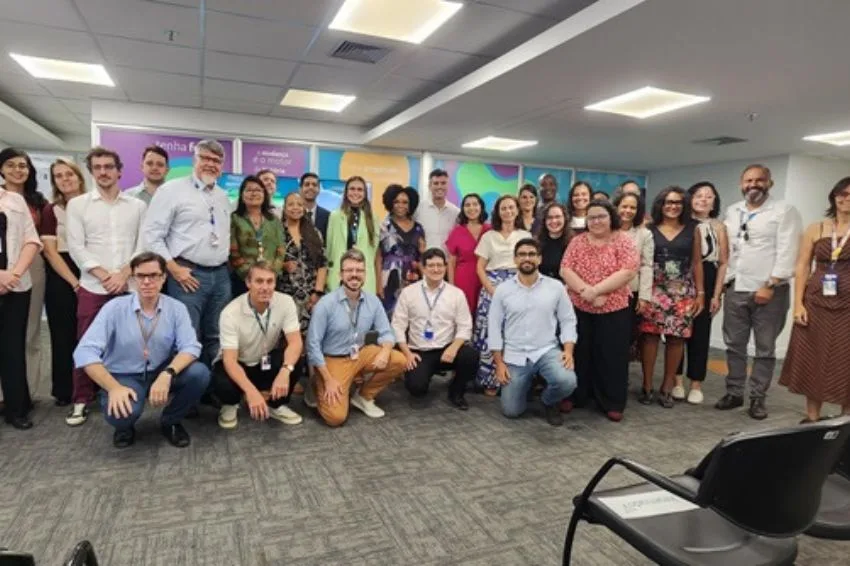
A EPE (Energy Research Company) and the Finep (Financier of Studies and Projects) promoted a Training Seminar on Energy Transition at the Finep headquarters, in Rio de Janeiro (RJ), which included the presentation of EPE studies relevant to the energy transition.
For Thiago Ivanoski, director of Economic, Energy and Environmental Studies at EPE, “Technology, innovation, energy – we need to have these increasingly integrated so that we can move forward, produce more, and climb higher steps. We already use Finep data for the purposes of monitoring and evaluating innovation, research and development.”
According to Thiago Prado, president of EPE, “it is impossible to think about energy transition without thinking about innovation and technological development. Part of this challenge of looking to 2055 is not giving up on any technology, because we do not know which one will emerge, blossom and perhaps become the dominant technology that will leverage this transition process.”
Energy transition: progress, challenges and lessons for 2025
Check out the study:
During the seminar, the “Biofuels Current Situation Analysis: Year 2023” and the executive notebooks “Sustainable Aviation Fuels in Brazil – Future Perspectives”, “Carbon capture, storage and use in Brazil: Contributions for the selection of areas of interest” and “The Role of the Oil and Natural Gas Sector in the Energy Transition” were presented, all published in 2024.
The Current Situation Analysis summarizes the most relevant events that occurred in the renewable fuels market in its base year, analyzing technical-economic indicators of ethanol, biodiesel and bioelectricity, as well as aspects related to the international biofuels market, greenhouse gas emissions avoided by the use of these renewable sources and the National Biofuels Policy.
The SAF notebook aims to consolidate relevant information about these fuels, presenting the production routes already approved by ANP (National Agency of Petroleum, Natural Gas and Biofuels), in addition to comparing the main aspects of these routes and outlining production trajectories in Brazil, aiming to meet programs to reduce greenhouse gas emissions in civil aviation.
Next, the booklet “Capture, storage and use of carbon in Brazil: Contributions for the selection of areas of interest” was presented, which maps the qualitative potential of each area of the national territory for the development of geological carbon storage projects in Brazil.
Finally, they presented the study “The Role of the Oil and Natural Gas Sector in the Energy Transition”, with considerations on the role of this sector in building a fair, inclusive and balanced transition.
The full study can be found by clicking here.
all the content of Canal Solar is protected by copyright law, and partial or total reproduction of this site in any medium is expressly prohibited. If you are interested in collaborating or reusing part of our material, please contact us by email: redacao@canalsolar.com.br.


Comments
Comments are moderated before publication.Comments should be respectful and contribute to a healthy debate. Offensive comments may be removed. The opinions expressed here are those of the authors and do not necessarily reflect the views of the author. Canal Solar.