
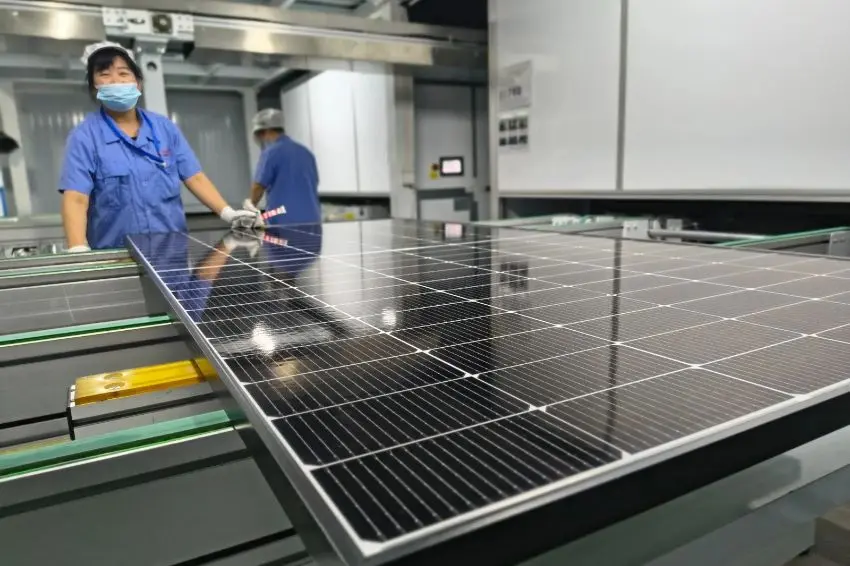
Two photovoltaic modules with the same nominal power can have similar prices and deliver different results in the field. Response to heat, performance under low irradiance, and dirt accumulation on the glass influence how much each module generates over time.
This difference is a factor in the choice of equipment for both centralized generation (CG) plants and distributed generation (DG) projects.
The price per watt-peak (R$/Wp) helps to compare the initial investment in the modules. To assess how much it costs to generate energy over the lifespan of the project, the benchmark is the levelized cost of energy (LCOE).
The calculation takes into account the initial investment, operating and maintenance expenses, and the energy the system is expected to generate throughout its lifespan, which can exceed 25 years. During this period, module degradation reduces energy production and impacts the cost of each kilowatt-hour generated.
“The evaluation of a photovoltaic module needs to go beyond the initial acquisition cost. The market seeks high-performance assets where glass technology, conversion efficiency, and long-term reliability guarantee the lowest Levelized Cost of Energy (LCOE) and maximum return for the investor,” highlights Camila Yamaguti, Sales Manager at ZNShine Solar.
Optical innovation and graphene glass technology from ZNShine Solar
Some of the light that hits a photovoltaic module is reflected by the front glass before reaching the silicon cells. The more useful light that passes through the glass, the greater the generation potential of the cells.
To increase light transmission, ZNShine Solar claims to have developed a graphene technology applied directly to the glass.
According to the manufacturer, this technology is patented and was developed in partnership with research institutions, including the University of Science and Technology of China.
- Greater light transmission. According to ZNShine, the technology that uses graphene directly on the glass surface allows for greater light transmission in the 600 to 1.100 nanometer range, which includes part of the visible light and near-infrared. According to the company, this characteristic can favor energy generation during the early morning and late afternoon hours.
- Reduced reflection on the glass. ZNShine also states that graphene technology applied directly to the glass reduces the amount of light reflected by the surface. According to the manufacturer, this can help the cells better utilize diffuse radiation, which reaches the module from various directions and has a greater impact on cloudy days.
Mitigation of Soiling and operational efficiency (OPEX)
Dust and other debris that accumulates on the glass of the modules reduces the amount of light reaching the cells and, consequently, the generation of energy.
The losses associated with this phenomenon, known in the industry as soiling, are estimated at between 3% and 5% per year and can be higher in dry regions or those with intense agricultural or industrial activity.
According to ZNShine Solar, graphene technology applied directly to glass helps remove dirt in two ways:
- Water spreads across the glass. The technology, which uses graphene directly on the glass surface, causes rainwater to form a thin film on the glass, making it easier to remove dust.
- Light helps decompose organic waste. According to the manufacturer, ultraviolet radiation activates a reaction in the graphene technology applied directly to the glass, which breaks down some of the organic material adhered to the glass.
ZNShine also states that these effects can reduce the frequency of cleanings and generate savings of up to 30% in O&M (operation and maintenance) costs in plants with a history of high dust accumulation.
Reliability and the ZNShine Solar standard of excellence
According to Camila Yamaguti, sales manager at ZNShine Solar, the ability of the modules to maintain performance in the field influences energy generation throughout the plant's lifespan.
Among the factors that can reduce production are microcracks in the cells, mechanical fatigue caused by repeated stress on the modules, and... potential-induced degradation (PID).
Camila states that ZNShine Solar modules are designed to minimize these risks. Among the key differentiators highlighted by the manufacturer are conversion efficiency, patented graphene technology applied directly to the glass, and a linear performance guarantee.
The guarantee defines the minimum power that the module must maintain throughout the coverage period, one of the parameters used in the plant's generation and revenue projections.
all the content of Canal Solar is protected by copyright law, and partial or total reproduction of this site in any medium is expressly prohibited. If you are interested in collaborating or reusing part of our material, please contact us by email: redacao@canalsolar.com.br.



Comments
Comments are moderated before publication.Comments should be respectful and contribute to a healthy debate. Offensive comments may be removed. The opinions expressed here are those of the authors and do not necessarily reflect the views of the author. Canal Solar.