
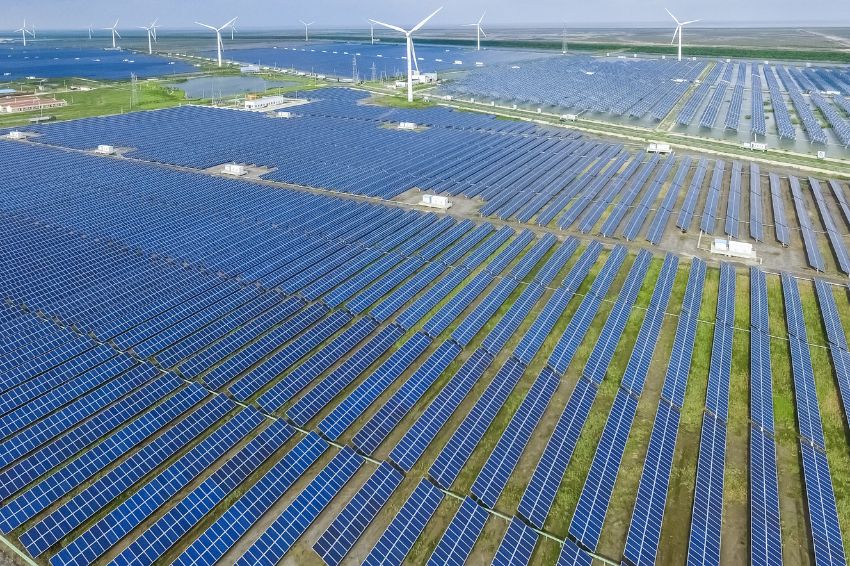
Government support and incentives for clean energy technologies have reached new heights as policymakers have placed renewed focus on energy security after several crises in recent years, according to a new IEA report (International Energy Agency).
The first edition of State of Energy Policy 2024 provides the most comprehensive and up-to-date global picture of energy policies by country and sector, highlighting the most substantial changes over the past 12 months. This includes a publicly available repository – the Energy Policy Inventory – which contains more than 5 energy-related policies from around the world in areas such as government spending, regulation and trade.
The inaugural edition shows that governments around the world have earmarked nearly $2 trillion in direct investment support for clean energy since 2020. This is almost triple the amount committed after the 2007-08 financial crisis. The report finds that about 80% of direct government spending allocated went to China, the European Union and the United States.
Domestic manufacturing incentives for clean energy are an area of public investment that continues to grow substantially, accounting for nearly 10% of total government spending since the start of the decade, with low-emission vehicles, hydrogen and batteries receiving the largest allocations.
According to the IEA, high-profile examples include the United States' Inflation Reduction Act, India's Production-Linked Incentive and Brazil's Green Mobility and Innovation Programme, with other countries introducing similar policies and targets.
At the consumer level, the report highlights that the cost of short-term government support totaled $940 billion at the height of the global energy crisis. While many emergency measures have been eased, government-led programs to address ongoing affordability and competitiveness issues remain in place, particularly to address the upfront costs of adopting clean energy technologies.
“The unprecedented level of policy support and investment for clean energy is a recognition that these technologies not only reduce emissions, but help safeguard energy security,” said Laura Cozzi, IEA Director of Sustainability, Technology and Outlook. “The increase in trade policies and incentives for domestic manufacturing also signals that clean energy is becoming central to industrial policies.”
With high geographic concentrations within clean energy supply chains – in technologies such as solar PV, wind, batteries and electrolysers – the Agency sees an increased policy focus on supporting domestic manufacturing and supply chain security.
According to the research, this is reflected in a dramatic jump in the number of trade policies related to clean energy technologies, with almost 200 new trade measures introduced since 2020, compared to less than 40 in the previous five years.
Adjustments to import tariffs, anti-dumping duties and countervailing measures, including those recently announced by the European Union and the United States, account for nearly 40% of changes in clean energy trade policy since 2020.
Energy performance standards are another area where policy intervention has grown significantly in recent years. In 2023 alone, 35 countries—representing 20 percent of global greenhouse gas emissions—have passed new energy performance regulations.
However, some countries have also rolled back regulations, such as bans on the sale of new fossil fuel boilers and internal combustion engine vehicles, and the phasing out of unmitigated coal. These rollbacks have affected about 1% of current global emissions and have been outpaced by increases in severity in other parts of the world.
Don't miss any news from the electricity sector! Sign up to our Community by clicking here and get exclusive access to our content!
all the content of Canal Solar is protected by copyright law, and partial or total reproduction of this site in any medium is expressly prohibited. If you are interested in collaborating or reusing part of our material, please contact us by email: redacao@canalsolar.com.br.




Comments
Comments are moderated before publication.Comments should be respectful and contribute to a healthy debate. Offensive comments may be removed. The opinions expressed here are those of the authors and do not necessarily reflect the views of the author. Canal Solar.