

With the new regulatory challenges and changes in the Brazilian electricity sector, professionals and companies in the photovoltaic sector have been seeking alternative solutions to maintain the technical and financial viability of projects.
In this scenario, Grid Zero systems stand out as a strategy to continue operating even without the need to inject energy into the distribution grid.
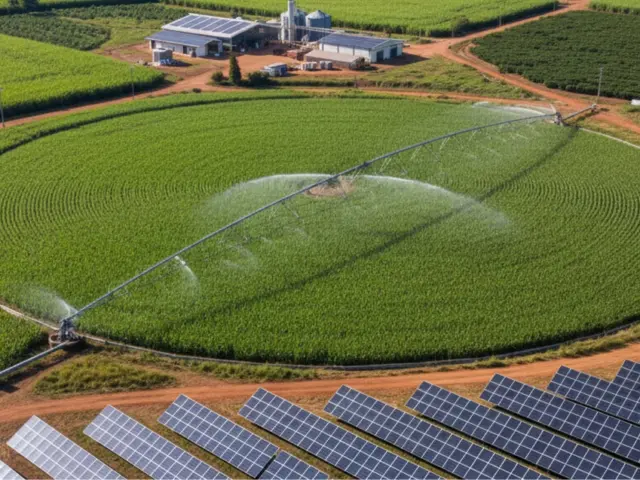
According to Rui Esteves, Director of Quality and Innovation at TTS Energy, the Grid Zero concept consists of generating energy locally – with almost instantaneous consumption – without exporting surpluses to the concessionaire.
“This approach requires precise control of the power flow, rapid response of the equipment and, above all, attention to technical standards and safe operation of the system,” he explained.
Advantages of Grid Zero
According to the expert, the main advantages of this configuration include the reduction of contracted demand, the possibility of starting generation even before the completion of reinforcement works on the network and the elimination of risks with flow reversal, which avoids rejections or embargoes. “This is especially useful in regions with limited infrastructure or where the distributor has technical restrictions.”
“Grid Zero projects also allow greater freedom in the sizing of hybrid systems and integration with batteries, especially in commercial and industrial applications. In addition, the configuration can be adapted for both low-voltage customers (captive market) and consumers in the Free Energy Market,” he pointed out.
Free Energy Market
The gradual opening of the market, with full release expected by 2027, has encouraged integrators and consultants to explore new fronts of action with medium and large customers, especially in medium voltage.
“Access to more competitive prices, personalized contracts and greater predictability in consumption make the ACL (Free Contracting Environment) a promising – and complementary – alternative to traditional distributed generation,” emphasized Esteves.
However, success in this segment requires technical expertise, regulatory knowledge and the ability to model specific solutions for different consumer profiles. This includes everything from access validation and tariff structure to systems architecture, risk modeling and long-term contracts.
Specialized training for new scenarios
In this new context, technical training becomes essential. To meet this demand, the Canal Solar Educacional has opened a new class Grid Zero Projects course, focusing on integrators, designers and engineers who want to master this system model.
The training will be held between June 23rd and 26th, with a scholarship of up to 15%. Interested parties can obtain more information at this link or by filling out the form below:
[elementor-template id="561407″]
all the content of Canal Solar is protected by copyright law, and partial or total reproduction of this site in any medium is expressly prohibited. If you are interested in collaborating or reusing part of our material, please contact us by email: redacao@canalsolar.com.br.



Comments
Comments are moderated before publication.Comments should be respectful and contribute to a healthy debate. Offensive comments may be removed. The opinions expressed here are those of the authors and do not necessarily reflect the views of the author. Canal Solar.