
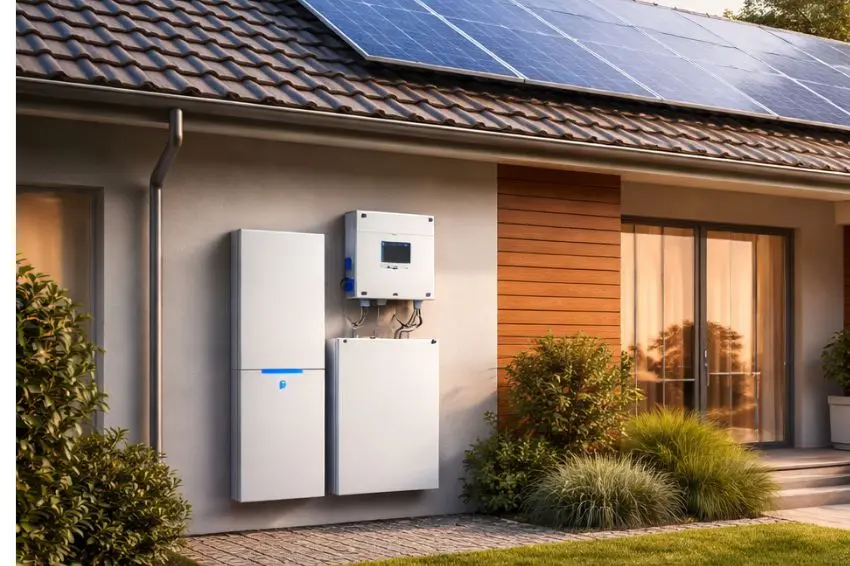
Demand for home batteries has seen significant growth in recent weeks in a major Australian city, amid escalating conflicts in the Middle East.
In Sydney, Australia, demand for this type of solution skyrocketed by 200% during that period, according to an analysis published by VoltX Energy.
The increase in inquiries for this type of solution has been more pronounced in suburban areas, especially in the northwest region of the city, where energy consumption is higher and there is greater availability of space for installation.
The survey shows that these areas have characteristics that favor the adoption of larger systems, such as more space available for installation and a higher consumption profile.
David Sedighi, the company's operations director, explains that this behavior is more evident in areas with a family-oriented profile.
“Residential neighborhoods, generally geared towards families, tend to have higher energy consumption due to the size of the houses and the number of residents. In this context, it makes sense to seek greater self-sufficiency by storing and using one's own energy,” he stated.
According to the company, the average annual electricity bill for a family of four in the region already reaches approximately US$2.350,00, which is equivalent to R$12.289,00 at the current exchange rate.
End of incentive
Na AustraliaAnother key factor driving the increased demand for residential batteries is the change in rules incentivizing this solution.
Currently, consumers can still access more advantageous reimbursement conditions for higher-capacity systems, which has encouraged the anticipation of investments.
However, this scenario is about to change. Starting May 1st of this year, subsidies will be reduced, altering the economic viability of the projects.
According to Sedighi, families who wait to install the system until after this date will have to pay almost US$10.000 (approximately R$51.800,00) more for a 50 kWh system than they pay now.
Australia: Three hours of free solar electricity starting in 2026
all the content of Canal Solar is protected by copyright law, and partial or total reproduction of this site in any medium is expressly prohibited. If you are interested in collaborating or reusing part of our material, please contact us by email: redacao@canalsolar.com.br.




Comments
Comments are moderated before publication.Comments should be respectful and contribute to a healthy debate. Offensive comments may be removed. The opinions expressed here are those of the authors and do not necessarily reflect the views of the author. Canal Solar.