
By the end of 2024, the Brazil must reach 150 MWp of installed capacity in floating solar plants. Already in world, the segment should exceed 6 GW of installed power by 2031.
According to estimates from wood mackenzie, the forecast is that at least 15 countries surpass the 500 MW mark. The technology is also expected to show stable growth, with a annual evolution rate of 15%.
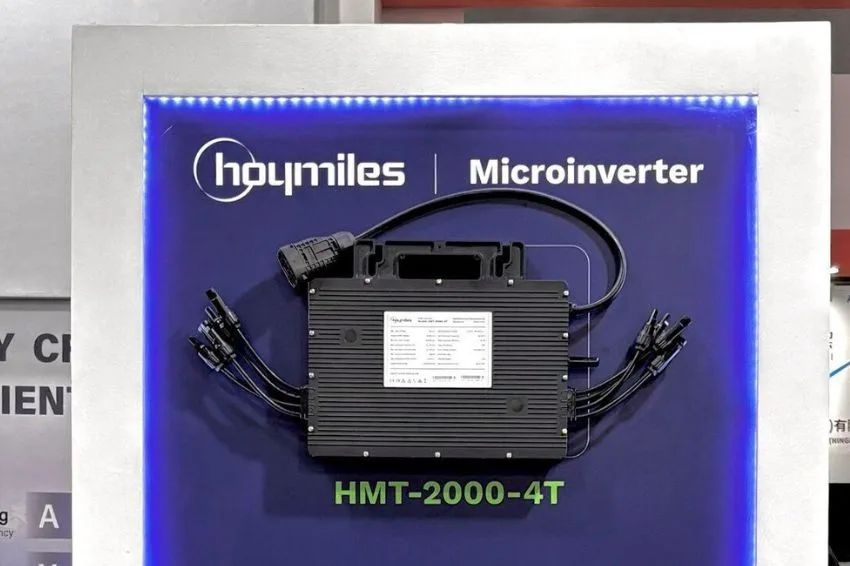
Paying attention to this market, Hoymiles realized rigorous testing In yours microinverters and the result was positive: the same operated stably for floating PV applications.
Check out some below tests that the manufacturer's products have passed marine environments and under extreme environmental conditions.


Salt spray test
Industrial-grade salt spray testing is a commonly used method for evaluating the corrosion resistance of industrial products. By simulating corrosion in marine environments, the test examines the durability of equipment under harsh environmental conditions.
During testing, the solution is usually exposed to salt spray or salt water for a designated period of time while being observed for rust, corrosion, or other surface damage.
Hoymiles microinverters, including connection terminals and enclosures, have undergone salt spray testing and passed – meaning they have excellent corrosion resistance and are capable of operating stably for long periods of time in marine environments.
According to the company, products that pass this test are generally safe for use in offshore engineering, marine equipment, coastal wind energy and other scenarios prone to salt spray erosion.
Temperature and humidity test
Temperature and humidity testing is an essential assessment procedure designed to evaluate the resilience and resistance of equipment under extreme environmental conditions. Among the important items are:
- Constant humidity and thermal operation test: the objective is to test the maximum temperature and humidity at which the product can work, without affecting its performance;
- 85℃ Temperature and 85% Humidity Test: This simulates harsh environmental conditions to ensure that the microinverter's internal components are still reliable for a long time.
These tests can ensure the durable performance of photovoltaic systems in high temperatures and humid conditions typical of coastal areas. According to the company, Hoymiles microinverters and internal components are built with longevity in mind, reducing operation and maintenance costs and risks of failure.
Ultraviolet Exposure Test
Ultraviolet (UV) exposure testing is a method that evaluates the durability performance of materials and products. By simulating UV exposure from sunlight, the test examines the equipment's durability in outdoor environments.
During testing, microinverters are exposed to UV light for a set period of time and are then observed for color changes, cracking, fading, or other signs of aging.
Passing the UV exposure test means the product has good anti-aging performance and can resist UV radiation from sunlight – and other natural environmental factors.
Qualified equipment can be safely used in outdoor applications such as building facades, outdoor decoration, solar photovoltaics and other scenarios that are generally in direct sunlight.
Hoymiles stated that it conducts rigorous UV exposure testing through third-party institutes to ensure that the product – including case, connectors and cables – can withstand high levels of UV exposure.
Advantages of floating PV plants
Floating photovoltaic systems can be installed on the surface of water, such as the sea, lakes and reservoirs, for example. The effective use of aquatic spaces for installing panels offers a series of advantages:
- Water cools the modules and therefore improves power generation efficiency;
- Floating solar power plants can mitigate water evaporation, improve the surrounding aquatic environment, and contribute to ecological and water conservation.
“As the technology continues to mature and costs decrease, there has been a notable increase in investment in floating solar energy globally. As a result, it is expected to emerge as an important growth engine for the photovoltaic industry”, estimated Hoymiles.
Challenges in Floating PV
Unlike photovoltaic systems on land, those floating on water are exposed to more uncertainties and environmental challenges.
- System components must be durable enough to withstand prolonged exposure in humid conditions;
- The layout must be carefully designed, including the placement of photovoltaic modules, inverters, brackets, etc.
all the content of Canal Solar is protected by copyright law, and partial or total reproduction of this site in any medium is expressly prohibited. If you are interested in collaborating or reusing part of our material, please contact us by email: redacao@canalsolar.com.br.


Comments
Comments are moderated before publication.Comments should be respectful and contribute to a healthy debate. Offensive comments may be removed. The opinions expressed here are those of the authors and do not necessarily reflect the views of the author. Canal Solar.