

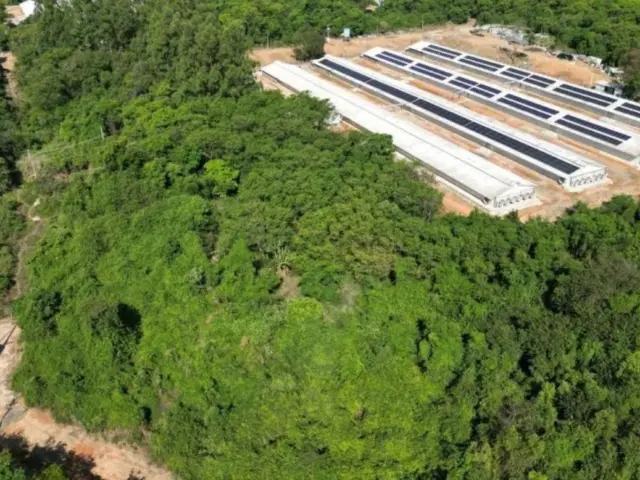
A UNICOBA announced that his hybrid plant, installed in Santa Helena do Ingles, in Amazon, eliminated 143 kg of CO2 per day with the replacement of diesel oil generators with solar energy and batteries.
Annually, according to the company, there are more than 53 tons of CO2 that would be emitted by burning diesel. The project, which recently completed one year, has 132 photovoltaic modules connected to 54 batteries which generate a daily energy of 202,75 kWh.
Fossil generators, which are highly polluting, also required a high cost. For the same amount of daily energy captured with UNICOBA solutions, 53,69 liters of diesel would be needed.
The system installed in Santa Helena is part of the company's initiative to contribute to access to electricity for more than 450 families living in remote areas of the Amazon.
In total, the manufacturer has already installed more than 5 isolated electricity generating points, serving riverside families in the Legal Amazon who still did not have 24-hour power.
Another 15 thousand points are in the implementation phase. At the moment, the company is operating in the Purus River, close to the border of Rondônia and Acre. There are 3,8 km and more than 4 riverside families served.
The company's solutions are made up of photovoltaic panels and stationary lithium batteries with intelligence not only to store the energy collected during the hours of sunlight to also have electricity at night, but also to control and calculate how long it will last, in order to use it optimally so there is no shortage.
Working alongside energy distributors in the North region – Equatorial, Energisa, Amazonas Energia and Roraima Energia -, UNICOBA has already installed systems in riverside communities in the states of Mato Grosso, Pará, Rondônia and Amazonas. The objective is to expand the projects and invest an additional R$200 million in the first half of 2023.
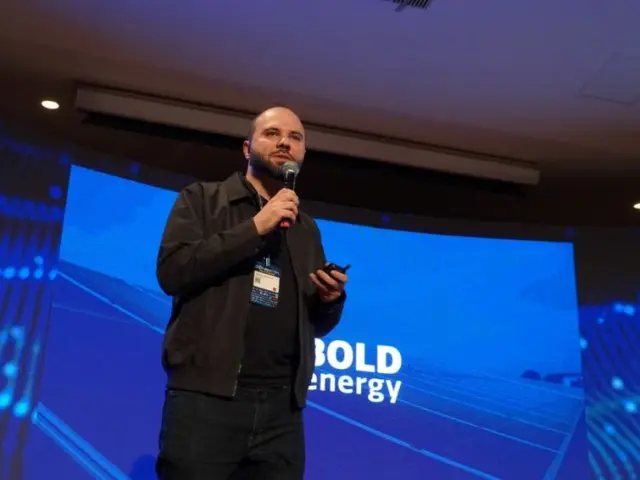
“The use of hybrid plants is the most sustainable option to bring energy to families disconnected from the SIN (National Interconnected System)”, highlighted Marcelo Rodrigues, head of Innovation and Business at UNICOBA.
“Thanks to solar energy generation and battery storage, we are guaranteeing light for people, increasing economic productivity, with fishing, açaí and tourism; and expanding access to education and health”, he added.
UNICOBA projects also promoted the reduction of thousands of tons of CO2 in the ozone layer, with the replacement of diesel power generators, which today are the only source of energy for many families living in these isolated regions.



Comments
Comments are moderated before publication.Comments should be respectful and contribute to a healthy debate. Offensive comments may be removed. The opinions expressed here are those of the authors and do not necessarily reflect the views of the author. Canal Solar.