

Optimize infrastructure and operational costs, reducing the use of diesel oil for energy generation, in addition to seeking sustainability. These are the objectives of the hybrid system in Oiapoque (AP), composed of a 4 MW photovoltaic plant and a 12 MW thermal plant with diesel generators.
The city is not connected to the SIN (National Interconnected System) and depends on an energy producer to supply and supply the municipality with more than 24 thousand residents.
The photovoltaic plant was installed in 2017 by Voltalia after winning a tender to supply electricity to Oiapoque, being the only company to offer a hybrid photovoltaic/thermal system, consisting of clean (solar) and thermal generation with diesel generators.
The solar plant has 15.840 solar panels, 132 inverters occupying an area of 70 thousand m². The plant generates approximately 5 GWh per year. The integration of the two energy sources (solar and thermal) has generated savings of 10% in diesel per year.
To ensure intelligent control of the hybrid system, Voltalia is using a power management system from DEIF, with 16 controllers (6 x ASC and 10 x AGC-4) making up the backbone of the power management system.
“DEIF controllers were the only solution we found on the market that could integrate thermal and solar plants. Controllers from both plants communicate and provide good monitoring and supervision options. It is a unique solution on the market”, highlights Leonardo Salgardo, manager of the Voltalia Power Plant.
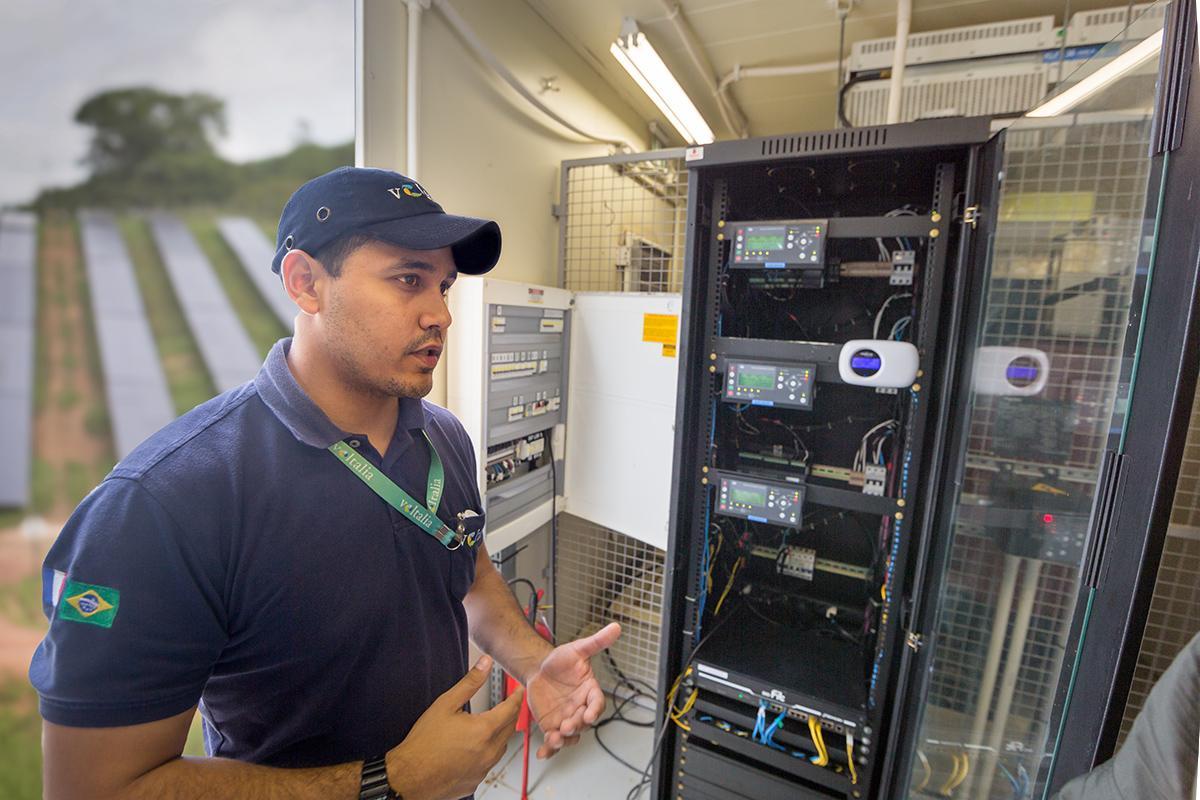
Salgardo also highlights that this automated solution guarantees minimum fuel consumption, maximizing photovoltaic penetration without compromising the generator set's minimum load requirements.
“We can monitor and control the entire office plant, and we don't need to go to the plant to open and close circuit breakers and monitor alarms. We can access everything from the operating room, including the histories of the DEIF controllers and, by analyzing the data, we can optimize the operation and increase energy production”, comments Leonardo.

Future plans for Oiapoque
Voltalia said it is planning to build a 7,5 MW run-of-the-river hydroelectric plant in Oiapoque. The plant is expected to be ready in early 2023 and further reduce diesel consumption, providing the community with even greener energy.
According to the company, DEIF controllers will be able to integrate the thermal/solar plant with the hydroelectric plant. After installing the hydroelectric plant, Voltalia expects renewable sources to meet up to 90% of the city's energy demand.

Comments
Comments are moderated before publication.Comments should be respectful and contribute to a healthy debate. Offensive comments may be removed. The opinions expressed here are those of the authors and do not necessarily reflect the views of the author. Canal Solar.