
1. Introduction
The transformation of the Brazilian electricity sector can no longer be understood solely from the perspective of expanding installed generation capacity. For decades, energy planning has been predominantly guided by a central question: how much energy will the system be able to produce to meet present and future demand?
The increasing participation of variable renewable sources, the digitalization of loads, the electrification of production processes, the expansion of distributed generation, and the greater operational complexity of the system are progressively shifting the debate to a second question: when will energy be available and with what degree of flexibility can it be used? It is in this context that energy storage systems assume strategic relevance.
The battery introduces a temporal variable into energy planning. In simplified terms, it allows, within technical and economic limits, the dissociation of when energy is available from when it will be used. This characteristic transforms storage into a potential instrument for flexibility, load management, operational resilience, and integration of distributed energy resources.
In rural areas, the discussion takes on particular dimensions. Contemporary agricultural production is increasingly dependent on electricity for irrigation, pumping, refrigeration, product preservation, facility climate control, automation, connectivity, telecommunications, processing, remote monitoring, and various other activities.
In this scenario, energy is not merely an ancillary input. In certain production processes, its unavailability can compromise operational continuity, productivity, quality, and conservation.
The inclusion of storage systems among the financing options linked to Crop Plan 2026/2027 should therefore be interpreted as more than simply expanding a list of equipment.
This move could represent the beginning of a structural change: the recognition, by rural credit policy, that the energy modernization of the countryside depends not only on the capacity to produce electricity, but also on the capacity to manage it over time.
The central hypothesis of this article is that the convergence of rural credit and energy storage creates a new economic frontier for Brazilian agribusiness, while also highlighting the need for coordination between agricultural policy, energy policy, and sectoral regulation.
2. The crop plan as an instrument of public policy and productive modernization.
The Plano Safra (Harvest Plan) is one of the main instruments for organizing and directing Brazilian rural credit. Its economic function goes beyond simply providing financial resources, as credit conditions influence investment decisions, technological incorporation, productive modernization, and risk management.
In the 2026/2027 cycle, R$ 525,1 billion was announced for agribusiness. This amount reveals the economic scale of the program and its potential to guide investments on a national scale.
The importance of including storage technologies should be understood precisely from this perspective.
When a public credit policy begins to include a specific technology in its financing structures, it's not just a financial change that occurs. There is potentially a reduction in barriers to entry, increased demand, stimulation of supply, incentives for project structuring, and the creation of new relationships between manufacturers, integrators, rural producers, cooperatives, financial institutions, consultants, agents in the electricity sector, and providers of digital solutions.
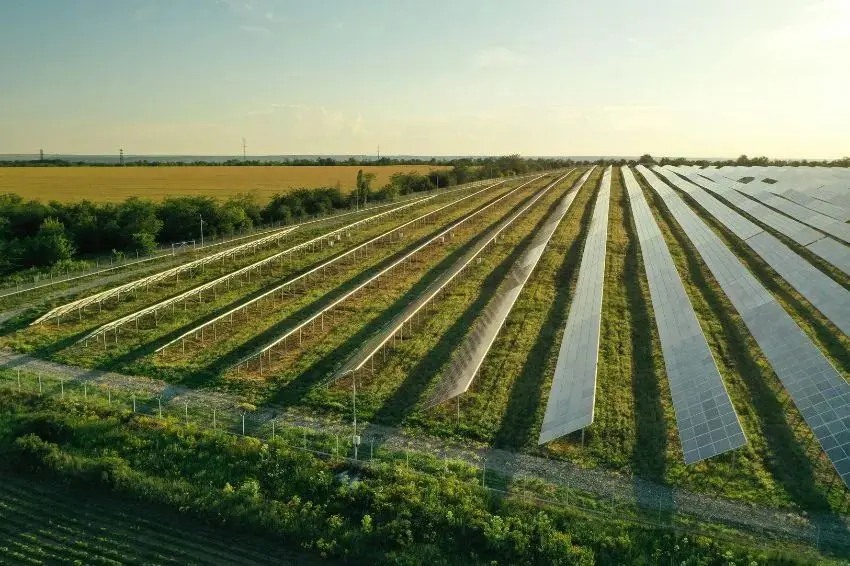
The Plano Safra program will now finance energy storage systems in rural areas.
In this sense, credit functions as a mechanism for technological induction. Recent experience with photovoltaic solar energy demonstrates that the initial capital cost can constitute a significant barrier to the adoption of energy technologies.
The availability of financing alters the economic analysis because it allows the investment to be spread over time and brings the financial outlay closer to the expected economic benefits of the asset.
In storage, this issue is even more sensitive. Unlike a generation solution whose economic proposition can be presented predominantly based on the energy produced, a storage system depends on multiple variables: power, energy capacity, duration, depth of discharge, efficiency, degradation, operating cycles, load profile, control strategy, tariff conditions, grid availability, operational purpose, and expected lifespan.
For this reason, financing batteries doesn't just mean financing equipment. It means opening up space for a new category of energy projects whose viability depends on the integration of engineering, data, regulation, and economics.
3. From generation to flexibility: a paradigm shift
The expansion of distributed generation in Brazil has consolidated an energy narrative strongly centered on local electricity production. For millions of consumers, the energy transition has become associated with the installation of photovoltaic systems and the possibility of reducing energy expenses.
Storage alters this logic. Generation primarily answers the question: How much energy can be produced? Storage adds another: When should this energy be used?
The difference is structural. A consumer unit may have high solar generation at a certain time and higher demand at another. It may be subject to power peaks, interruptions, fluctuations, or critical processes that do not tolerate discontinuity. It may have loads whose economic value varies according to the time of operation.
In these situations, energy analysis ceases to be exclusively volumetric and becomes temporal. Energy does not have the same economic value at all times. This observation is fundamental to understanding storage.
A kilowatt-hour available during a period of abundance may have a different economic utility than one available during an outage, a peak demand, a critical operating window, or a period of higher marginal cost for a given consumer. Storage, therefore, introduces a dimension of flexibility.
This flexibility may allow, depending on the technical configuration and applicable framework, strategies related to:
a) operational continuity;
b) power supply for critical loads;
c) increased self-consumption of local generation;
d) temporal shift in consumption;
e) demand management;
f) peak reduction;
g) integration with renewable sources;
h) formation of microgrids;
i) Contingency response;
j) improved energy resilience.
However, it should not be assumed that all these applications are automatically or indiscriminately available in any project. Each function depends on the technical architecture, control system, equipment capacity, connection regime, installation characteristics, and legal and regulatory framework.
4. Storage in agribusiness: energy as productive infrastructure
The importance of storage in rural areas stems from the technological transformation of agricultural activity itself.
Precision agriculture, automation, connectivity, sensors, pumping systems, controlled irrigation, climate-controlled environments, cold chains, and processing methods are increasing the reliance on reliable electrical infrastructure.
In certain activities, power outages can have consequences that go beyond the cost of the electricity not supplied.
There may be process disruptions, product loss, interruption of production cycles, failures in automated systems, or reduced productivity.
It is precisely at this point that the economic analysis of energy storage needs to overcome a simplistic view of payback based solely on the difference between the purchase cost and the value of the energy saved.
The benefit of a battery system may be associated, depending on the case, with the avoided cost of interruptions, the continuity of critical processes, the reduction of peak demand, the optimization of self-consumption, or the possibility of greater control over the energy profile.
This means that the economic value of storage is highly dependent on the specific case. For a rural property with low load criticality and a reliable supply, a given project may not be economically viable.
For another system, with continuous processes, sensitive cooling, strategic pumping, or high losses due to interruptions, the analysis may be substantially different.
Therefore, financing policy must be accompanied by a culture of responsible technical and economic sizing.
5. Bess is not synonymous with backup.
One of the main conceptual misconceptions in the popularization of batteries is reducing them to the function of emergency power.
Although backup is a relevant application, a Battery Energy Storage System (BESS) can have a much more complex architecture and purpose.
A BESS typically involves not only battery cells or modules, but also power conversion, management, protection, control, and communication systems, and, depending on its size and configuration, thermal infrastructure and specific safety systems.
The economic intelligence of the project lies in coordinating these components with the actual profile of the installation. Therefore, two rural properties with similar annual consumption may require completely different solutions.
The hourly load curve, peak power, the existence of local generation, the frequency of interruptions, the criticality of processes, the seasonality of production, and the tariff regime are all potentially decisive variables.
The risk of accelerated market expansion without adequate technical expertise is the proliferation of oversized, undersized, or projects driven by economic promises incompatible with the actual data of the consumer unit. Financing reduces the capital barrier, but does not eliminate the risk of design errors.
6. Law No. 15.269/2025 and the new legal status of storage.
The evolution of energy storage in Brazil is not occurring in a regulatory vacuum. Law No. 15.269, of November 24, 2025, constitutes a significant milestone in the modernization process of the electricity sector and introduces explicit legal bases related to energy storage systems.
Among the relevant aspects, the legislation now includes the activity of electricity storage within the regulatory powers of the National Electric Energy Agency and has established provisions related to the inclusion of these systems in sectoral planning and contracting. The legal importance of this change is significant.
Historically, the regulatory architecture of the electricity sector has been built upon relatively defined categories: generation, transmission, distribution, commercialization, and consumption.
Storage challenges this organization because its operational behavior can vary. At one point, the system absorbs energy. At another, it conserves energy for future use.
Later, it can be supplied to the installation or, depending on the architecture and applicable rules, interact with the network. This versatility makes any attempt at a purely intuitive framework inadequate. The legally correct question is not simply: "Does a battery generate power or consume energy?"
The most appropriate question is: What function does the system perform, in what configuration, at what voltage level, under what connection regime, and with what effects on the network and other agents?
Law No. 15.269/2025 represents progress precisely because it recognizes the need for legal treatment of storage. However, the existence of a legal basis does not mean that all operational, commercial, tariff, and procedural issues are automatically resolved.
7. The mismatch between technology, credit, and regulation.
The inclusion of batteries in rural financing mechanisms reveals a recurring phenomenon in technological transitions: different institutional dimensions evolve at different speeds.
Technology may mature at a certain speed. Capital may respond at another. Regulation, in turn, needs to reconcile innovation, safety, economic efficiency, reliability, and user protection.
This is not to say that Brazil has no regulations whatsoever regarding storage. Such a statement would be technically inaccurate given recent legislative and institutional developments.
The problem is something else.
The practical expansion of applications tends to multiply specific questions:
- How will the connection be handled in each configuration?
- What technical requirements will apply?
- How will the measurement be taken?
- What is the treatment of the absorbed and subsequently discharged energy?
- How can we avoid undue economic impact in certain architectural designs?
- When will there be interaction with the network?
- How do you distinguish between behind-the-meter storage and assets intended for providing system services?
- What responsibilities will fall to the agents involved?
- How to treat hybrid systems?
- How to integrate storage, distributed generation, and consumption?
These questions demonstrate that regulatory maturity does not depend solely on an abstract legal definition.
It depends on operational and economic rules capable of recognizing the plurality of functions of storage.
8. Credit does not replace regulation, but it can accelerate the market.
The availability of financing can profoundly alter the speed at which a technology spreads. By reducing the need for initial outlay and spreading the investment over time, credit expands the universe of potential buyers.
In terms of storage, this could have a significant effect: the market could gain scale before all regulatory controversies are fully resolved.
This scenario should not necessarily be interpreted as negative. Innovation often precedes regulatory consolidation. However, it requires caution. The financial institution will analyze credit risk and financing conditions. The supplier will analyze the technological solution. The integrator may size the system. But the complete energy project requires a cross-cutting vision.
It is necessary to understand:
a) the electrical profile of the unit;
b) the purpose of the storage;
c) the operating model;
d) the connection architecture;
(e) the tariff system;
f) the existence of local generation;
g) potential interaction with the network;
h) the distributor's requirements;
i) the applicable regulatory rules;
j) the expected degradation;
k) the maintenance strategy;
l) the security of the system;
m) economic rationality.
The absence of this integration can transform a promising public policy into a driver of poorly structured investments.
9. The risk of the “solarization” of the battery market.
There is one particular risk that deserves attention: replicating in energy storage the commercial logic used in part of the photovoltaic market.
Solar systems and storage systems have distinct economic characteristics.
In photovoltaic generation, although individualized technical analysis is also essential, there is a relatively intuitive relationship between solar resources, installed capacity, and expected energy.
In terms of storage, value doesn't simply derive from the battery's existence. It derives from its use. A battery that's not being used can have value as a contingency reserve. A battery that's cycled daily has a different logic.
A battery designed to reduce peak demand requires a specific strategy. A battery integrated with solar power generation has its own dynamics.
A battery designed for critical loads responds to different criteria than those used for time arbitrage.
Therefore, selling BESS based solely on nominal capacity or a generic promise of savings represents a dangerous oversimplification. The sector will need to develop a data-driven culture.
Load curves, measurement intervals, seasonality, power, duration, frequency of events, avoided costs, and degradation need to be integrated into the decision.
10. Storage, distributed generation and self-consumption
The expansion of battery use in rural areas may also change how distributed generation projects are designed.
For years, the prevailing logic has been associated with maximizing generation and using the compensation mechanisms provided for in the applicable legal and regulatory framework.
Storage introduces another conceptual possibility: increasing the temporal coincidence between generation and consumption.
In a photovoltaic installation, some of the energy can be produced during times when the local load is reduced. Depending on the architecture, the battery can absorb a portion of this energy for later use.
This tends to emphasize the concept of instantaneous or temporally displaced physical self-consumption, although the legal and economic treatment of each configuration must be analyzed in light of the applicable rules.
This discussion becomes particularly relevant given the evolution of the Electricity Compensation System, the transition rules established by Law No. 14.300/2022, and the growing importance of managing consumption profiles.
The future of distributed generation may therefore be less focused on simply maximizing the energy injected into the grid and more oriented towards intelligent integration between generation, consumption, storage and control.
11. The systemic dimension: Brazil needs flexibility.
The debate about storage in agribusiness cannot be isolated from the broader transformations of the National Interconnected System.
The expansion of variable renewable energy sources alters the operational needs of the system. High production during certain periods does not, in itself, guarantee availability coinciding with all periods of demand.
Similarly, the existence of installed capacity does not eliminate transmission constraints, power requirements, load ramps, and local network challenges.
In this environment, flexibility becomes increasingly valuable. It is important to avoid oversimplification. Batteries do not solve all the problems in the electricity sector. They do not indiscriminately replace transmission expansion. They do not eliminate the need for planning. They do not correct all congestion. They are not a universal solution for every generation restriction event. Location, power, duration, and operational strategy are determining factors.
However, precisely because of their responsiveness and control capabilities, storage systems can be integrated into the set of available resources to increase flexibility and resilience.
12. Financing as a sign of economic maturity
The inclusion of storage technology in financing policies represents an important sign of maturity. Emerging technologies typically follow a trajectory that involves research, demonstration, initial applications, cost reduction, supply chain formation, standardization, financing, and commercial expansion.
When financial institutions and public policies begin to structure mechanisms for acquiring a particular asset, a qualitative change occurs.
Technology is no longer seen merely as experimental innovation, but is becoming an integral part of ordinary investment decisions.
This can produce chain reactions:
a) increased demand;
b) greater competition among suppliers;
c) development of specialized integrators;
d) expansion of engineering services;
e) emergence of business models;
f) need for specific insurance;
g) improvement of technical standards;
h) development of regulatory skills;
i) increased investor interest.
The Plano Safra (Harvest Plan) can therefore act as a catalyst for a storage ecosystem applied to agribusiness.
13. The legal challenges of bess contracts
Market expansion will also require contractual evolution.
Supply contracts for storage systems should not automatically replicate models used for photovoltaic systems.
Specific issues need to be addressed through discipline.
Among them:
a) guaranteed usable capacity;
b) nominal power and effectively available power;
c) efficiency;
d) degradation;
e) cycles;
f) warranty conditions;
g) operational limits;
h) integration with third-party systems;
i) responsibilities for software;
j) updates;
k) cybersecurity;
l) maintenance;
m) availability;
n) performance;
o) component replacement;
p) disposal and destination at the end of its useful life;
q) Responsibility for integration failures;
r) acceptance criteria.
Furthermore, the commercial promise must correspond to the configuration actually contracted. If the project is sold with the expectation of cost savings, the contract needs to clarify the assumptions. If it is sold for backup, it must define the loads covered, expected autonomy, and conditions.
If it's sold for demand management, the performance parameters need to be measurable. Market growth without contractual maturity could create a new frontier of litigation.
14. A new frontier for cooperatives and collective structures
The Brazilian rural environment has a strong cooperative tradition. This characteristic can create specific opportunities for storage, although the models must be analyzed with legal rigor.
Agricultural cooperatives possess significant cargo volume, shared infrastructure, processing units, storage facilities, refrigeration systems, and industrial processes.
The combination of renewable generation, demand management, and storage can open up opportunities for collective or centralized projects in strategic facilities.
However, economic cooperation should not be confused with automatic authorization for any energy sharing. The corporate or associative structure does not preclude the application of sectoral rules.
Each model must comply with the legal framework applicable to the generation, consumption, connection, commercialization, and potential compensation of energy. This is a fundamental point. Contractual innovation cannot be used as a substitute for electricity regulation.
15. The need for integrated energy governance
The main consequence of including batteries in rural financing may be institutional. The energy project no longer fits into a single discipline.
It requires dialogue between:
- electrical engineering;
- regulatory law;
- contract law;
- rural credit;
- finance;
- safety;
- information Technology;
- asset management;
- sustainability.
This multidisciplinary approach represents both a challenge and an opportunity. Farmers shouldn't decide on storage solely based on equipment price. Financial institutions shouldn't exclusively analyze repayment capacity. Integrators shouldn't only size systems based on installed capacity. Lawyers shouldn't limit themselves to a formal review of the contract. The quality of the project depends on integrating these perspectives.
16. Final considerations
The inclusion of energy storage systems in the financing environment of the 2026/2027 Harvest Plan represents a significant shift in the relationship between agricultural policy and energy policy. Its significance goes beyond the mere acquisition of batteries.
The movement indicates that the modernization of the field is beginning to incorporate a new dimension: the ability to manage energy over time.
During the first stage of the distributed energy transition, the dominant question was: How much were we able to generate?
In the next step, the question tends to be: When do we need to use it? This change has economic, regulatory, and institutional consequences.
In agribusiness, storage can contribute to resilience, operational continuity, integration with renewable sources, and energy management, provided that projects are correctly sized and have demonstrable economic rationale.
In the electricity sector, the expansion of batteries is putting pressure on the evolution of rules for connection, measurement, operation, and valuation of flexibility.
In the legal environment, it requires more sophisticated contracts and individualized analysis of technical configurations. In the financial market, it transforms an asset previously perceived as emerging into an object of structured investment policies.
Law No. 15.269/2025 demonstrates that the Brazilian legal system has begun to formally recognize the role of storage. The advancement of capacity contracting initiatives and the expansion of financing mechanisms indicate that the market is likely to accelerate.
The central question, therefore, is no longer whether energy storage will be part of Brazil's energy future. The question is how it will be integrated, financed, regulated, contracted, and operated. The Plano Safra (agricultural plan) may have opened a new frontier. Not only because it now allows batteries.
But because it recognized, albeit implicitly, a fundamental principle of the new electricity economy: The value of energy depends not only on how much is produced, but also on when it is available. And perhaps that is precisely the most profound transformation underway.
References
NATIONAL ELECTRIC ENERGY AGENCY – ANEELDocuments and regulatory processes related to electrical energy storage in Brazil.
BRAZIL. Law No. 14.300, of January 6, 2022. Establishes the legal framework for distributed microgeneration and minigeneration and the Electric Energy Compensation System.
BRAZIL. Law No. 15.269, of November 24, 2025. Modernizes the regulatory framework of the electricity sector and establishes provisions related to energy security and storage systems.
BRAZIL. Ministry of Agriculture and Livestock. 2026/2027 Crop Plan. Official information on resources allocated to agribusiness.
BRAZIL. Ministry of Mines and Energy. Institutional documents and initiatives related to electricity storage and power contracting.
Brazilian National Bank for Economic and Social Development – BNDES. Institutional information on financing for machinery, equipment, energy efficiency, and low-carbon solutions.
CANAL SOLAR. Plano Safra (Agricultural Plan) will now finance energy storage systems in rural areas. Published on July 7, 2026.
The opinions and information expressed are the sole responsibility of the author and do not necessarily represent the official position of the author. Canal Solar.


Comments
Comments are moderated before publication.Comments should be respectful and contribute to a healthy debate. Offensive comments may be removed. The opinions expressed here are those of the authors and do not necessarily reflect the views of the author. Canal Solar.