
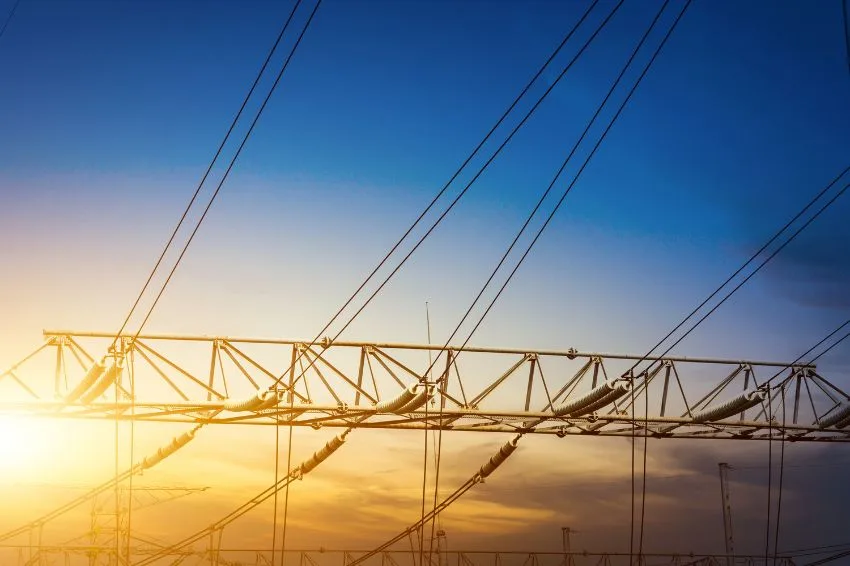
A interconnection of isolated systems to the SIN (National Interconnected System) had a great contribution to reducing the use of fossil sources in the country, according to information released by the MME (Ministry of Mines and Energy).
Em 2023, some municipalities in the North of the country, such as Parintins and Itacoatiara, in the state of Amazonas, and Juruti, in Pará, received transmission lines that inserted these locations in SIN, providing greater quality and security of electricity supply for these populations.
According to the ministry, such connections – in addition to helping to reduce the generation of diesel oil and the emission of CO2 into the atmosphere – they also reduced Federal Government spending on the CCC (Fuel Consumption Account), charge paid by all electricity consumers.
Last year, Brazil saved R$1,3 billion with CCC – which reached the level of R$ 11,6 billion, a lower value than expected by ANEEL (National Electric Energy Agency).
The value achieved also represents a drop compared to the amount reached in 2022, which was R$12,9 billion.
CCC and its relationship with isolated systems
In an interview with Canal Solar, José Marangon de Lima, CEO of MC&E consultancy, explains that CCC accumulators is a account that All Brazilian consumer pays to subsidize diesel oil used for the regions of the Amazon, mainly.
Are small communities, sometimes entire cities who live in places that are difficult to access and that – as there is no electrical energy from the grid, because the SIN often does not reach them – end up being supplied with energy using diesel oil.
The professional points out that, in CCC, are also included, not only the diesel costs, as well as the entire logistics to transport it to these communities.
“As no consumer in these regions could pay for this energy that arrives through diesel, because it is very expensive, what happens? Consumers in Brazil, who are using cheaper energy, end up paying a higher tariff to subsidize these consumers who are in the Amazon region”, he commented.
Marangon further explains that, for years, isolated communities have always been supplied by diesel generators, but that, with the arrival of new technologies, as for example, solar panels with batteries, situation has changed.
“In these regions, solar panels with batteries are being installed, with diesel only being used to cover occasional days when there is no sun, since the battery does not store energy for five or six days in a row. In other words, diesel is also used, but most of the time, not”, he highlights.
With this, Marangon explains that there has been an increasing saving by the Federal Government by sending diesel to these regions, alleviating costs for SIN consumers.
“There are huge savings when using solar systems with batteries in these regions. It really reduces emissions and, in addition, it is cheaper compared to diesel. As a result, the CCC subsidy decreases for consumers in other regions that have a national interconnected system.”
all the content of Canal Solar is protected by copyright law, and partial or total reproduction of this site in any medium is expressly prohibited. If you are interested in collaborating or reusing part of our material, please contact us by email: redacao@canalsolar.com.br.




Comments
Comments are moderated before publication.Comments should be respectful and contribute to a healthy debate. Offensive comments may be removed. The opinions expressed here are those of the authors and do not necessarily reflect the views of the author. Canal Solar.