

Article published in the 21st edition of the Magazine Canal Solar
Os operational costs the industries, especially in the food sector, are considerably impacted by expenses on energy. Furthermore, vulnerability to intermittent supply or a lack of energy can result in significant losses for companies, reaching million-dollar figures.
The growing concern about high energy costs has driven the Brazilian industry to adopt measures closest sustainable. Strategies focused on energy efficiency and incorporation of renewable sources have been widely explored to mitigate financial and environmental impacts.
An example is the SSA Group (São Salvador Alimentos), one of the main producers of chicken meat in Brazil, present in all stages of the production chain, from the production of fertile eggs to the distribution of fresh and processed products on the national and international market.
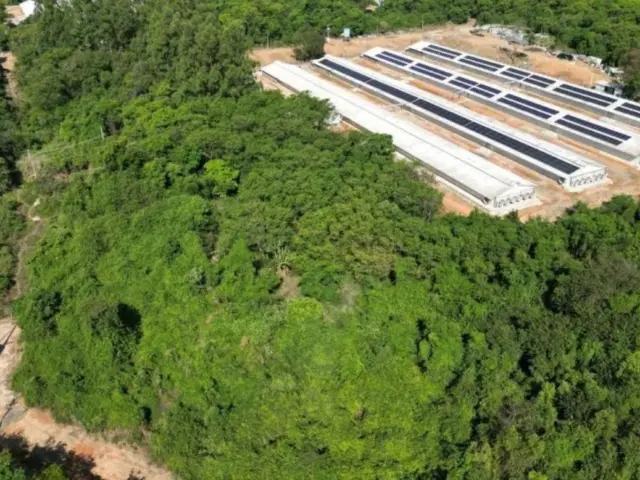
The company made a strategic decision to invest in a hybrid solution to supply your factory in New Venice (GO). The system implemented to serve the manufacturing unit integrates the network da dealership and two other sources connected to the load, one of which UFV (photovoltaic plant) of 5,7 MWp and a OUTDOORS (thermal power plant) of 12 MW.

In addition to financial gains, the company has another objective: to have a lighter environmental footprint. Second Henrique Fernandes Borges, electrical engineer at the SSA group, with the load scenario that the unit currently has, the company will save about 48 thousand liters de Diesel a month.
“Adding this, with the energy that we will no longer purchase from the ACL (Free Contracting Environment) and, proportionally, the non-use of the Transmission System for this portion, our monthly savings goes from R $ 570 thousand”, He highlighted.
In total, the photovoltaic project has 8.640 Canadian Solar Hiku7 modules of 665 W and 16 Sungrow SG250HX inverters divided in two skids – solution that aims to concentrate several devices such as transformers, inverters, electrical protection and control panels, communication systems and the shelter structure of these devices in just one location.
"This is the more e most technological hybrid design do Brazil, applied directly to an industrial complex (final consumer)”, assessed Borges.
"At three sources (dealership, UFV and UTE) operate synchronized with permanent parallelism and are controlled by a power management system of the DEIF extremely reliable and technological, with high-level automation”, he emphasized.


Want to check it out corn informações sobre or the project? Access 21ª edition of the magazine.
all the content of Canal Solar is protected by copyright law, and partial or total reproduction of this site in any medium is expressly prohibited. If you are interested in collaborating or reusing part of our material, please contact us by email: redacao@canalsolar.com.br.

Comments
Comments are moderated before publication.Comments should be respectful and contribute to a healthy debate. Offensive comments may be removed. The opinions expressed here are those of the authors and do not necessarily reflect the views of the author. Canal Solar.