
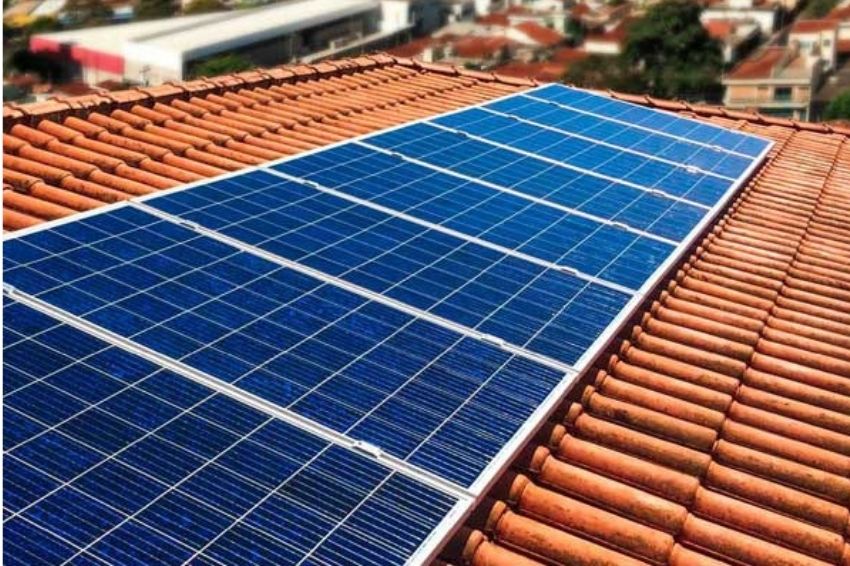
Amid discussion of the creation of a law for GD (distributed generation) in Brazil, the country surpassed, this Tuesday (17), the mark of 700 thousand UCs (consumer units) receiving energy from the solar source. The data is from ANEEL (National Electric Energy Agency) and the survey was carried out by ABSOLAR (Brazilian Photovoltaic Solar Energy Association).
Currently, the solar source represents more than 6,49 GW of operational installed power and is present in 5.349 Brazilian municipalities. According to the ABSOLAR, since 2012 the solar DG sector has attracted more than R$ 32 billion in new investments to the country, adding more than 189 thousand jobs accumulated in the period.
For Rodrigo Sauaia, CEO of ABSOLAR, photovoltaic energy will play an increasingly strategic role in achieving the country's economic and environmental development goals, “especially at this time, to help the economy recover after the pandemic, as it is the renewable source that generates the most jobs in the world”.
The association also highlighted that although it has made progress in recent years, Brazil is still behind in the use of its own solar energy generation. This is because, according to data from ABSOLAR, of the more than 87,5 million electricity consumers, only 0,8% already use the Sun to produce clean, renewable and competitive energy.
Heated market
For Willy Zulke, sales executive at Araymond Brasil, the brand is a great achievement for the photovoltaic sector, but there is still a lot to grow and challenges to face. “Brazil has a large capacity for energy production from solar sources that is still unexplored, so it is expected that in the coming years the number of consumer units with their own energy generation will grow even more.”
“Another major challenge is the use of adequate and durable equipment and materials for all these new photovoltaic installations that are to come. Professional solutions that aim to increase the useful life and improve the quality of installations should be considered for better generation use in the long term”, added Zulke.
Breno Machado, product manager at WDC Networks, also highlighted the potential of the solar sector and emphasized that there is still an ocean of opportunities and a very large market to be explored. “The scenario is one of broad growth in the coming years, since we are still at the beginning of the expansion in the national territory and solar still represents a very small share of the country's energy matrix”, he analyzed.
The executive also commented that the proposal that creates the GD Legal Framework should further heat up the Brazilian photovoltaic market. “We believe that PL 5829 will further promote the growth of the distributed generation market, as it will bring greater legal certainty and attract greater investments to the sector as a whole”, he added.
In evaluating the ABSOLAR, the agreement made between the MME (Ministry of Mines and Energy), the ANEEL and representatives of the photovoltaic sector is seen as an alternative to alleviate the problems of the water crisis in the electricity sector, helping to reduce electricity bills.
“Solar energy has helped to lower the electricity bills of all Brazilians by reducing the use of fossil thermoelectric plants, which are more expensive and polluting and are responsible for the red flag. Additionally, it helps to reduce electrical losses and new infrastructure expenses, which would be charged on electricity bills”, commented the president of the entity's Board of Directors, Ronaldo Koloszuk.
Consumer profile
In terms of the number of consumer units that use their own solar energy generation, residential consumers are at the top of the list, representing 75,5% of the total. Next come consumers from the commerce and services sectors (14,8%), rural producers (7,2%), industries (2,1%), public authorities (0,4%) and other types, such as public services (0,02%) and public lighting (0,01%).
Own solar energy generation is already present in 5.083 municipalities and in all Brazilian states. Among the five leading municipalities are Cuiabá (MT), Brasília (DF), Teresina (PI), Uberlândia (MG) and Rio de Janeiro (RJ), respectively.

Comments (3)
Comments are moderated before publication.Comments should be respectful and contribute to a healthy debate. Offensive comments may be removed. The opinions expressed here are those of the authors and do not necessarily reflect the views of the author. Canal Solar.
Too bad it's for pouxis...I wish I could...dream of consumption
Mariana's article is very good.
Solar energy is inexhaustible and can be installed next door, in the back, in the front, on an unoccupied plot of land, without disturbing any neighbors.
There's sun for everyone.
There is no shortage of financing, what is needed is qualified and competent professionals in the field.
I bought solar squares for my house, the panels have already been installed over a month ago, I just need Enel to come to my house to do a clock inspection because I had to ask for a load increase to be able to enjoy my clean energy
I'm from São Gonçalo RJ